
Business Setup in the UAE 2026: Costs, Steps & Mainland vs Free Zone Guide

Recent Insights
Table of Contents
Business Setup in the UAE: Complete Guide
A lot of people look at the United Arab Emirates and immediately think of tall towers, luxury, and tourism. But anyone who has spent even a little time studying the region knows it’s far more than that. The UAE has quietly built one of the most business-friendly environments in the world, which is why so many entrepreneurs consider starting their business setup in the UAE. Things generally move faster here; the laws are predictable, and the government actually invests in systems that make life easier for investors. If you’re trying to start something new, this is the kind of foundation you want beneath your feet.
Introduction: Why the UAE Is a Global Hub for Business
A New Wave of Opportunity for Foreign Investors
One of the first things people notice when exploring a business setup in the UAE is how naturally the country connects to different markets. You’re basically sitting in the middle of three massive regions of Asia, Africa, and the Middle East, so trade routes overlap here in a way that feels almost intentional. Dubai has used this advantage well: its ports are huge, flights come in and out all day, and the logistics network hardly ever slows down.
But the environment goes beyond geography. The UAE has pushed itself into a digital-first era. Most paperwork you’d expect to do in person is handled online. Systems are cleaner, quicker, and less draining compared to those in many other countries. For someone planning to set up a new business in the UAE, this can feel like a breath of fresh air.
And something else stands out as well. People who are exploring a new business setup in the UAE or comparing business setup companies in the UAEoften talk about how steady everything feels. Rules don’t change randomly; procedures are updated to become easier, not more complicated, and the overall attitude is geared toward helping businesses grow. Whether you’re a freelancer, a startup founder, or running a more established enterprise, the impression you get is that the UAE is genuinely trying to keep up with the future. It’s a place where ideas don’t stay stuck on paper. With a bit of planning and the proper support, they actually turn into functioning businesses.
Case Study: Turning Uncertainty into a Clear UAE Business Setup Roadmap
When a Europe-based consulting firm approached DBTA, they were overwhelmed by conflicting advice online about business setup in the UAE. Some sources suggested a Free Zone; others pushed Mainland, and none explained how future tax exposure would look under the new corporate tax regime.
DBTA began with a strategic assessment of the client’s revenue model, client geography, and growth plans. Based on this, DBTA advised a cost-effective Free Zone structure with provisions to open a Mainland branch later if local contracts increased. The result was a compliant setup, lower initial costs, and a structure that could scale without restructuring later.
Key Benefits of UAE Business Setup for Global Entrepreneurs
People who look into starting a business setup in the UAE often realize the benefits are much bigger than they expected. The country has built a reputation for being steady, predictable, and surprisingly easy to work with if you’re coming from abroad. For entrepreneurs who want a place where their ideas can actually grow, the UAE offers a mix of advantages that you don’t often find in one location.
Financial Incentives and Simple Profit Repatriation
One of the first things investors usually notice is how financially relaxed the system feels. There’s no personal income tax here, which immediately changes the equation for both founders and skilled employees. It allows companies to attract better talent without constantly worrying about tax deductions eating into salaries. And the freedom to own your business completely 100% in most sectors is a huge relief. Even more comforting is the fact that you can take back all your profits or capital whenever you want, without complicated approvals or hidden limits. It removes a quiet fear many entrepreneurs carry when investing abroad.
Corporate Tax That Favours Smaller Businesses
Yes, the UAE now has a corporate tax, but the way it’s structured shows that the government thought about how startups and smaller companies operate. The 9% rate applies to taxable income exceeding AED 375,000; however, eligible resident businesses with revenue below AED 3 million may elect for Small Business Relief (SBR), treating them as having no taxable income for periods ending on or before December 31, 2026.; however, qualifying companies in Free Zones may still benefit from a 0% rate on ‘Qualifying Income For a lot of new ventures, that means their early years are essentially tax-free. It gives businesses room to breathe, settle, and find their footing before they’re expected to pay anything.
A Safe and Dependable Business Environment
The feeling of safety here is more than just physical. Entrepreneurs often mention how predictable things feel; laws are clear, rights are protected, and the system rarely surprises you with sudden changes. Intellectual property rights are taken seriously, which is reassuring for tech founders and anyone working with unique ideas. And because there are no restrictions on moving money across borders, planning becomes much easier. Combined with political stability, it gives foreign investors a sense of long-term comfort, the kind that makes them confident enough to commit.
The Core Decision: Choosing Your Jurisdiction
When someone starts thinking about a business setup in the UAE, one of the first real choices they face is deciding where the company should legally exist. This isn’t a small decision either; your jurisdiction affects nearly everything later on, from how much you spend to who you can sell to. In simple terms, you usually end up choosing between a Mainland company, a Free Zone company, or an Offshore setup. They all work differently, and each one fits a different type of business plan.
Mainland Company Setup (Onshore)
Mainland companies are formed under the Department of Economic Development (DED) of whichever Emirate you choose. People who want to work directly in the local UAE market usually lean toward this option because it gives the most freedom. A Mainland company can trade anywhere in the Emirates, work with government departments, and deal with large local corporations without needing any special approvals.
If your customers are primarily in the UAE, or if you want long-term local credibility, the mainland structure fits better. But there’s a catch that sometimes surprises new investors: you must have a real, physical office. Not a virtual desk, not a shared corner, an actual office that’s officially registered, like through Ejari in Dubai. This pushes the yearly cost higher, and it’s something people need to plan for before choosing this route.
Free Zone Company Setup
Free Zones are a different world altogether. With more than 40 of them across the UAE, each one handles its own rules and licensing. A big reason international founders prefer Free Zones is the simplicity; you get full foreign ownership and can take 100% of your profits back home whenever you want.
But Free Zones aren’t perfect for every business. The main limitation is market access. A Free Zone company can operate inside the zone freely and can do business internationally, but it can’t directly trade inside the UAE Mainland unless it uses a local agent or distributor. For many digital businesses, exporters, consultants, and online service providers, this isn’t really a problem.
Another thing people like about Free Zones is flexibility. You don’t need to rent a whole office. A small, shared desk or co-working space is enough in many zones, which keeps early expenses low. Plus, most Free Zones offer customs benefits for goods that stay inside the zone or are re-exported.
The Niche Option: Offshore Company
Offshore companies look similar to Free Zone companies at first, but they are not meant for local UAE businesses at all. These structures are mainly used for international trade, asset protection, or holding global investments. They can’t rent an office in the UAE, and they don’t provide residency visas.
Places like RAK ICC or JAFZA Offshore allow these setups, but they must be formed through an approved registered agent. They are helpful if you need a secure, legally recognised vehicle for international operations, but not if you’re trying to build a business within the UAE itself.
Key Strategic Differences: Mainland vs. Free Zone
| Category | UK (London) Cost | Dubai Cost | Notes |
|---|---|---|---|
| Rent (2-bed Apt) | £2,500+ | £1,800 – £2,300 | Cheaper per sqft in Dubai. |
| Petrol (Litre) | £1.45+ | £0.66 (AED 3.00) | Significantly cheaper. |
| Groceries | Standard | +20% | Imported UK brands (Waitrose/M&S) are pricey. |
| Utilities | £200 | £250 – £400 | Summer AC bills drive this up. |
| Schooling | Free (State) | £15k/child (Avg) | Private schooling is mandatory for expats. |
Step-by-Step Guide to UAE Company Formation
The UAE makes company formation look simple, but when you actually go through the process, you realise it needs a bit of planning. Things usually move smoothly as long as each step is handled in the correct order. Anyone doing a business setup in the UAE for the first time should know what comes before because once the paperwork gets mixed up, everything slows down.
Step 1: Define What Your Business Will Do
The very first thing you need to figure out is the exact activity your company will carry out. The UAE doesn’t issue one license for everything. There are commercial licenses for trading, industrial permits for manufacturing, and professional licenses for service-based work. Some fields, especially anything involving law, finance, or regulated activities, need extra approval from specific authorities. After sorting out the activity, you choose your legal structure. Whether it’s an LLC, FZE, or FZC depends on ownership, how many partners you have, and what kind of operation you’re planning.
Step 2: Pick a Trade Name and Reserve It
Once the activity is set, the next part is naming the company. Naming rules are stricter than people expect. The trade name must be clear, respectful, linked to the business, and it must show the legal structure at the end, like “LLC.” When you apply for the reservation, authorities usually ask for passport copies of all owners and sometimes visa copies if someone already lives in the UAE. After the name is approved, it stays reserved for your business.
Get Initial Approval from the Authorities
Initial approval is basically the UAE saying, “We don’t have a problem with you starting this company.” For foreign investors, there’s an extra step: getting consent from the General Directorate of Residency and Foreigners Affairs (GDRFA). This is more of a pre-check than anything else. At this stage, some authorities ask for a simple business plan just enough to show what the company intends to do and how it plans to function.
Secure an Office and Finalise Your Legal Papers
Every company must have an official address. This part is non-negotiable. If you’re forming a Mainland business, you’ll need a real physical office, something you rent and register, like the Ejari system in Dubai. Free Zones are more relaxed; they offer shared desks, small offices, or even virtual office packages, which help new companies keep their costs down.
On the Mainland, the size of your office matters because it affects how many visas you can sponsor. The bigger the space, the more employees you’re allowed. After sorting that out, you draft your Memorandum of Association (MoA). This document explains who owns what, how decisions are made, and how the company will operate. It must be officially attested before moving to the next step.
Apply for the Trade License
The final step is submitting everything: initial approvals, attested documents, the tenancy contract, and any speciality approvals to the relevant authority. After paying the fees, the license is issued. The process is much quicker these days because many Emirates allow you to finish the licensing through online systems. Once the licence shows up, the company is officially formed.
Case Study: Avoiding a Costly Mainland Mistake for a Digital Business
A tech-enabled services startup planned to register a Mainland company in Dubai, assuming it was the “strongest” option for credibility. When they contacted DBTA, the team identified a significant issue: the business had no immediate need for local UAE clients and would be serving international customers remotely.
DBTA explained that a Mainland setup would force unnecessary office rent, higher overheads, and compliance obligations without adding value. Instead, DBTA structured the business in a Dubai-based Free Zone using a flexi-desk arrangement, cutting setup and annual costs by more than 40%. The client later expanded smoothly once UAE-based clients were secured.
Financial Planning: A Detailed Look at Business Setup Costs
The total financial outlay for UAE business setup is highly sensitive to the chosen jurisdiction and operational needs. While a baseline Low-Cost Company Formation is possible, specific regulatory and space requirements can increase costs significantly.
Cost Variables and General Ranges
Mainland Business Setup Costs are generally higher due to compulsory office rent, which can range from AED 15,000 to over AED 50,000 annually, plus market fees (approximately 2.5% of the annual rent). Mainland license fees alone typically range from AED 15,000 to AED 25,000+.
Free Zone Company Setup Costs are more varied, often segmented into packages. A basic, zero-visa package in a cost-effective zone like SRTIP can start as low as AED 5,500 (exclusive of VAT and administrative fees). However, licenses in premium Dubai free zones such as DMCC or DIFC may start from AED 33,000 and AED 30,000, respectively, reflecting the specialised services and location prestige.
Low-Cost Company Formation and Cost Optimisation
Entrepreneurs prioritizing Low-Cost Company Formation should target Free Zones that offer flexible or virtual office options.
- Budget-Friendly Zones: Sharjah Media City (Shams), RAKEZ (Ras Al Khaimah), and IFZA (International Free Zone Authority) are consistently cited for their affordability and flexible packages. IFZA, in particular, offers a desirable Dubai business address at a lower cost than many other Dubai-based zones.
- Cost-Saving Strategies: Utilising shared office space or flexi-desks is the most effective way to reduce the total setup cost, as rental charges for shared facilities typically start between AED 5,000 and AED 15,000 per annum, drastically reducing overhead compared to securing a private office. Beginning with a zero-visa package and registering multiple activities under a single license also helps conserve initial capital.
Mandatory Fees and Operational Overheads
Beyond the license cost, specific mandatory fees apply regardless of jurisdiction:
- Initial Fees: These include the Initial Approval fee (approx. AED 120 – 500) and the Name Reservation fee (approx. AED 600 – 1,000).
- Visa Expenses: Costs related to the UAE Residence Visa for investors and employees, including medical tests and Emirates ID applications, typically range from AED 3,000 to AED 7,000 per applicant.
- Share Capital: While highly variable, many free zones set the minimum required share capital at around AED 50,000, although some lower-cost zones require as little as AED 1,000.
Estimated Setup Cost Comparison (Starting Packages)
| Jurisdiction Type | Starting License Range (AED) | Key Office Requirement | Total Estimate (Basic 1-Year) |
|---|---|---|---|
| Low-Cost Free Zones (SRTIP, Shams) | 5,500 – 9,000 | Flexi-desk / Virtual (Low Cost) | 10,000 – 15,000 (0-visa package) |
| Premium Dubai Free Zones (DMCC) | 25,000 – 33,000+ | Serviced Office (Higher Cost) | 40,000 – 75,000+ (Includes 1 visa) |
| Mainland (DED – Professional / Commercial) | 15,000 – 25,000+ | Mandatory Physical Office | 35,000 – 55,000+ (Excl. High Rent) |
Specialised Setup Tracks
E-commerce Business Setup
The decision between the Mainland and the Free Zone is particularly crucial for e-commerce. For businesses focused on global exports and international clientele, a Dubai free zone like Dubai CommerCity is optimal, offering tax-free profits on exports and efficient logistics.
However, if the primary goal is direct sales and to local customers within the UAE, a Mainland company is essential. A Mainland license grants the freedom to sell directly to UAE customers without intermediaries, set up stores or warehouses anywhere, and participate in local exhibitions. If a Free Zone company wishes to penetrate the local market, it must engage a local distributor or establish a Mainland branch, adding complexity and cost.
Freelance License and Digital Nomad Options
The UAE recognises the rise of the digital economy and offers specific Freelance License packages tailored for sole professionals such as writers, consultants, and developers.
These licenses provide a legal structure for operating services and securing residency. They are highly cost-effective and ideally suited for digital nomads, allowing them to operate legally in the UAE. Annual costs for a freelance permit in specialised zones like RAKEZ or Shams can start below AED 10,000, offering flexibility and low barriers to entry. This strategy encourages skilled professionals to establish a presence, potentially serving as an incubator before they scale up to a larger company structure in the major hubs like Dubai or Abu Dhabi.
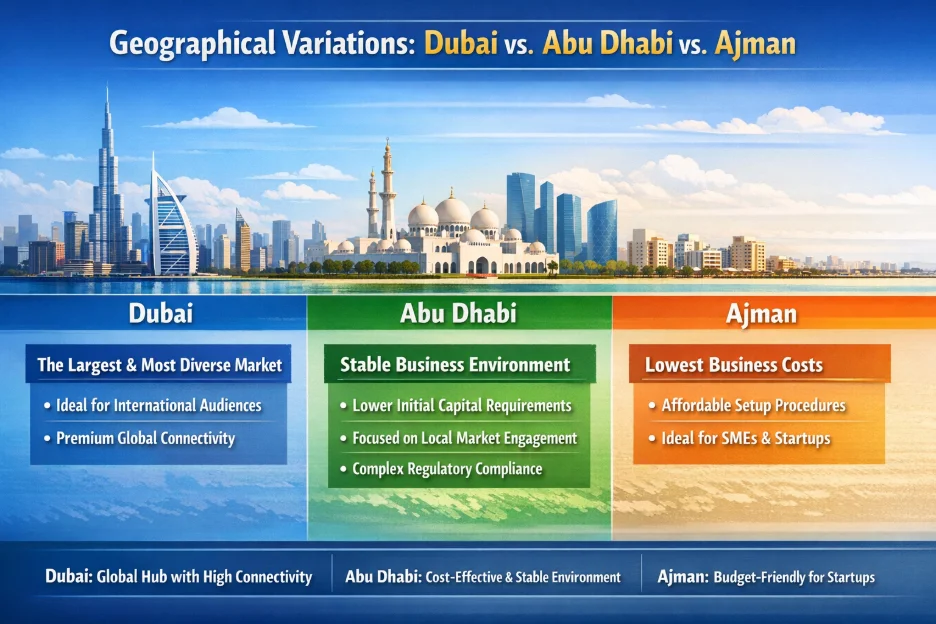
Geographical Variations: Dubai vs. Abu Dhabi vs. Ajman
Post-Formation Essentials: Visas, Banking, and Compliance
The receipt of the Trade License marks the end of the formation process, but successful operation hinges on securing visas and a robust banking infrastructure.
UAE Residence Visa Process and Rules
A company’s license establishes eligibility for UAE Residence Visas for partners, investors, and employees. Hese visas are typically valid for two or three years and require applicants to undergo a medical fitness test. Visa holders meeting financial and housing criteria can also sponsor their dependents.
Crucially, visas issued by a Free Zone Company strictly limit the individual’s ability to work outside the designated free zone. These employees do not have a standard MoHRE (Ministry of Human Resources and Emiratisation), meaning any engagement with the Mainland must be carefully structured and potentially require specific approvals or a dual license structure.
Corporate Bank Account Opening: Challenges and Requirements
Opening a Corporate Bank Account is often cited as the most challenging post-formation step. Due to stringent Anti-Money Laundering (AML) and Know Your Customer (KYC) regulations, the process can take up to three months. Banks require extensive due diligence, particularly demanding notarised and legalised corporate documents to verify the Ultimate Beneficial Ownership (UBO) structure and management.
This lengthy, demanding process functions as a necessary compliance gate, ensuring the legitimacy and financial substance of the business beyond the initial licensing approval. Startups must be prepared for this delay and ensure that complete documentation is ready.
Furthermore, most established banks enforce high minimum monthly average balance requirements, typically ranging from AED 25,000 to AED 150,000, with non-maintenance penalties applying if the balance falls short. Banks like Emirates NBD, Mashreq Bank, ADCB, and RAKBANK are established institutions offering specialised business services.
Corporate Bank Account Minimum Balances:
| Bank | Account Type Example | Minimum Monthly Average Balance (AED) | Non-Maintenance Fee (AED) |
|---|---|---|---|
| Emirates NBD | Prime | 50,000 | 150 |
| Mashreq Bank | Business Accounts (Low Tier) | 25,000 | Varies |
| ADCB | Business Accounts | 25,000 – 1,000,000 | Varies |
Legal and Regulatory Compliance (Taxation and Reporting)
The UAE’s regulatory landscape is rapidly evolving, requiring proactive attention to new federal taxes and reporting standards.
UAE Corporate Tax (CT)
Federal Corporate Tax was introduced in 2023/2024. The fundamental structure benefits small and medium enterprises significantly:
- A 0% rate applies to taxable income up to AED 375,000.
- A 9% rate applies only to taxable income exceeding AED 375,000.
Free Zone implications are nuanced: while Free Zone entities historically enjoyed 0% tax, they are now classified as “Qualifying Free Zone Persons.” To maintain the 0% Corporate Tax rate on “qualifying income,” they must adhere to specific substance requirements and ensure their income is not substantially derived from non-qualifying Mainland activities. The shift means even tax-exempt entities must now engage in careful accounting and tax planning to remain compliant.
VAT Registration and Filing Requirements
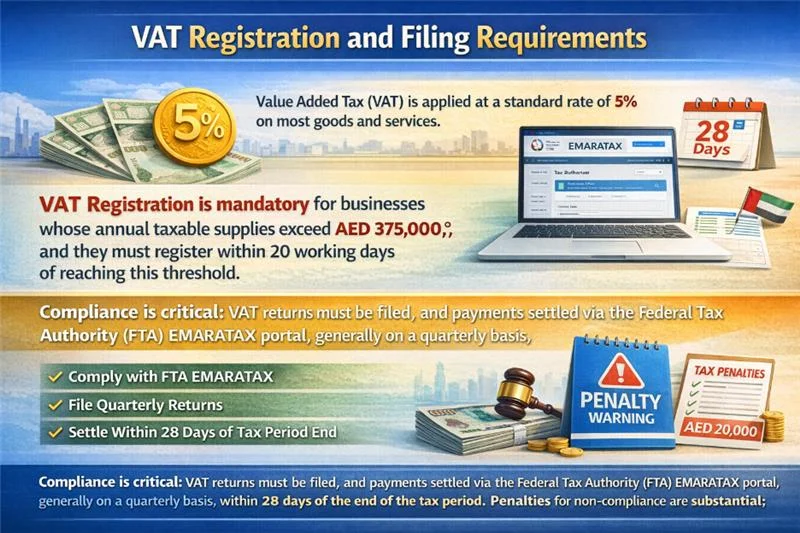
Value Added Tax (VAT) is applied at a standard rate of 5% on most goods and services. VAT Registration is mandatory for businesses whose annual taxable supplies exceed AED 375,000, and they must register within 20 working days of reaching this threshold.
Compliance is critical: VAT returns must be filed, and payments settled via the Federal Tax Authority (FTA) EMARATAX portal, generally on a quarterly basis, within 28 days of the end of the tax period. Penalties for non-compliance are substantial; Failure to register for VAT within the required timeframe now typically incurs a penalty of AED 10,000
Annual Reporting Obligations: Economic Substance Regulations (ESR) and Renewals
The Economic Substance Regulations (ESR) require entities conducting specific ‘Relevant Activities’ (such as Holding Company Businesses, Shipping, or Investment Fund Management) to demonstrate genuine economic substance in the UAE. This involves filing an annual notification and an ESR report proving adequate employees, expenditure, and physical presence within the UAE. This reporting requirement aligns the UAE with global tax transparency standards and ensures that companies registered in the country are genuinely operating from here.
Finally, the Trade License must be renewed annually with the respective DED or Free Zone Authority to maintain legal standing. Fees vary based on the business activity and location.
The Essential Role of a Business Setup Consultant
Given the complexity of navigating jurisdictional differences, the hurdles of securing a Corporate Bank Account, and the strict requirements for tax and regulatory compliance (ESR, CT), engaging a professional Business Setup Consultant is not merely convenient; it is a critical risk mitigation strategy.
Mitigating Risk and Ensuring Compliance
Expert consultants possess specialised knowledge of local laws, ensuring the company structure chosen perfectly aligns with the entrepreneur’s long-term market strategy, avoiding costly restructuring later. They are instrumental in reducing the risk of administrative penalties associated with new taxes, such as the AED 20,000 penalty for late VAT Registration. Their value is derived from minimizing compliance errors, which 64% of early-stage businesses reportedly face in their first year.
Comprehensive Service Scope
A consultant acts as a comprehensive liaison, managing every stage from initial approvals (including the necessary GDRFA pre-check for foreign shareholders) to final license issuance.
Crucially, consultants facilitate the complex Corporate Bank Account opening process. By preparing the required KYC/UBO documentation and leveraging relationships with banks like Emirates NBD and Mashreq, they drastically reduce the processing time and complexity that can otherwise take months. Beyond setup, advisory services extend to ongoing payroll management, auditing, and ensuring continuous adherence to dynamic regulatory obligations like the Economic Substance Regulations (ESR).
Case Study: Solving Banking and Compliance Delays After Company Formation
A trading company had already completed its UAE business setup before approaching DBTA but was stuck for nearly three months trying to open a corporate bank account. Multiple banks rejected the application due to incomplete UBO disclosures and unclear transaction flows.
DBTA stepped in to restructure the documentation, prepared a detailed business activity explanation, aligned the company profile with AML expectations, and guided the client toward the most suitable bank. Within weeks, the account was approved. DBTA also implemented VAT registration and compliance tracking to prevent future penalties.
How Dubai Business & Tax Advisors Supports UAE Business Setup from Start to Stability
Setting up a business in the UAE is not difficult on paper, but in practice, many founders struggle because decisions are made too quickly or based on incomplete advice. This is where Dubai Business & Tax Advisors take a different approach. Instead of pushing a pre-set package or a single jurisdiction, DBTA starts by understanding how the business will actually operate, earn revenue, and grow over time.
The team helps clients choose the correct jurisdiction by analysing where customers are based, whether Mainland access is genuinely needed, and how future corporate tax exposure can be managed. DBTA then handles the whole setup process, including activity mapping, trade name approvals, licensing, and coordination with Free Zone authorities or the Department of Economic Development.
Beyond licensing, DBTA supports clients with one of the most challenging areas of UAE business setup: post-formation compliance. This includes preparing businesses for corporate bank account opening, structuring documents to meet AML and KYC expectations, and guiding clients through VAT registration, corporate tax planning, and Economic Substance requirements. The goal is not just to launch the company, but to ensure it operates smoothly, remains compliant, and avoids costly corrections later.
Conclusion: Launching Your Business Success in the UAE
The UAE business setup environment offers a golden opportunity for foreign investors to capitalise on a stable, strategically positioned, and forward-looking economy. The key to successful establishment lies in meticulous preparation and strategic jurisdictional choice.
Entrepreneurs must carefully weigh the unrestricted market access and higher credibility of a Mainland Company against the 100% foreign ownership, lower overhead, and specialised logistical benefits of a Free Zone Company. The trend toward Low-Cost Company Formation through flexi-desk options in Free Zones makes the UAE highly accessible for startups and digital nomads. However, the high standard of regulatory integrity enforced through strict banking KYC protocols, mandatory Corporate Tax compliance for qualifying profits, and ESR reporting demands that all new enterprises establish genuine economic substance.
By partnering with an experienced Business Setup Consultant to navigate the nuances of licensing, banking requirements, and evolving federal compliance, foreign investors can minimise delays and ensure their foundation in the UAE is robust, compliant, and poised for sustained international growth.
FAQ's:
Business setup in the UAE typically begins with selecting the correct business activity and jurisdiction, followed by trade name reservation and initial approval. The next step involves securing an office or flexi-desk, preparing legal documents such as the Memorandum of Association, and submitting the trade license application. Once the license is issued, the process continues with residency visas, corporate bank account opening, and tax registrations, where applicable.
The cost depends mainly on whether the business is registered in the Mainland or a Free Zone. In 2026, while some promotional zero-visa packages in Northern Emirate free zones start at approximately AED 5,500, most standard packages range between AED 12,000 and AED 25,000, depending on the jurisdiction and facility, Mainland company formation usually begins around AED 15,000 and increases with office rent and regulatory fees. Additional costs may include visas, banking requirements, and ongoing compliance obligations.
A Mainland company allows you to trade freely across the UAE and work directly with local clients and government entities. A Free Zone company offers full foreign ownership and lower setup costs, but limits direct Mainland trading unless a distributor or branch is used. The right option depends on where your customers are and how you plan to operate.
In most cases, no. The UAE now allows 100% foreign ownership for the majority of business activities in both the Mainland and Free Zones. Local sponsors are only required for a small number of strategic or restricted activities. This change has made the UAE business setup far more accessible for international entrepreneurs
Most professional, commercial, consulting, trading, and digital services activities allow full foreign ownership. This includes IT services, marketing, e-commerce, management consultancy, and general trading. However, some regulated sectors, such as defence or certain utilities, may still have ownership restrictions.
Typically, you’ll need passport copies of all shareholders, a visa copy if applicable, a business activity description, and a proposed trade name. Depending on the jurisdiction, additional documents such as a business plan, No Objection Certificate (NOC), or shareholder resolutions may also be required.
In straightforward cases, a Free Zone company can be set up within 5 to 10 working days. Mainland setups may take slightly longer, especially if additional approvals or office registration are required. Delays usually occur when documentation is incomplete, or banking preparation is overlooked.
Yes, many Free Zone and professional licenses allow remote or location-independent work. This is common for consultants, freelancers, and digital businesses. However, if you plan to serve Mainland clients directly or hire local staff, additional licensing or approvals may be needed.
Cost-effective zones like IFZA, RAKEZ, Shams, and SRTIP are popular among startups due to flexible packages and low overhead. Dubai-based zones such as DMCC or Dubai CommerCity suit businesses seeking global credibility, though they come at a higher cost. The best option depends on budget and business goals.
While the UAE is transparent compared to many countries, unexpected costs can arise from office requirements, visa quotas, bank minimum balance penalties, and compliance filings. Businesses that rush setup without proper planning often discover these later. Careful structuring helps avoid surprises.
Opening a corporate bank account requires thorough KYC and AML checks. Banks usually ask for company documents, ownership details, proof of business activity, and sometimes notarised papers. The process can take several weeks, so it’s best to prepare banking documents alongside company formation.
After setup, businesses must renew their trade license annually and comply with UAE Corporate Tax, VAT (if registered), and Economic Substance Regulations where applicable. Proper accounting records must be maintained, and filings must be submitted on time to avoid penalties.
A Free Zone company cannot be directly ‘converted’ into a Mainland entity, but it can open a Mainland branch or form a new Mainland company when needed. Many businesses start in a Free Zone and expand later once local UAE demand increases.
Latest news & articles
About the Author:
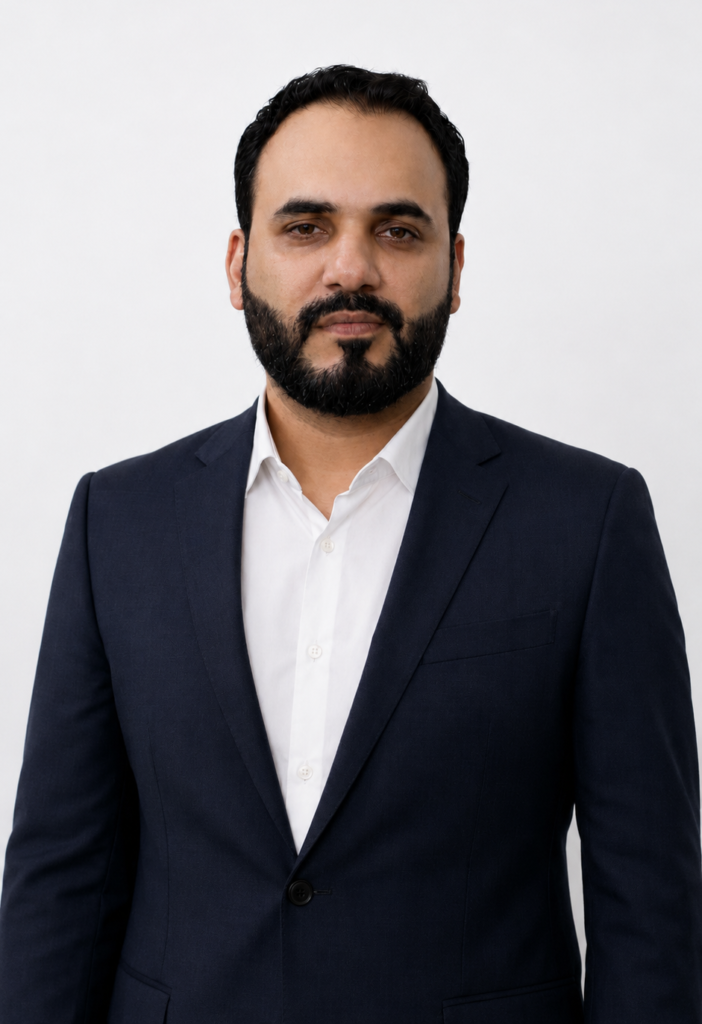
AURANGZAIB CHAWLA
As CEO of DBTA, Aurangzaib Chawla advises globally mobile businesses and individuals on cross-border tax planning and structuring. With expertise spanning the UK, UAE, and wider GCC, Zaib helps clients minimise double taxation, protect assets, and achieve long-term financial efficiency while staying fully compliant.
Planning to launch in Dubai or the UAE?
Let’s talk about how to structure your business for growth the smart, compliant, and tax-efficient way

About the Author:
AURANGZAIB CHAWLA
As CEO of DBTA, Aurangzaib Chawla advises globally mobile businesses and individuals on cross-border tax planning and structuring. With expertise spanning the UK, UAE, and wider GCC, Zaib helps clients minimise double taxation, protect assets, and achieve long-term financial efficiency while staying fully compliant.
Planning to launch in Dubai or the UAE?
Let’s talk about how to structure your business for growth the smart, compliant, and tax-efficient way
About the Author:
AURANGZAIB CHAWLA
As CEO of DBTA, Aurangzaib Chawla advises globally mobile businesses
and individuals on cross-border tax planning and structuring. With expertise spanning the UK, UAE, and wider GCC, Zaib helps clients minimise double taxation, protect assets, and achieve long-term financial efficiency while staying fully compliant.
Planning to launch in Dubai or the UAE?
Let’s talk about how to structure your business for growth the smart, compliant, and tax-efficient way.
Connect with Reliable Dubai Business Consultants
Get in Touch