
Best UAE Business Setup Consultants for Mainland and Free Zones

Recent Insights

Table of Contents
The UAE is a top place to do business. The rules here are tighter than ever.
A 9% Corporate Tax is now in force. The Central Bank has strict rules on money laundering. Getting your setup right from day one is not just helpful. It is a must.
Business setup consultants do much more than file forms. The best ones help you avoid costly mistakes.
For most founders, the hard part is not getting a license. It is opening a bank account and staying tax compliant. Ask yourself: is my business bankable, compliant, and built to last?
Types of UAE Business Setup Consultants
There are many service firms in the UAE. But quality varies a lot. Knowing the types helps you find the right fit.
General and Free Zone Specialists
These firms handle company setup and Free Zone work. They are good for simple cases. Their focus is speed and basic compliance.
Mainland Specialists
These firms work with the Department of Economy and Tourism (DET). They handle office setup, legal structures, and jurisdiction advice.
Choose this type if you plan to sell to UAE customers or bid for government work. They help you pick the right license for your business model.
Regional Expansion Specialists
These firms help founders use the UAE as a base for wider Gulf operations. They are useful if you plan to grow into Saudi Arabia.
They advise on cross-border tax and multi-jurisdiction licensing. They also help you make structural choices that save money long-term.
Operational and Visa Support Specialists
Free Zone companies often face hard visa limits. These firms help you work around that.
They offer Employer of Record (EOR) services. This lets you manage visas and payroll without changing your whole license.
Compliance-First Advisory Firms
This is the most useful type for high-revenue businesses and foreign firms.
These firms go beyond filing. They focus on tax, ESR compliance, UBO registration, and bank readiness.
If a banking failure or a fine would seriously hurt your business, this is the only type of worth using.
| Consultant Type | Primary Focus | 2026 Risk Priority |
|---|---|---|
| General and Free Zone | Standard licensing, Free Zone access | Speed and basic compliance |
| Mainland Specialists | DET licensing, office registration | Local market access and legal structure |
| Regional Expansion | Multi-jurisdiction setup | Cross-border tax and regulatory risk |
| Operational / EOR | Visa management and payroll | Labour law and workforce scaling |
| Compliance-First Advisory | Tax, banking, CT and ESR | Regulatory fines, AML, banking rejection |
Watch out for firms that only compete on price. A cheap license often means no real tax or banking support. That is exactly where the most valuable help is needed.
What a Good Business Setup Consultant Does
The difference between a proper advisory firm and a basic filing agent is simple. Good consultants find and fix problems early.
Accurate Activity Classification
Picking the wrong license activity is one of the most common and costly mistakes.
A software developer needs a Professional license, not a Commercial one. The wrong choice leads to bank rejections, regulatory flags, and denied permits.
A good consultant matches your license to your actual revenue streams. Every time.
Visa Planning
Mainland companies can grow their visa quotas based on office size. Free Zone companies often start with zero to six visas per license.
A good consultant asks about your hiring plans upfront. They plan your visa needs before you hit a wall mid-growth.
UBO and ESR Compliance
All UAE companies must file Beneficial Owner (UBO) declarations. ESR rules apply to Free Zone firms seeking the 0% Corporate Tax rate.
A proper consultant makes sure these filings are done right. They help your business prove real substance inside the UAE. That means local decisions and core work happening on the ground.
Verifying Credentials
Be careful with unlicensed agents. A real consultant holds a valid commercial license. You can check this on the relevant DET or Free Zone authority portal.
Always verify before you engage. A licensed firm gives you legal protection and accurate, up-to-date advice.
Mainland vs Free Zone: A 2026 Breakdown
This is the most important structural choice you will make. Base it on current facts, not old ideas about costs or tax benefits.
| Factor | Mainland | Free Zone |
|---|---|---|
| Market Access | Full UAE market and government contracts | International and zone-to-zone only |
| Office Requirement | Physical office required (Ejari) | Flexi-desk or virtual office allowed, but banks may ask questions |
| Corporate Tax Rate | 9% on profits above AED 375,000 | Potentially 0%, but strict ESR rules apply |
| Visa Scalability | High, linked to office size | Limited, typically 0 to 6 on basic packages |
| Estimated First-Year Cost | AED 25,000 to AED 40,000+ | AED 5,500 to AED 15,000 (license only) |
Market Access and Operations
Choose Mainland if you want to sell to UAE customers, run a shop, or bid for government work.
Foreign ownership is now allowed in most Mainland sectors. But you still need a physical office registered under Ejari.
Free Zone firms focus on international trade. To sell inside the UAE, you often need a local distributor or a dual DET license. Both add cost and extra steps.
How Corporate Tax Affects Your Choice
Mainland companies pay 9% tax on profits above AED 375,000. That is clear and simple.
Free Zone companies can pay 0%. But only if they meet strict income rules and maintain real substance in the UAE.
If a Free Zone firm fails the substance test, the 0% rate disappears. The standard 9% rate then applies. Many founders miss this when they compare costs. It can change the whole financial picture. Our tax advisory team helps you stress-test this before you commit to a structure.
Cost and Timeline
Free Zone setups are faster. Most take seven to fourteen days. The license cost is also lower to start.
Mainland setups cost more upfront. AED 25,000 to AED 40,000+. This covers the office lease and government fees.
But over time, the Mainland often gives better visa capacity and more room to grow. For growing businesses, it can be the more cost-effective choice.
Choosing the Right Free Zone
There are over 40 Free Zones across the UAE. The right one depends on three things: cost, fit for your activity, and banking credibility.
| Free Zone | Emirate | Best For | Banking Credibility | Starting Cost (Est.) |
|---|---|---|---|---|
| DMCC | Dubai | Global trade, commodities | Highest, premium relationships | Higher / premium |
| IFZA | Dubai / Fujairah | SMEs, digital startups | Good, digital process aids approval | Medium, best value in Dubai |
| RAKEZ | Ras Al Khaimah | Logistics, manufacturing | Solid and stable | From AED 6,000 |
| SHAMS | Sharjah | Media, e-commerce, creative | Good for sector-specific setups | From AED 5,750 |
| Meydan FZ | Dubai | Consultancy, digital services | Competitive in Dubai | Medium |
| KEZAD | Abu Dhabi | Logistics, industrial | High, strategically focused | Varies by activity |
| Ajman FZ | Ajman | Ultra-low-cost only | High risk, flagged by banks | From AED 5,000 |
DMCC
The Dubai Multi Commodities Centre (DMCC) has the strongest global name in the UAE. It also has the best banking relationships. It is the top choice for long-term global trade.
IFZA
The International Free Zone Authority (IFZA) is flexible and fast. It suits small firms and startups with tight budgets. Its digital process tends to make bank applications smoother.
RAKEZ
Ras Al Khaimah Economic Zone (RAKEZ) is a strong pick for logistics, manufacturing, and industrial setups. It offers solid facilities and competitive costs.
SHAMS
Sharjah Media City starts from around AED 5,750 for a basic license. It focuses on media, e-commerce, and creative businesses.
A Note on Low-Cost Zones
Very cheap zones like Ajman Free Zone look good on paper. In practice, banks flag them often. Account applications get delayed or turned down.
The cost of fixing this later can far exceed what you saved on the license. Treat your Free Zone choice as a banking decision, not just a cost one.
The True Cost of Setting Up in the UAE
Many founders are shocked by the gap between the advertised price and the real cost. This is worth knowing before you compare quotes.
What the Advertised Price Excludes
A price like ‘AED 5,500 business setup’ usually covers the license only. It is for a zero-visa package in a specific zone. It does not include anything you need to run a business or get a UAE visa.
The Real Numbers
A working setup with one investor visa typically costs AED 20,000 to AED 27,650 in the first year. Here is what makes up that gap.
| Cost Component | Type | Estimated Cost (AED) | Notes |
|---|---|---|---|
| Basic License Fee (0 Visa) | Initial | 5,500 to 7,000 | The advertised headline price |
| Establishment Card / Immigration File | Initial, mandatory | ~1,500 | Required before any visa processing starts |
| E-Channel Registration and Deposit | Initial, refundable | 5,000 to 7,150 | Mandatory for visas. The biggest hidden fee |
| Investor or Employee Visa (1 person) | Initial | 3,000 to 5,000 | Includes medical, Emirates ID, and stamping |
| Flexi-Desk or Virtual Office | Annual | 5,000 to 7,500 | Needed for substance checks and banking |
| Total Realistic First-Year Cost | ~AED 20,000 to 27,650 | For a working company with one visa |
Add annual audit fees of AED 5,000 to AED 10,000 for zones like DMCC. Also, budget for legal translation and notarisation.
A consultant who does not show you these figures upfront is not giving you the full picture.
Common Mistakes and What They Cost You
Most of the pain founders face after setup comes from choices made before setup. These mistakes tend to get worse over time.
Wrong License Activity
Picking the wrong license to save money creates a structural flaw. Banks check if your license matches your real business. If it does not, your account gets rejected.
This is not a small admin issue. It is a core error that often needs a full rebuild to fix.
Underestimating Visa Quotas
Choosing a one or two visa package to cut costs is very common. When the business grows and needs more staff, it hits a hard cap.
Upgrading mid-year costs far more than planning from the start. A good consultant plans for your needs from day one.
The Tax-Free Misconception
Many founders think a Free Zone means no tax duties. That has not been true since 2023.
Tax registration is now mandatory for almost all UAE entities. To keep the 0% rate, Free Zone firms must meet ESR rules each year.
Missing a filing can trigger fines and back-tax charges. Regulators are actively enforcing this.
Using Unlicensed Agents
Unlicensed brokers are common in the UAE. They often vanish after the initial setup. You can be left with a poorly built company and no legal recourse.
Always check that your consultant holds a valid license before you sign anything.
Choosing the Right Location
Your choice of Emirate or business district affects licensing, compliance, and daily costs. Here is a quick guide.
Dubai
Dubai has the highest global profile and the widest range of business clusters. It is the top choice for service firms, global traders, and regulated financial services.
Costs are higher than other Emirates. But the banking access and market depth justify the premium for most foreign businesses.
Key hubs include JLT near DMCC and Business Bay close to the DET.
Abu Dhabi
Abu Dhabi offers lower office costs than Dubai. It suits firms aligned with government-led sectors like energy, defence, and heavy industry.
ADGM is one of the most trusted financial zones in the region. International banks rate it very highly.
Sharjah
Sharjah gives very affordable entry points through zones like SHAMS. It works well for startups focused on regional markets.
It is a practical choice for media and creative businesses that do not need a Dubai address.
Ras Al Khaimah
RAKEZ is a strong option for logistics, manufacturing, and industrial firms. It offers lower costs than Dubai and stable, straightforward admin.
Ajman
Ajman is only for very cost-sensitive setups where banking access is not urgent. The banking risk profile of Ajman Free Zone is well known. Most advisers recommend avoiding it if you need a UAE bank account soon.
The Banking Bottleneck in 2026
Opening a corporate bank account is the hardest step for most new UAE companies. This is not an accident.
The Central Bank has tightened its anti-money-laundering and KYC rules. It follows guidance from the Financial Action Task Force. Banks now check every application very closely.
Why Banks Say No
Banks run detailed internal scoring on each application. Any gap between your company structure and your business model can trigger a refusal.
Common rejection triggers include:
- Choosing a Free Zone with low banking credibility
- Having a foreign owner without UAE residency
- Using a vague or mismatched activity description
- Submitting incomplete UBO declarations
- Lacking a proper flexi-desk or office contract
| Rejection Reason | What a Good Consultant Does | The Underlying Issue |
|---|---|---|
| High-risk Free Zone | Guides you to credible zones like DMCC or IFZA | AML and KYC scrutiny |
| Foreign owner, no residency | Advises owner to get UAE residency or provides notarised proof | UBO clarity and source-of-funds check |
| Vague business activity | Builds a detailed business plan that matches the bank's risk profile | Mismatch between license and real operations |
| Incomplete compliance docs | Ensures UBO filings, office contracts, and audit readiness are in order | Regulatory gaps |
Why Residency and Zone Choice Matter
Foreign owners without a UAE residence visa face much higher scrutiny. The absence of an Emirates ID often stalls an application. Even when all other documents are complete.
Your Free Zone choice also affects which banks will consider you. DMCC and IFZA give you the widest options. Low-credibility zones can trigger automatic flags at several major banks.
The most valuable thing a consultant does in 2026 is prepare a bank-ready file before you approach any bank. That means aligning your activity, UBO structure, residency, and documents so they hold up under scrutiny. Our business tax advisory services include exactly this kind of pre-banking compliance review.
How to Choose the Right Consultant
There are hundreds of business setup firms in the UAE. Use these checks to find a good one.
Verify the License
Ask to see the consultant’s commercial trade license. Verify it through the relevant DET or Free Zone authority. If they cannot provide it, do not proceed.
Test Their Tax Knowledge
Ask about the 9% Corporate Tax and Transfer Pricing rules. These sit in Articles 35 to 36 of Federal Decree-Law No. 47 of 2022.
Ask whether they can support your annual tax return and audit readiness. A good firm will answer clearly and with detail. Vague answers are a red flag.
Ask About Banking Success
Ask whether they have helped similar firms open corporate accounts. Firms with foreign owners or complex structures are especially relevant.
A firm with real experience will give specific, credible answers. Not general assurances.
Get a Full Cost Breakdown
Reject any proposal that hides fees. A proper quote includes all deposits, visa costs, E-Channel fees, and annual audit fees.
A complete, honest quote is a strong sign the firm will not surprise you with extra invoices later.
What a Compliance-First Setup Looks Like
For any business where a banking failure or a fine would cause real damage, the right consultant treats your setup as a structural problem. Not a paperwork task.
Here is what that means in practice.
- Your license activity matches your real revenue streams
- Your UBO structure is clear and fully documented
- Your residency status aligns with banking requirements
- Your activity matches your bank’s risk appetite
- Your compliance calendar for tax, ESR, and VAT is planned from day one
A good consultant gives you one clear quote upfront. It covers all government fees, deposits, visa costs, and annual audit fees. No surprises.
Any consultant who provides this level of clarity at the start is far more likely to be a reliable long-term partner. Get in touch with our team to get a full, transparent breakdown of your setup.
FAQs
For the license alone, yes. But once you add visa costs, E-Channel deposits, and mandatory fees, the real cost is AED 20,000 to AED 27,650 in the first year.
Free Zone licenses take seven to fourteen working days. Mainland setups take two to four weeks. The date you register marks the start of your first Corporate Tax financial year.
Mainland companies must have a physical office (Ejari). Free Zones allow flexi-desks or virtual offices. But banks may ask for a dedicated desk if your business has high transaction volumes or a complex structure.
Mainland gives full UAE market access and eligibility for government contracts. Free Zone is designed for international trade. Selling inside the UAE from a Free Zone usually needs a local distributor or a dual DET license.
Mainland companies pay 9% on profits above AED 375,000. Free Zone companies can pay 0%, but only if they meet strict qualifying income and substance tests. If those conditions fail, the 9% rate applies.
Yes. The 2021 amendment to the Commercial Companies Law opened most Mainland activities to full foreign ownership. A small number of sensitive sectors still require Emirati participation. Your consultant can confirm your activity’s status.
Mainland visa capacity grows with office size. Free Zone quotas depend on your package. Basic flexi-desk options allow zero to six visas. Larger office packages allow more.
Yes. But it means setting up a new Mainland entity or branch. You also need to move contracts, staff, and banking. It is far easier and cheaper to make this decision at the start.
Most Free Zones allow remote registration. Banking is different. Most UAE banks still need in-person or video KYC. Plan this carefully if you cannot travel to the UAE.
Final Thoughts
The UAE rewards founders who get the structure right from day one. The license is just the start.
What matters is whether your company is bank-ready, tax-compliant, and built to hold up under scrutiny. From the FTA, the Central Bank, and your own clients.
The best consultants ask hard questions before they file anything. They care about your license, UBO structure, visa capacity, banking profile, and tax position. Not just the headline cost.
A small saving on setup is not worth a bank refusal, a regulatory fine, or a costly rebuild that could have been avoided.
Choose your adviser carefully. It is the most important decision you will make in the setup process.
Latest news & articles
About the Author:
AURANGZAIB CHAWLA
As CEO of DBTA, Aurangzaib Chawla advises globally mobile businesses and individuals on cross-border tax planning and structuring. With expertise spanning the UK, UAE, and wider GCC, Zaib helps clients minimise double taxation, protect assets, and achieve long-term financial efficiency while staying fully compliant.
Planning to launch in Dubai or the UAE?
Let’s talk about how to structure your business for growth the smart, compliant, and tax-efficient way

About the Author:
AURANGZAIB CHAWLA
As CEO of DBTA, Aurangzaib Chawla advises globally mobile businesses and individuals on cross-border tax planning and structuring. With expertise spanning the UK, UAE, and wider GCC, Zaib helps clients minimise double taxation, protect assets, and achieve long-term financial efficiency while staying fully compliant.
Planning to launch in Dubai or the UAE?
Let’s talk about how to structure your business for growth the smart, compliant, and tax-efficient way
About the Author:
AURANGZAIB CHAWLA
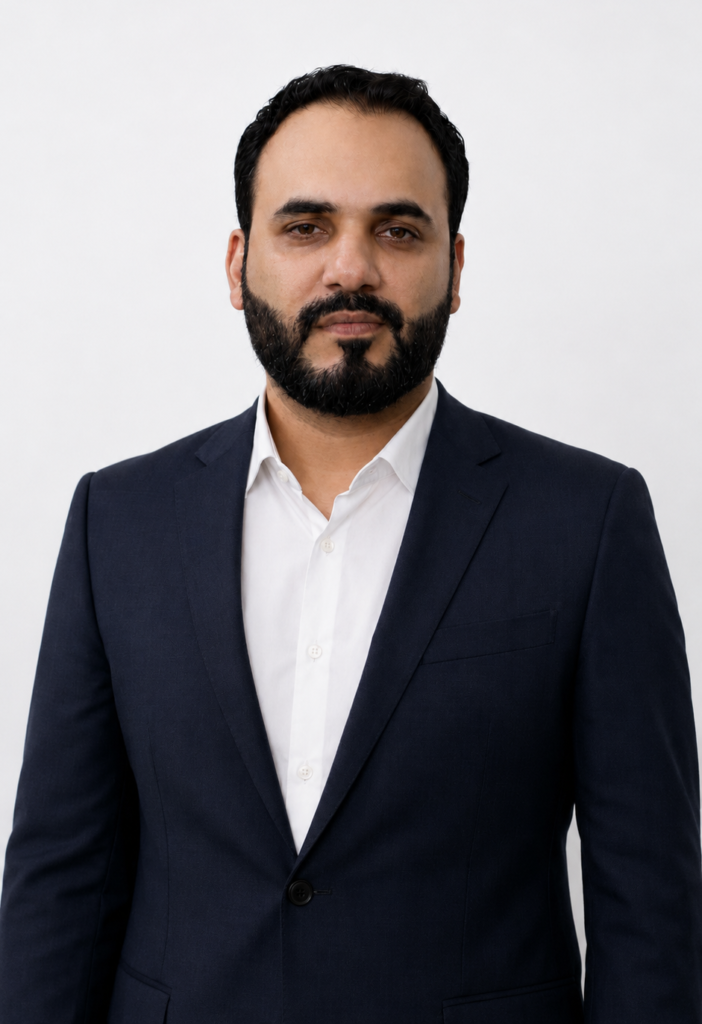
As CEO of DBTA, Aurangzaib Chawla advises globally mobile businesses
and individuals on cross-border tax planning and structuring. With expertise spanning the UK, UAE, and wider GCC, Zaib helps clients minimise double taxation, protect assets, and achieve long-term financial efficiency while staying fully compliant.
Planning to launch in Dubai or the UAE?
Let’s talk about how to structure your business for growth the smart, compliant, and tax-efficient way.
Connect with Reliable Dubai Business Consultants
Get in Touch