
How to Get a Consultancy License in Dubai Complete Guide

Recent Insights
Table of Contents
What Is a Consultancy License in Dubai?
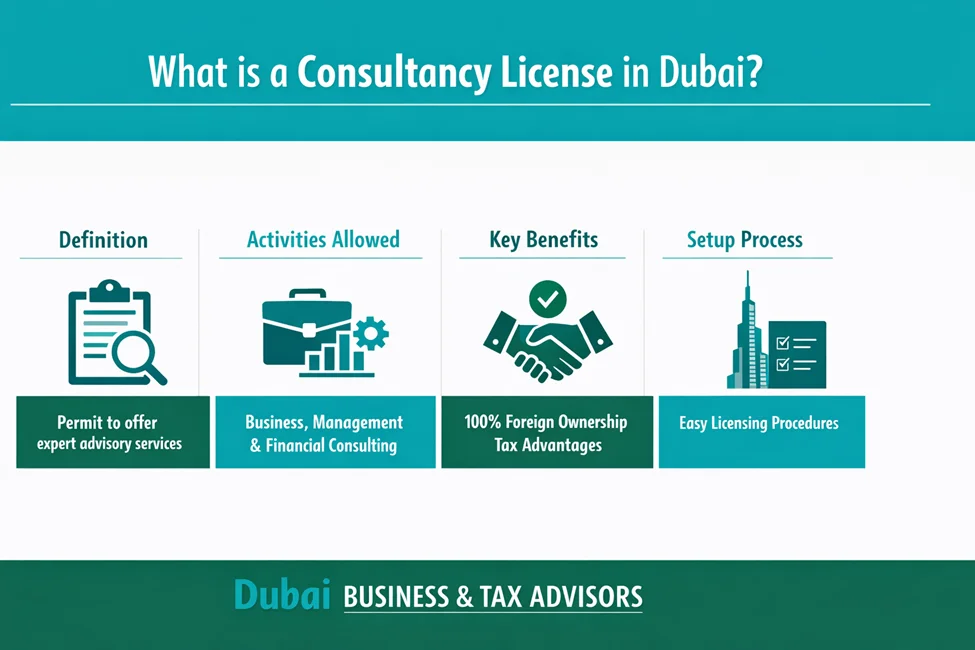
In the UAE, a consultancy license is a professional license. You need to understand this. A commercial license covers buying and selling goods. An industrial license covers making things. A consultancy license covers providing expert services. It recognizes your expertise. This expertise comes from education. It comes from certification. It comes from experience. The definition of consultancy expanded in 2026. It covers more than management advice now. It covers more than financial advice. It includes digital transformation. It includes cybersecurity. It includes niche areas like behavioral economics. When you hold a consultancy license, you can legally trade your knowledge. You trade it for a fee.
What Can You Do with a Consultancy License?
This license lets you operate as a recognized advisor. You can make formal contracts. These contracts can be with government entities. They can be with big companies. They can be with SMEs. In the UAE, you cannot legally invoice for “advisory services” without this permit. The license lets you open a corporate bank account. You can apply for residency visas. These visas can be for yourself. They can be for your staff. You can lease office space. Beyond these rights, it gives you credibility. You can bid for high-value tenders. Many Dubai organizations require consultants to have a valid license. The license must match the project. This applies to those in DIFC. It applies to those working on government projects. The license is your professional badge of honor.
Types of Consultancy Services in Dubai
The variety of consultancy activities can overwhelm you. The DET assigns a code to each activity. The DET is the Department of Economy and Tourism. Free Zone authorities also assign codes. Business consulting remains most popular. It covers strategy. It covers efficiency. HR consultancy is another high-growth area. It focuses on UAE labor laws. It focuses on talent acquisition. Specialized roles demand more. Legal consultancy requires local accreditation. IT consultancy has sub-sectors. These include blockchain. They include data privacy. Marketing consultancy focuses on regional digital trends. Understanding which category fits your services is crucial. It dictates your liability. It determines the regulatory bodies you will work with.
Types of Consultancy Licenses in Dubai
The UAE’s rules are precise. You cannot get a “general consultancy” license. You must specify your field. In 2026, authorities are more strict. They ensure the license matches your background. This maintains high professional standards.
Legal Consultancy License in Dubai
Getting a legal consultancy license in Dubai is rigorous. The license is not issued based on an application alone. It requires approval from the Dubai Legal Affairs Department. In 2026, the requirements remain firm. The lead consultant must hold a recognized law degree. They must show post-qualification experience.
HR Consultancy License in Dubai
The HR consultancy license in Dubai has seen massive demand growth. This stems from UAE population growth. It also stems from new labor regulations. This license permits you to offer executive search. You can offer talent management. You can offer organizational design. If your business moves beyond “advisory” into “manpower supply,” you need a separate license. That license is more complex.
Architectural Design Consultants License in Dubai
For those in the built environment, this license is the gold standard. It is the architectural design consultant’s license. Dubai Municipality heavily regulates this sector.
To secure this license, the firm must employ a “Technical Manager.” This can be a lead architect. They must be registered with the Municipality. They must hold a validated degree. The requirements ensure any architectural advice meets the UAE’s strict codes. These include safety codes. They include sustainability codes. This applies whether you are designing a skyscraper or a luxury villa. In 2026, there is emphasis on “Green Building” certifications. There is emphasis on AI design. Firms must prove they can meet these standards. They must do this before getting their license.
Other Consultancy Licenses
The list of “other” consultancy categories is vast. IT consultancy is perhaps the fastest-growing. It includes Fintech advisory. It includes Cloud migration strategy. Management consultancy remains a “catch-all.” It works for business strategists. Marketing consultancy focuses on Middle Eastern consumers.
Who Issues Consultancy Licenses in Dubai?
Deciding who issues your license is important. It is as important as the license itself. In Dubai, there are two main paths. One is the Mainland. This is on-shore. The other is Free Zones. This is offshore. Each has its own rules. Each has its own costs. Each has its own limits. In 2026, the boundaries blurred slightly. This is because of tax changes. But operational differences remain significant.
Mainland Licensing Authority
The licensing authority for Dubai consultancy on the mainland is the DET. The DET is the Dubai Department of Economy and Tourism. A mainland license is often called an “on-shore” license. This is the traditional way of doing business in Dubai. It is recommended for consultants. These consultants plan to work with government departments. They work with large local companies. The DET oversees the entire process. One advantage of a mainland license is that there is no geographic restriction. You can lease an office anywhere. You can provide services across the UAE.
Free Zone Licensing Authorities
Dubai has over 30 different Free Zones. Each acts as its own licensing authority. Each has its own rules. Popular choices for consultants include DMCC. DMCC is the Dubai Multi Commodities Centre. Dubai Knowledge Park is another choice. DIFC is another. DIFC is the Dubai International Financial Centre. Each Free Zone is tailored to a specific industry. Dubai Media City serves marketing consultants. Dubai Internet City serves IT advisors. Free Zone authorities offer a “one-stop-shop” experience. They handle the license. They handle the visas. They handle the office space.
Regulatory Approvals for Specialized Consultancy
For certain high-impact roles, the DET cannot act alone. Free Zone authorities cannot act alone either. They require “External Approvals.” These come from specialized bodies. For example, a healthcare consultant may need a blessing from the DHA. The DHA is the Dubai Health Authority. A legal firm needs the Legal Affairs Department. A financial advisor may need to satisfy the Central Bank. They may need to satisfy the SCA.
However, this is where most delays occur. Consultants must ensure their qualifications are beyond reproach. Their business plans must be beyond reproach. Professional due diligence services can help. These regulators act as gatekeepers. They maintain professional quality in the UAE.
Consultancy License in Dubai: Mainland vs Free Zone
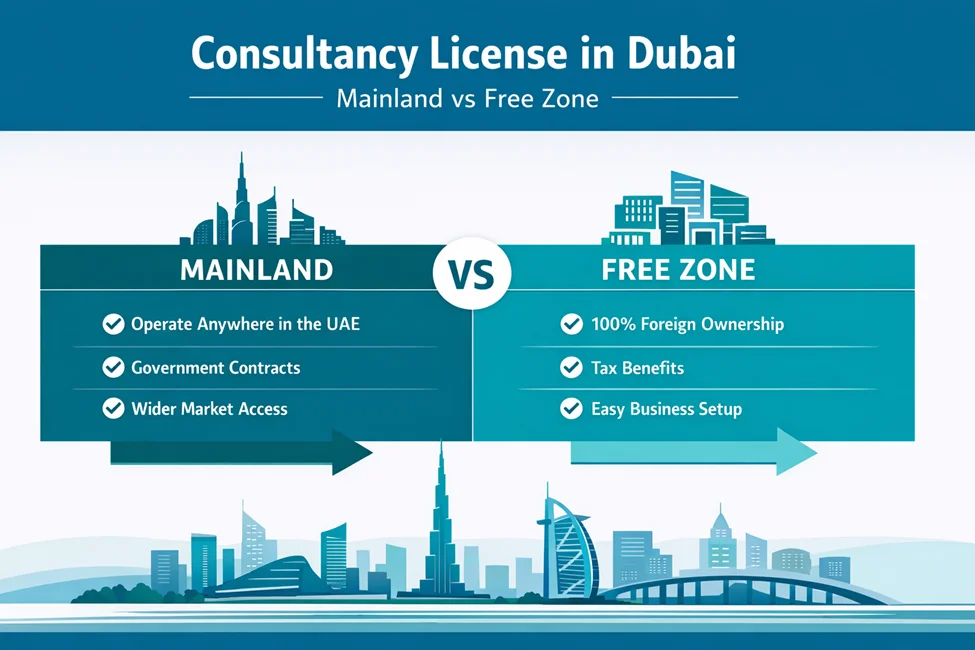
The “Mainland vs. Free Zone” debate is common. It is the most common question I get as an advisor. In the past, the decision was driven by ownership rules. Free Zones allowed 100% ownership. Mainland required a local partner. Things changed with the UAE Commercial Companies Law. Foreigners can now own 100% of most mainland consultancy firms. This shifted the focus. Now it is about market access. It is about operational costs.
Mainland Consultancy License
Choosing a mainland license shows intent. It shows you want to be fully integrated into the UAE economy. It provides the greatest flexibility for growth. You can bid for massive infrastructure projects. You can consult for Municipalities. You can work with thousands of businesses. These are in the on-shore market. A mainland consultancy license typically requires something. It requires a Local Service Agent. This is called an LSA. Unlike a “local partner” in a trading company, an LSA has no ownership stake. They have no management control. They are paid a fixed annual fee.
Free Zone Consultancy License
The Free Zone model remains attractive. It is attractive for solo consultants. It is attractive for startups. This stems from its lower barrier to entry. If your clients are primarily international, this is often the most logical choice. If they are in the same Free Zone, this works well. Free Zones offer “Flexi-desk” packages. You do not need a dedicated office. This significantly reduces the cost.
Free Zones often provide a sense of community. If you are an HR consultant in Dubai Knowledge Park, you are surrounded by potential partners. You are surrounded by clients in the same sector.
Comparison Table
| Feature | Mainland | Free Zone |
|---|---|---|
| Ownership | 100% Foreign | 100% Foreign |
| Market Access | Full UAE-wide | Zone and International |
| Local Service Agent | Required | Not Required |
| Office Requirement | Physical office | Flexi-desk allowed |
| Visa Quota | Higher | Limited |
| Cost | Higher initial | Lower entry |
How to Get a Consultancy License in Dubai (Step-by-Step)
Setting up a business in Dubai follows a sequence. You cannot skip steps. In 2026, the process is highly digitized. But requirements for physical documents remain. Following this guide will help you. It will help you avoid pitfalls. For more details on Dubai company formation and registration, consult with experts.
Step 1: Choose Your Consultancy Business Activity
Everything starts with the activity. You must look at the official list. This list comes from the DET. It comes from your Free Zone. Select the activity that describes your work. Be warned. “General Consultancy” is not a standard activity. You must be specific. If you provide “IT Advisory” and “Marketing Advice,” you may need two activities. This might cost more. The authorities are strict about “activity creep.” This means doing work you are not licensed for.
Step 2: Choose Your Business Jurisdiction
You must decide based on our comparison. Choose between the Mainland and a Free Zone. Consider your target audience. Are they local government entities? Go Mainland. Are they international tech firms? A Free Zone like DMCC might be better. DTEC is another option. This decision is hard to reverse. It is hard once the license is issued. Take time to analyze your plan. Analyze your long-term business plan before committing.
Step 3: Select Your Legal Structure
For a professional consultancy, there are common structures. One is a Sole Establishment. This is owned by one person. Another is a Civil Company. This is a partnership. Another is an LLC. LLC is a Limited Liability Company.
Step 4: Reserve Your Trade Name
Your trade name must follow strict guidelines. These are UAE guidelines. It cannot be blasphemous. It cannot be politically sensitive. It cannot infringe on trademarks. If you use your own name, it must be your full name. Like “John Smith Consultancy.” You will submit three name options. You submit these to the licensing authority. Once approved, the name is reserved. It is reserved for a set period. This is usually 6 months. Professional company formation services can expedite this process.
Step 5: Apply for Initial Approval
Initial Approval is the government’s way of saying something. They are saying they have “no objection.” No objection to you starting a business. It does not allow you to trade yet. But it does allow you to proceed to the next steps. These include leasing an office. They include applying for external approvals. This applies if your activity is specialized.
Step 6: Submit Required Documents
This is the most labor-intensive step. You will need passport copies. You will need visas. Most importantly, you will need attested educational certificates. These must be verified. First, they are verified by the Ministry of Foreign Affairs. This is in your home country. Then they are verified by the UAE Ministry of Foreign Affairs. This is MOFA. Without these, a professional consultancy license will not be issued.
Step 7: Lease Office Space
For Mainland licenses, you must lease an office. Get the contract registered. Use the Ejari system. The office size determines your “visa quota.” This is how many employees you can hire.
In Free Zones, you might sign a lease. This is for a “Flexi-desk.” This provides a shared workspace. It provides a PO Box.
Step 8: Pay License Fees and Receive Your License
Once all approvals are in place, something happens. The authority issues a payment voucher. The office must be secured first. This voucher covers the license fee. It covers the trade name fee. It covers various levies.
Once paid, your digital license is issued. You are officially a licensed consultant in Dubai. You can then open your bank account. You can apply for residency visas.
What Documents Do You Need for a Consultancy License in Dubai?
The UAE’s system thrives on documentation. In 2026, many things will be uploaded digitally. But the “original” documents must often be presented. They must be verified. Having a complete document pack ready is the best way. It is the best way to speed up your setup.
Basic Documentation
Every application starts with the basics. You need clear copies of passports. These are for all shareholders. These are for all directors. The copies must be in color. If you are already in the UAE, you need more. You need a copy of your residency visa. You might need a copy of your tourist visa. You need your Emirates ID if applicable. You will need a few passport-sized photographs. These must be against a white background. They are for visa processing.
Professional Documentation
This is where consultancy licenses differ. They differ from trading ones. You must prove your expertise. This typically means providing your university degree. It could be a professional diploma. As mentioned, this must be fully attested.
Business Documents
These are documents generated during the setup. During the setup process. They include the Trade Name Reservation Certificate. They include the Initial Approval Certificate. For companies with multiple partners, an MOA is required. This outlines the ownership split. It outlines management powers.
How Much Does a Consultancy License Cost in Dubai? (2026)
Budgeting for a consultancy license requires something. It requires looking beyond the license fee. There are several layers of costs. These vary based on your jurisdiction. They vary based on the number of visas you require.
Consultancy License Cost in Mainland Dubai
For a mainland setup in 2026, government fees typically range. They range between AED 18,000 and AED 25,000. This is for the license. However, you must also account for the LSA fee. The LSA is the Local Service Agent. This can range from AED 5,000 to AED 15,000 per year. Additionally, Dubai Municipality charges a “Market Fee.” This is 5% of your annual office rent. When you add the cost of a physical office, the total changes. A small office averages AED 30,000 or more. The total initial investment is usually around AED 60,000 to AED 80,000.
Free Zone Consultancy License Cost
Free Zones are generally more budget friendly. Learn more about low-cost business setup options in Dubai. They are friendly to solo entrepreneurs. Many zones offer “Startup Packages.” These include the license. They include one visa. This is for a flat fee.
Cost Breakdown for Consultancy Setup in Dubai
Here is a typical cost breakdown. This is for setting up a standard management consultancy. In Dubai:
- Trade Name Reservation: AED 600 to AED 1,000
- Initial Approval: AED 120 to AED 500
- License Fee: AED 10,000 to AED 15,000
- Administrative & Knowledge Fees: AED 2,000
- Office Rent (Mainland): AED 30,000 or more
- Flexi-desk in Free Zone: AED 5,000 to AED 10,000
- LSA Fee (Mainland Only): AED 10,000
- Visa Costs (Per person): AED 4,000 to AED 6,000
- Health Insurance (Mandatory): AED 1,000 to AED 5,000
The insurance cost depends on coverage.
How Long Does It Take to Get a Consultancy License in Dubai?
Time is money. This is especially true for consultants. You might be waiting to sign your first contract. Dubai’s “Zero Bureaucracy” initiative cut wait times. Wait times are significantly lower. However, you must still account for something. The “human factor.” Document verification.
Average Timeline for License Approval
In a best-case scenario in 2026, your license can be in your hands quickly. This can happen within 5 to 10 working days.
Here is how the timeline typically breaks down:
- Trade Name & Initial Approval: 24 to 48 hours
- Preparation of MOA & LSA Agreement: 1 to 2 days
- Office Leasing & Ejari Registration: 2 to 3 days
- Final Document Submission & License Issuance: 24 to 48 hours after payment
The office leasing time depends on your property search. However, if your activity requires external approvals, you should add time. Add at least 15 to 20 working days. This applies to Legal. Architecture. Healthcare.
Visa processing follows license issuance. It typically takes another 7 to 14 days. This is to complete medical tests. It is to complete Emirates ID biometrics.
What Are the Office Requirements for a Consultancy License in Dubai?
The UAE government views a physical office as important. It is a sign of a “real” business. While the rules have relaxed for certain sectors, the office remains key. It is a key part of the framework.
Office Requirements for Mainland Companies
If you hold a Mainland license, you are generally required to have something. You need a physical office space. This must be at least 200 square feet.
The authorities may conduct inspections. They ensure the office is operational. They ensure it reflects the activity on your license. This office is also the basis for your visa quota. For every roughly 80 to 100 square feet, you are usually granted one visa quota.
Flexi Desk Options in Free Zones
Free Zones revolutionized the market. They introduced the “Flexi-desk.” This is a shared workstation. You can use it for a set number of hours. Hours per week. It is a legal address for your business. It is much cheaper than a private office. In 2026, most Free Zone consultancy licenses come with something. They come with a “Flexi-desk” option. They come up with a “Smart Office” option. This is part of the package. This makes it ideal for certain consultants. These are consultants who primarily work at client sites. They might work from home.
Virtual Office Options
Some jurisdictions now offer “Virtual Offices.” You only have a mailing address. You have a phone answering service. While this is the cheapest option, it often comes with restrictions. These restrictions are significant. For instance, you may not be able to apply for residency visas. Not under a virtual office setup. Some banks are hesitant. They are hesitant to open accounts. Accounts for companies without a physical presence. They want a flexi-desk presence at a minimum.
What Is a Local Service Agent and When Do You Need One?
As a UK advisor, I often clarify something. I clarify the role of the Local Service Agent. This is an LSA. This is a unique feature. A feature of the UAE mainland professional license. It often causes confusion. Confusion for Western entrepreneurs.
When a Local Service Agent Is Required
An LSA is mandatory for something specific. It is mandatory for any professional license. This is issued on the Mainland. This applies where the owner is a foreigner. If you are setting up a consultancy in a Free Zone, you do not need an LSA. On the Mainland, the LSA is the legal bridge. It is the bridge between your company and government departments.
What Does a Local Service Agent Do?
The role of a local service agent is purely administrative. They do not own 51% of your company. You own 100%. They have no right to your profits. They have no involvement in your business decisions. They have no liability for your business debts. Their job is to help with visa processing. They help with labor card renewals. They help with interactions with the DET. They are effectively your “PRO.” PRO means Public Relations Officer. They work at a high level.
How Much Does a Local Service Agent Cost?
The cost is an annual fee. This should be clearly outlined. It is outlined in a Local Service Agent Agreement. This is signed at the Notary Public. In 2026, the standard market rate is something specific. For an LSA. For a small consultancy. It is between AED 8,000 and AED 15,000. Be wary of agents who ask for a percentage of profits. This is not the standard practice. Not for a professional license.
What Do You Need to Open a Corporate Bank Account?
Opening a bank account in 2026 is challenging. It is often cited as the most challenging part. The most challenging part of setup. Banks in the UAE have strict protocols. These are extremely strict. They have Anti-Money Laundering protocols. These are AML protocols. They have “Know Your Customer” protocols. These are KYC protocols.
Documents Required for a Business Bank Account
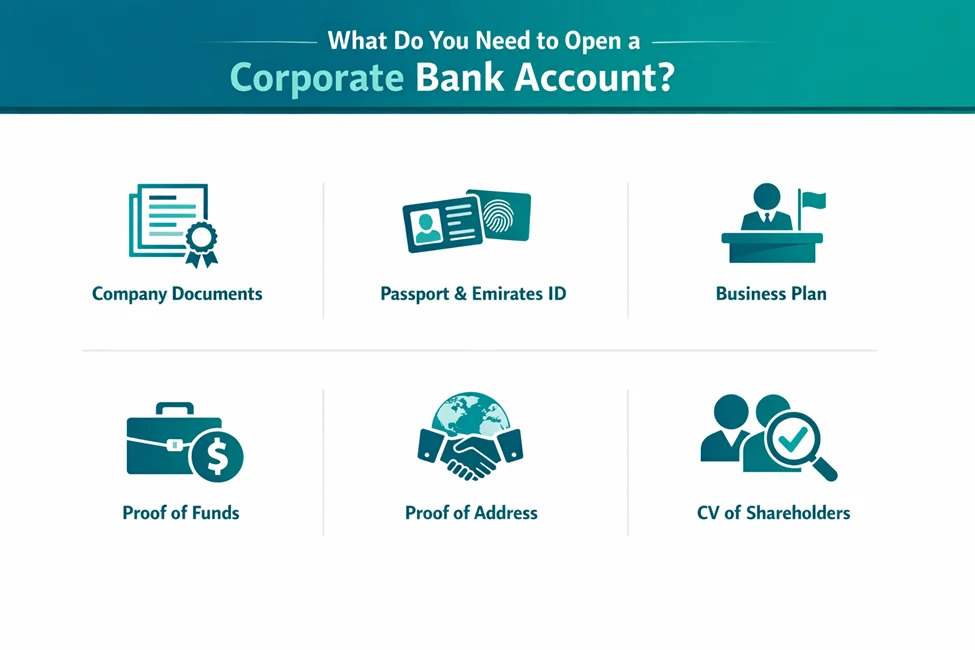
To even begin the application, you will need certain things. You will need your fresh Trade License. You will need your MOA. You will need your Certificate of Incorporation. You will also need the passports of all shareholders. You will need their visa. You will need their Emirates ID. But the “deal-breaker” is often something else. It is the proof of address. This is your Ejari. This is your Flexi-desk contract. You need a comprehensive business plan.
Compliance Requirements
The bank will conduct a background check. This is on all shareholders. If you have a history of business in other countries, they may ask for something. They may ask for 6 months of bank statements. These are from those entities. For consultants, they will specifically look at something. They look at whether your education matches your business activity. They look at whether your experience matches. If you are a 22-year-old with no experience, you will face scrutiny. This applies if you are trying to open a “Financial Advisory” account. The scrutiny is significant.
What Are the Tax Obligations for a Consultancy License in the UAE?
The era of “zero tax” in the UAE has evolved. While it remains very tax-friendly, consultants must be aware. They must be aware of their compliance obligations. It is more tax-friendly compared to the UK. It is more tax-friendly compared to the US.
Corporate Tax for Consultancy Firms
As of June 2023, the UAE introduced something. It introduced a federal Corporate Tax. The rate is 9%. This applies to taxable profits. Profits exceeding AED 375,000. In 2026, all consultancy firms must register. They must register for Corporate Tax. This applies whether you are Mainland. Whether you are Free Zone. There are “Small Business Reliefs” available. These are for companies with revenue below a threshold. The current threshold is AED 3 million. These can exempt them from paying the tax. But the requirement to register remains. The requirement to file a return remains.
Accounting and Compliance Requirements
With Corporate Tax introduction, maintaining proper accounting books is not optional anymore. You must keep records. Keep them for at least 5 to 7 years. In 2026, the FTA is much more active. The FTA is the Federal Tax Authority. They are active in auditing small businesses. Ensuring your invoices are VAT-compliant is essential. Properly categorizing your expenses is essential. This helps you avoid heavy fines.
Do You Need to Pass an Exam to Get a Consultancy License in Dubai?
For most management consultants, there is no exam. For most marketing consultants, there is no exam. However, for “technical” professions, the UAE ensures something. They ensure practitioners are qualified. For “regulated” professions, they ensure practitioners are actually qualified.
Industries Requiring Certification
If you are applying for something specific, something is required. For an architectural design consultants license. The lead engineer must pass an exam. This is conducted by Dubai Municipality. Similarly, those in legal fields must often undergo something. They undergo an interview. They undergo a competency test. This is with their respective departments. Those in medical fields must do the same. Financial advisors may need to pass exams. These are set by the CISI. They might be set by other recognized bodies. This is as mandated by the SCA.
Case Study: A Lesson in Specialization
A boutique UK-based consultancy firm moved to Dubai. This was Stratford Partners. This happened in early 2026.
They initially applied for something. For a “General Management” license. But they were actually providing something else. “Legal Compliance Advice.” Their bank account application was flagged. It was flagged for “unlicensed activity.”
DBTA stepped in. We restructured their activity. We changed it to a legal consultancy license. A license in Dubai. We handled the external approvals. These were from the Legal Affairs Department.
“The nuance of Dubai’s licensing system was complex. Far more complex than we anticipated. DBTA did not just fix our license. They saved our reputation. Our reputation with the bank. They did this before we had even started.” This is from James H. He is the Managing Director.
How DBTA Can Help You Get a Consultancy License in Dubai
At DBTA, we provide something. A “concierge” experience. DBTA is Dubai Business & Tax Advisors. We provide this experience for professionals. We do not just fill out forms. We provide strategic insights. This insight is needed to thrive. To thrive in 2026.
Business Setup Consultation
We help you identify something. The precise consultancy license type. The type that fits your five-year plan.
Mainland and Free Zone Setup
We provide an unbiased comparison. This helps you choose jurisdiction. The jurisdiction that offers the best ROI.
Documentation Support
Our team handles heavy lifting. This includes degree of attestation. This includes government submissions.
Bank Account Assistance
We leverage our relationships. Our relationship with UAE banks. This ensures your corporate account is open. It is opened with minimal friction.
Tax & Compliance Advisory
We ensure that you are registered. Registered for Corporate Tax. Registered for VAT. We keep you on the right side. The right side of the FTA
Frequently Asked Questions (FAQs)
To get a consultancy license in 2026, first define your activity. Your specific consulting activity. Like HR. Like IT. Like Management. Next, choose between Mainland or Free Zone. Mainland is governed by the DET. The DET is the Department of Economy and Tourism.
The documentation process is rigorous. You must provide clear passport copies. These are all shareholders. Include current UAE visas if applicable. Include Emirates ID.
The primary difference lies in something. In geographic reach. In office requirements. A Mainland license allows you to consult any client. Any clients across the UAE? This includes government contracts. These are lucrative.
In 2026, costs vary. They vary based on jurisdiction. A Mainland consultancy license generally ranges from AED 18,000 to AED 25,000. This is for the license alone.
Dubai’s digital transformation made the process more efficient. Remarkably efficient. If your documents are ready, a license can be issued quickly. A standard management consultancy license. This can happen within 5 to 10 working days. Your attested degrees must be ready. Particularly your attested degrees.
For consultancy licenses, the “51% local partner” rule does not apply. Consultancy licenses fall under professional licenses. You can maintain 100% foreign ownership. 100% foreign ownership of your business.
The office requirement depends entirely on something. On your jurisdiction. On your visa needs. For a Mainland license, the DET generally requires something. The DET is the Department of Economy and Tourism. They require a physical office. This office must have a valid Ejari. An Ejari is a tenancy contract.
Yes. Because a consultancy license is something, authorities must verify something. It is a “professional” category. They must verify your expertise. This usually involves presenting a degree. A degree that directly relates to your activity. Your chosen activity.
absolutely. One of Dubai’s most attractive features is this. Professional consultancy firms can be 100% owned. Owned by foreign nationals. This applies whether they are in a Free Zone. This applies whether they are on the
Banks conduct deep checks. “Know Your Customer” checks. These are KYC checks. You will need your company’s trade license. You will need your MOA. The MOA is the Memorandum of Association. You will need proof. Proof of a physical office. Proof of a flexi-office. Banks also demand something. A comprehensive business plan. Include six months of personal bank statements. These are from the shareholders. Add proof of address.
Conclusion
The journey to getting a consultancy license is rewarding. A consultancy license in Dubai. It is one of the most rewarding investments. A professional can make this investment. This is true in 2026. While the bureaucratic landscape is designed for efficiency, requirements need careful thought. The underlying requirements. This includes professional qualifications. This includes tax registration. This includes jurisdictional choices. By aligning your intellectual capital with the right structure, you position yourself well. The right legal structure. You position yourself at the center. The center of the world’s most vibrant market. Most vibrant professional services market.
Latest news & articles
About the Author:
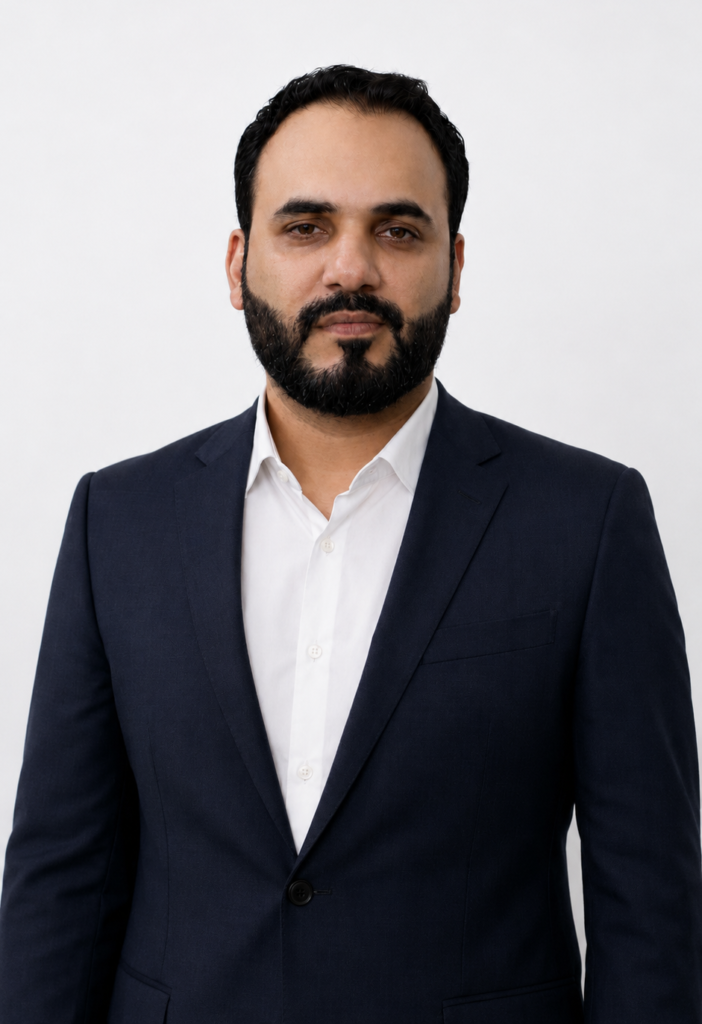
AURANGZAIB CHAWLA
As CEO of DBTA, Aurangzaib Chawla advises globally mobile businesses and individuals on cross-border tax planning and structuring. With expertise spanning the UK, UAE, and wider GCC, Zaib helps clients minimise double taxation, protect assets, and achieve long-term financial efficiency while staying fully compliant.
Planning to launch in Dubai or the UAE?
Let’s talk about how to structure your business for growth the smart, compliant, and tax-efficient way

About the Author:
AURANGZAIB CHAWLA
As CEO of DBTA, Aurangzaib Chawla advises globally mobile businesses and individuals on cross-border tax planning and structuring. With expertise spanning the UK, UAE, and wider GCC, Zaib helps clients minimise double taxation, protect assets, and achieve long-term financial efficiency while staying fully compliant.
Planning to launch in Dubai or the UAE?
Let’s talk about how to structure your business for growth the smart, compliant, and tax-efficient way
About the Author:
AURANGZAIB CHAWLA
As CEO of DBTA, Aurangzaib Chawla advises globally mobile businesses
and individuals on cross-border tax planning and structuring. With expertise spanning the UK, UAE, and wider GCC, Zaib helps clients minimise double taxation, protect assets, and achieve long-term financial efficiency while staying fully compliant.
Planning to launch in Dubai or the UAE?
Let’s talk about how to structure your business for growth the smart, compliant, and tax-efficient way.
Connect with Reliable Dubai Business Consultants
Get in Touch