
Moving Your International Business to Dubai: Tax, Residency & Structuring Guide

Recent Insights
Table of Contents
Concerned about triggering tax residency in your home country?
Download our FREE Guide: “Residency, Control & Tax Traps for International Directors

Introduction: Why Dubai is a Global Hotspot for Business Relocation
For many years now, Dubai has been on the radar of business leaders who are looking for a reliable base outside their home markets. What sets it apart is not just the skyline or lifestyle but the way the city has deliberately built itself into a global commercial hub. Entrepreneurs often point to its tax advantages, most notably the absence of personal income tax, but in reality, the attraction goes much deeper.
Relocating a business to Dubai is more than setting up an office in a new country. It involves navigating the fine print of tax residency rules, corporate structures, and international compliance obligations. Companies that approach it casually often run into unexpected hurdles, which is why planning and expert advice are essential. At the same time, the UAE has taken bold steps to strengthen its reputation in the global market. Reforms around financial transparency and governance have paid off, most clearly shown when the country was removed from the FATF “grey list.” That move has eased banking relationships for international firms and given Dubai added credibility as a safe, stable jurisdiction.
In the pages that follow, this guide breaks down the main factors behind Dubai’s appeal and offers a step-by-step approach to help businesses make the move with confidence.
Why Dubai Attracts Global Entrepreneurs
Dubai didn’t stumble into becoming a business hub, it earned it. Over the years the city has pushed hard to build an environment where entrepreneurs and global companies can actually thrive. The draw isn’t one single factor. It’s the mix: lighter taxes, easier rules, modern infrastructure, and the fact that the city has become a genuine meeting point between East and West.
Favorable Taxation and Regulatory Framework
One of the biggest talking points is the UAE’s approach to tax. There’s no personal income tax, no wealth tax, and no inheritance tax. For founders, that means more freedom to reinvest or simply enjoy the rewards of their work. For businesses, the corporate tax is simple profits, under AED 375,000 are untaxed, and anything above that pays just 9%. In practice, this keeps more money inside the company, fueling growth instead of draining into overhead. But taxes are only half the story. Until a few years ago, foreign investors had to partner with a local Emirati sponsor to operate on the mainland. That changed in 2021. Now, most businesses can be 100% foreign owned. For entrepreneurs, this was a game-changer suddenly, they could run operations with full legal and operational control. It removed one of the biggest barriers for global founders considering Dubai.
A Global Hub with World-Class Infrastructure
Geography also plays its part. Sitting right between Asia, Africa, and Europe, Dubai is naturally positioned as a trading powerhouse. But location alone wouldn’t mean much without the right infrastructure. Jebel Ali Port is one of the busiest shipping points in the world, and Al Maktoum International Airport connects companies to hundreds of destinations. That means faster delivery times, fewer bottlenecks, and reduced supply chain costs, things that directly hit the bottom line. Then there’s the digital side. High-speed internet, tech-driven utilities, and advanced e-services give companies from e-commerce brands to consulting firms the tools they need to operate smoothly. Put together, it’s not just about opening a company in Dubai. For many, it feels more like setting up a global launchpad.
Understanding Tax Residency Rules When Moving a Business to Dubai
For entrepreneurs shifting their base to Dubai, the real challenge isn’t just shipping laptops or setting up an office, it’s untangling tax residency. Moving across borders means more than a change of address; it means breaking fiscal ties with the home country. The complication? Many governments apply strict residency tests, and if you get them wrong, you could end up in the worst possible spot: considered a tax resident in two places at once. The result is double taxation, legal disputes, and penalties that can drain resources.
The UK Statutory Residence Test (SRT)
For British founders, the Statutory Residence Test (SRT) is the rulebook that matters most. It’s a detailed framework the UK uses to decide whether someone counts as a tax resident. The calculation isn’t just about counting days it also looks at personal and professional “ties” to the UK.
The SRT works in three layers:
- Automatic Overseas Tests. If you were a UK resident in the last three years and spend fewer than 16 days in the country, you’re automatically classed as non-resident. There’s also an exemption if you work full-time overseas and spend fewer than 91 days in the UK.
- Automatic UK Tests. On the other hand, spend 183 days or more in the UK and the decision is clear you’re a tax resident. The same applies if you maintain a home in the UK for at least 91 continuous days or work there full-time for a year.
- Sufficient Ties Test. This is the “grey zone.” If the first two don’t give a clear answer, HMRC looks at your ties: family still in the UK, a place to live, ongoing work, whether you’ve spent 90 days there recently, or if the UK is your main country of presence. Combine these ties with the number of days you’ve spent, and you can be pulled back into residency even with as little as 46 days in the country.
For founders, the takeaway is simple: tax residency isn’t just about time spent in Dubai, it’s about the connections you leave behind. Getting this wrong can undo the very benefits you moved for.
US Worldwide Taxation Rules
For American entrepreneurs, relocating to Dubai doesn’t wipe the slate clean with the IRS. The United States is one of the only countries in the world that taxes its citizens and Green Card holders on income earned anywhere, not just at home. To put it simply: even if you’re living full-time in Dubai, your global earnings are still under US tax law. That reality makes the Dubai business setup process far more complicated for US founders than for others. Washington has a series of anti-avoidance measures aimed at stopping profit shifting. Two of the biggest ones are the Controlled Foreign Corporation (CFC) rules and the Global Intangible Low-Taxed Income (GILTI) provisions. These laws mean that profits sitting inside your UAE company may still be taxed back in the US even if you never take the money out. And then there’s the paperwork. US persons are required to file additional forms, with Form 5471 being one of the most important. It’s essentially a detailed report on your foreign corporation ownership. Missing it isn’t a small slip, it can lead to hefty penalties that sometimes exceed the actual tax due. The key takeaway? For US founders, moving to Dubai doesn’t mean escaping Uncle Sam. Without careful planning, you risk being caught by both tax bills and fines. Professional advice isn’t optional here, it’s a necessity.

Global Standards: The Place of Effective Management Test
These days, tax residency isn’t just about where a company is registered on paper. Authorities look at where it’s actually run. This approach, known as the Place of Effective Management test, boils down to one question: where are the real decisions being made? Even if your business is incorporated in a Dubai Free Zone, if the board still meets back home or if strategy is set outside the UAE, other countries may claim the company as their tax resident. In other words, paperwork alone won’t protect you.
To avoid challenges, founders need to prove that Dubai is more than just a mailing address. That usually means:
- Holding board meetings in the UAE and keeping minutes.
- Making sure big strategic calls are documented in Dubai.
- Having a proper office with local directors and staff.
- Managing intellectual property and contracts directly from the UAE.
The UAE has also tightened its own rules through Economic Substance Regulations (ESR). These require certain businesses finance, shipping, distribution, and more to show a genuine presence in the country. Without that, the structure won’t hold up under scrutiny. The legal framework has also evolved. Before 100% foreign ownership was allowed, many investors worked through nominee shareholder setups. A recent Dubai court ruling gave clarity: older companies without local partners cannot simply be declared void, unless a final court judgment had already been made. For entrepreneurs, that decision removed a major risk and encouraged owners to update their setups under the new rules. Tax residency isn’t decided by what’s written on an incorporation document. It’s about where the company is truly directed, managed, and controlled day to day, not just on paper.
Business Structuring in Dubai: Choosing the Right Model
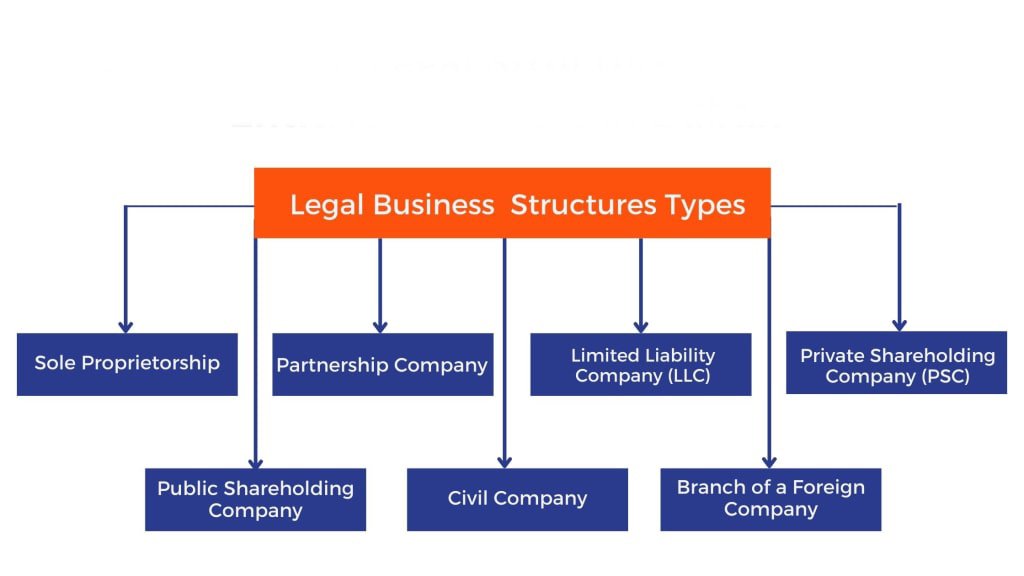
One of the earliest and most important decisions in the Dubai business setup process is picking the right legal structure. The choice isn’t just paperwork. It shapes how you trade, who you can sell to, and even how you plan for growth in the years ahead. Broadly, there are three models on the table: Free Zone, Mainland, and Offshore. Each has its own strengths, and each comes with trade-offs.
Free Zone Company Setup
Dubai’s free zones were created as special economic clusters to attract foreign investment in key industries. For years they’ve been the go-to choice for international founders because they allow 100% foreign ownership, profit repatriation, and tax perks. The appeal is clear: you don’t need a local sponsor, qualifying companies enjoy a 0% corporate tax on certain income, and many zones even build ecosystems for niche sectors like fintech, crypto, or AI. For a startup, being in a community of peers can be as valuable as the tax break. The trade-off? Free Zone companies generally cannot sell directly into the UAE’s mainland market. To do that, you need to work with a local agent or distributor, which adds cost and reduces independence.
Mainland Company Setup
A mainland company, licensed through Dubai’s Department of Economy and Tourism (DET), removes those restrictions. This structure gives you full access to the UAE market and even eligibility for government contracts. Since 2021, most sectors also allow 100% foreign ownership, a change that dramatically improved the appeal of the mainland option. The advantages are straightforward: you can open branches anywhere in the UAE, scale more flexibly, and operate with full legal control. But there’s a flip side too. A physical office is mandatory, and licensing costs plus office rent often push the budget higher compared to a Free Zone setup. The paperwork can also be more time-consuming.
Offshore & RAKICC Structures
Offshore companies, like those registered in the Ras Al Khaimah International Corporate Centre (RAKICC), serve a very different purpose. These entities aren’t designed to “do business” in Dubai in the traditional sense. Instead, they’re typically used for asset holding, wealth protection, or international transactions. The upsides are obvious: no UAE corporate tax, no income tax, and no VAT. They’re also useful for confidentiality, since ownership details are kept private. And because no office or local staff is required, they’re inexpensive to maintain. But here’s the limitation. Offshore firms cannot trade inside the UAE, and they don’t provide residency visas. So, while they make sense for asset protection or international structuring, they’re not suitable for founders who actually want to live and operate day-to-day in Dubai.
Comparison of Dubai Legal Structures
| Feature | Free Zone Company | Mainland Company | Offshore Company |
|---|---|---|---|
| Ownership | 100% Foreign Ownership |
100% Foreign Ownership (most sectors) |
100% Foreign Ownership |
| Market Access | Trade globally and within the free zone. Requires a distributor for mainland access. |
Unrestricted access to the entire UAE market. | Restricted from trading within the UAE. |
| Physical Presence | Flexi-desk, co-working space, or physical office required. |
Mandatory physical office space. | No physical office required. |
| Visa Eligibility | Can issue residency visas tied to office size. |
Can issue residency visas tied to office size. |
Cannot issue residency visas. |
| Primary Use Case | Services, consulting, IT, e-commerce, and global trade. |
Retail, hospitality, restaurants, local services, and government contracts. |
Holding companies, intellectual property (IP) holding, and asset protection. |
Considering a move to Dubai?
10 Steps to Set Up a Tax-Efficient UAE Holding Company” (Prominent download button – opens modal capture form

Legal Requirements for Moving a Business to Dubai
Setting up in Dubai isn’t just “pick a name and go.” There’s a legal process. Skip steps, and you’ll waste time fixing errors. The first big hurdle is Licensing. Every business needs one.
Types of licenses:
Commercial → for trading goods (import, export, wholesale).
Professional → for services (consultants, IT firms, educators).
Industrial → for manufacturing or production.
Reality check: many founders mess up here because they don’t clearly define their business activity at the start. That single mistake creates delays later.
The actual setup process (in practice):
- Decide what your activity is and whether you’ll be on the mainland, in a free zone, or offshore. This choice shapes everything.
- Reserve a trade name. Easy in theory, but Dubai is strict must be unique, no slang, no offensive terms. Many names get rejected.
- Apply for initial approval. Think of it as Dubai saying “okay, go ahead.” It’s not your license yet, just a green light.
- Draft a Memorandum of Association (MoA). This is the document that shows ownership and structure. Get it wrong, and approvals stall.
- Secure a physical office (mandatory for mainland, often required in free zones even a flexi-desk counts).
- Submit all docs + pay fees → then you finally get the license and can legally operate.
Where people get stuck:
- Trade name rejections.
- Errors in the MoA.
- Misunderstanding what “initial approval” allows.
Tip: Many founders use local advisors not because it’s impossible alone, but because it avoids small roadblocks that can add weeks to the timeline.
Trademark and Intellectual Property (IP) Registration
A lot of founders focus on licenses, offices, and bank accounts when moving a business to Dubai. But here’s something that often gets ignored, intellectual property. Your brand name, your logo, your designs: they don’t come with automatic protection just because you registered them back home. The UAE runs its own system, and if you don’t register locally, you could end up watching someone else copy your identity with little you can do about it.
How the registration process usually works:
- First, you run a trademark search with the Ministry of Economy. This is basically a sanity check to make sure your chosen name or logo isn’t already taken.
- Next, you file the application online. It sounds straightforward, but the details matter a missing document, or typo can push your application back weeks.
- If the Ministry is satisfied, your application moves to review and publication. At this stage, it goes into the official bulletin for 30 days, giving others a chance to object.
- Assuming no objections come through, you’ll receive a registration certificate. That gives you ten years of protection, with the option to renew.
Why it matters in real terms:
- Registering IP isn’t just a legal checkbox, it’s part of protecting the long-term value of your business. It ensures that the identity you build here actually belongs to you.
Dubai Tax Benefits for Businesses
Dubai isn’t the “no tax at all” destination it once was. But that doesn’t mean the benefits have disappeared. If anything, the rules are clearer now, and smart structuring can still give businesses a real edge. Everyone hears about the 9% corporate tax, yet the reality is more nuanced. For smaller companies, and for those that qualify under special regimes, the picture can look very different.
Corporate Tax and VAT
- Profits up to AED 375,000 are taxed at 0%, while anything above that is at 9%. So small and medium enterprises still get breathing space.
- Free zone firms can sometimes do even better. If they qualify as a “Qualifying Free Zone Person,” they may keep a 0% tax rate on eligible income. But they must meet economic substance rules—meaning they need real presence in the UAE, not just a paper company.
- On top of that comes VAT. It’s 5% across the board. Registration is mandatory once a company’s taxable supplies hit AED 375,000. Voluntary registration is possible from AED 187,500 upwards.
In practice, VAT is where many founders get caught off guard. They assume it won’t apply to them until suddenly it does.
Double Taxation Treaties
Where Dubai really stands out is with its international agreements. The UAE has signed more than 140 Double Taxation Avoidance Agreements (DTAAs). These treaties ensure the same income isn’t taxed twice, making cross-border work easier.
To use these treaties, companies need a Tax Residency Certificate (TRC) from the Federal Tax Authority.
The TRC typically requires:
- A valid UAE trade license.
- Audited financial statements.
- An office lease agreement.
- Six months of bank statements.
With a TRC in hand, businesses can access treaty perks like reduced withholding tax on dividends, royalties, and interest earned abroad.
Residency Options for Directors and Founders
Getting a visa is not an afterthought in Dubai. It’s part of the setup. Without it, you can’t live here legally, you can’t open a bank account, and many official processes simply stop. The government has introduced several visa categories over the years; each designed for a different type of entrepreneur or professional.
Golden Visa
- Long-term permit, either 5 years or 10 years.
- Built for investors, entrepreneurs, skilled professionals, and wealthy individuals.
- To qualify as an investor, you generally need to commit around AED 2 million in property or company capital.
- The real advantage? You don’t have to worry about leaving the UAE for more than six months. The visa still holds, which is ideal for founders who travel often.
Investor Visa
- Often called the partner visa.
- Valid for two years.
- Available for owners of businesses in both mainland and free zones.
- For many entrepreneurs, this is the first residency they secure because it’s faster and forms the basis for later tax residency planning.
Green Visa
- A newer option, rolled out in 2022.
- Valid for five years.
- Designed for freelancers, self-employed workers, and skilled professionals.
- Works well for consultants and tech founders who want flexibility and no Emirati sponsor requirements.
Implications for Global Tax Status
Obtaining a UAE residency visa is a foundational step in an international business relocation Dubai but is not a guarantee of breaking tax residency in a home country. Countries like the UK and US apply their own complex tests to determine tax status. A founder’s visa status must be complemented by genuine physical presence and a clear severance of ties in the home country to avoid dual taxation.
Residency Visa Quick Reference
| Visa Type | Duration | Eligibility Criteria | Key Benefits |
|---|---|---|---|
| Golden Visa | 5–10 years, renewable | Investment of AED 2M+ in real estate or business; or entrepreneur with project value of AED 500k+. | No sponsor required; can stay outside the UAE over 6 months without losing visa; can sponsor family members of any age. |
| Investor/Partner Visa | 2 years, renewable | Must own a UAE company trade license or invest in an existing company. | Pathway to Tax Residency Certificate (TRC); can sponsor family members. |
| Green Visa | 5 years, renewable | Self-employed with annual income of AED 360,000+; OR skilled professional earning AED 15,000+ per month. | No sponsor required; can sponsor family members. |
Dubai Company Setup Checklist
| Document/Action | Description |
|---|---|
| Passport Copies | Valid passport copies of all shareholders and directors. |
| UAE Visa/Entry Stamp | Copy of entry stamp or valid UAE visa. |
| Passport Photos | Recent passport-sized photos with a white background. |
| Proposed Trade Name(s) | A list of preferred company names. |
| Business Activity Description | A clear description of the intended business activities. |
| Memorandum of Association (MoA) | Required for many legal forms, detailing the company’s structure. |
| Office Lease Agreement/Ejari | Proof of physical address for the business. |
| No Objection Certificate (NOC) |
May be required if the founder is already a UAE resident with an existing employer. |
| Initial Approval Certificate |
The first green light from the licensing authority. |
| External Approvals | Additional approvals required for specific regulated industries. |
How DBTA Can Support Your Business Relocation to Dubai
Setting up a company in Dubai looks simple from the outside, but once you get into it, the details can trip you up. Choosing the right structure, handling tax residency, and staying compliant are areas where many founders make mistakes. This is exactly where Dubai Business and Tax Advisors come in. Instead of leaving you to figure it all out, DBTA walks through the process with your trade name approval, licensing, the Memorandum of Association, even office space requirements. They also cover the parts people often forget about: VAT registration, double taxation treaties, and proving economic substance DBTA doesn’t just process documents. They build a structure that lasts compliant, flexible, and ready to grow. That way, you stay focused on running the business, while the complicated side is handled properly.

Conclusion: Should You Move Your International Business to Dubai?
Dubai has become one of the strongest magnets for international businesses. The appeal is obvious: lighter taxes than most parts of the world, modern infrastructure, and a location that puts you right between East and West. For many companies, that combination is hard to ignore. In reality, without proper planning, the same rules that attract you can just as easily cause problems like double taxation or compliance penalties. The truth is that Dubai can be a powerful growth platform, but it only works if you treat the move as a strategic project. The headline tax number isn’t the whole story. The real advantage lies in structuring things correctly, maintaining substance, and leaning on professional advice. So, should you move? If global expansion is your goal and you’re prepared to set things up properly, then yes, Dubai is worth it. The city offers the tools and opportunities. The question is whether you’ll use them wisely.
FAQs:
Moving a business to Dubai isn’t just one form, it’s a series of steps. First, you decide whether to base yourself on the mainland, in a free zone, or offshore, because that choice controls what license you’ll need. Next comes the trade name reservation and initial approvals. After that, most companies prepare a Memorandum of Association and secure office space. Only then can finally documents and fees be submitted, leading to the trade license being granted.
To put it simply, Dubai’s tax system is lighter than most. Profits up to AED 375,000 are tax-free, and anything above that is taxed at nine percent. For many companies, that’s still far below what they would pay in Europe or North America. Some free zone businesses do even better, staying at zero percent if they meet certain conditions. And the city’s double taxation treaties, over 140 of them, make cross-border business easier by preventing the same income being taxed twice.
It really depends on your business. If you’re in shipping or trading, Jebel Ali usually makes sense because of its huge port and connections. Tech firms often choose Dubai Internet City or Silicon Oasis since those places are built around innovation. Finance groups look to DIFC because it’s designed for banking and investment. The real answer? Each zone has its own pros, costs, and rules you match to your business.
There’s no single answer. Some companies finish the process in just a few days, others take weeks. Free zone setups are usually faster if all the paperwork is ready, it can be done in under a week. Mainland companies often need more time because extra approvals and an office lease are involved. The real delays usually come from mistakes with documents or trade names. In general, if you’re organized, the move is quicker than people expect.
Ready to relocate or expand to Dubai?
We specialise in international structuring for UK, US, African, Indian, Chinese, and EU founders.

Latest news & articles

Visa-Free Countries for Emirates ID Holders (2026): Full List, Rules, and Travel Requirements
Read More »
About the Author:
AURANGZAIB CHAWLA
As CEO of DBTA, Aurangzaib Chawla advises globally mobile businesses and individuals on cross-border tax planning and structuring. With expertise spanning the UK, UAE, and wider GCC, Zaib helps clients minimise double taxation, protect assets, and achieve long-term financial efficiency while staying fully compliant.
Planning to launch in Dubai or the UAE?
Let’s talk about how to structure your business for growth the smart, compliant, and tax-efficient way
About the Author:
AURANGZAIB CHAWLA

As CEO of DBTA, Aurangzaib Chawla advises globally mobile businesses
and individuals on cross-border tax planning and structuring. With expertise spanning the UK, UAE, and wider GCC, Zaib helps clients minimise double taxation, protect assets, and achieve long-term financial efficiency while staying fully compliant.
Planning to launch in Dubai or the UAE?
Let’s talk about how to structure your business for growth the smart, compliant, and tax-efficient way.
