
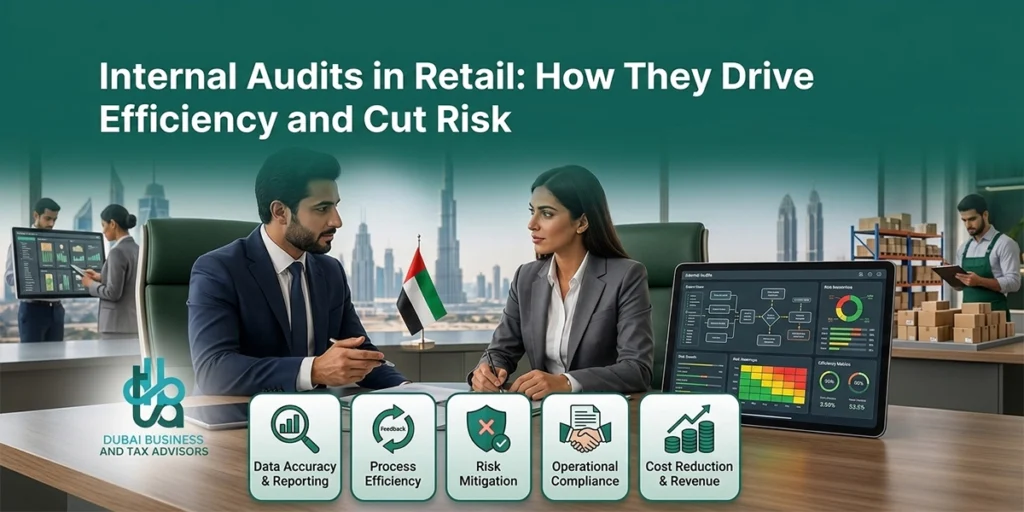
Running a retail store means juggling a lot at once. You’ve got stock to watch. Cash to track. Staff to manage. Rules to follow. All at the same time. It’s easy for small problems to slip through the cracks when there’s this much going on.
That’s where an internal audit comes in. It gives you a clear look at how your store is really doing. It shows you where money is leaking out. It shows you where risk is building up. And it shows you where your team could work smarter, not harder.
This guide covers what internal audits do for retail stores. We’ll look at why they matter, and how to get real value from one.
An internal audit is a close look at how your business runs day to day. It checks your controls, your rules, and your processes across every part of the store. That means everything. IT systems. Finances. Supply chains. Risk plans. The goal is simple. Find the gaps. Suggest better ways to work. Help the business run more smoothly. A good audit doesn’t stop at pointing out problems, though. It also gives you a clear path to fix them.
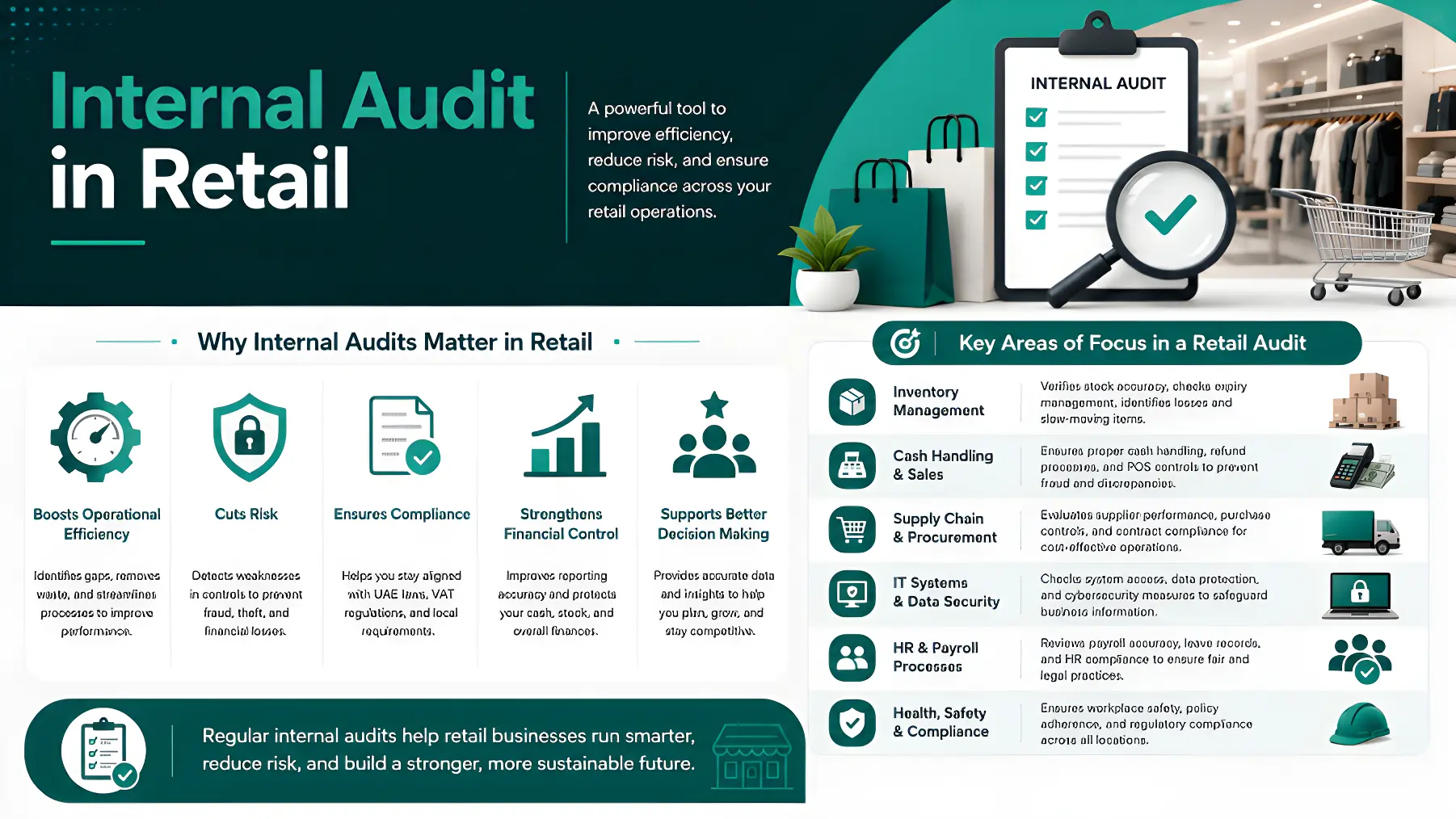
Retail moves fast, and risks change fast too. An internal audit gives you a regular check-up. That way, small issues don’t turn into big ones.
Here’s where it makes the biggest difference.
Audits are one of the best tools for spotting waste and slow work in a store. A trained eye often catches problems staff walk past every day without noticing.
Here’s how an audit helps with efficiency.
Every retail store carries some risk. Theft, fraud, weak spots in security systems. It’s part of the game.
Audits shine a light on these risks before they turn into real losses.
Theft is a growing worry across the whole industry. The National Retail Federation’s 2025 Impact of Retail Theft and Violence report found an 18 percent jump in average shoplifting cases in 2024, compared to the year before. A large share of stores also say fraud tied to organised theft groups is on the rise.
Here’s how an internal audit helps you stay ahead of that.
A retail compliance audit check that your business meets local laws. That means VAT rules, labour laws, and Dubai Economic Department guidelines.
On the financial side, a solid audit makes sure your statements match UAE corporate governance rules. This lowers your risk of costly mistakes or fines later.
Audits also check that you follow the UAE’s anti money laundering and counter terrorism financing rules. This means going through your transaction records. It also means checking how well you verify who your customers really are.
Regular audits build good money habits into your business. Over time, they help you make smarter calls and keep the company steady for the long run.
A few benefits stand out.
An internal audit does more than check your rules and controls. Auditors also study market trends and data. This helps them spot gaps, wasted spend, missed chances, and old processes.
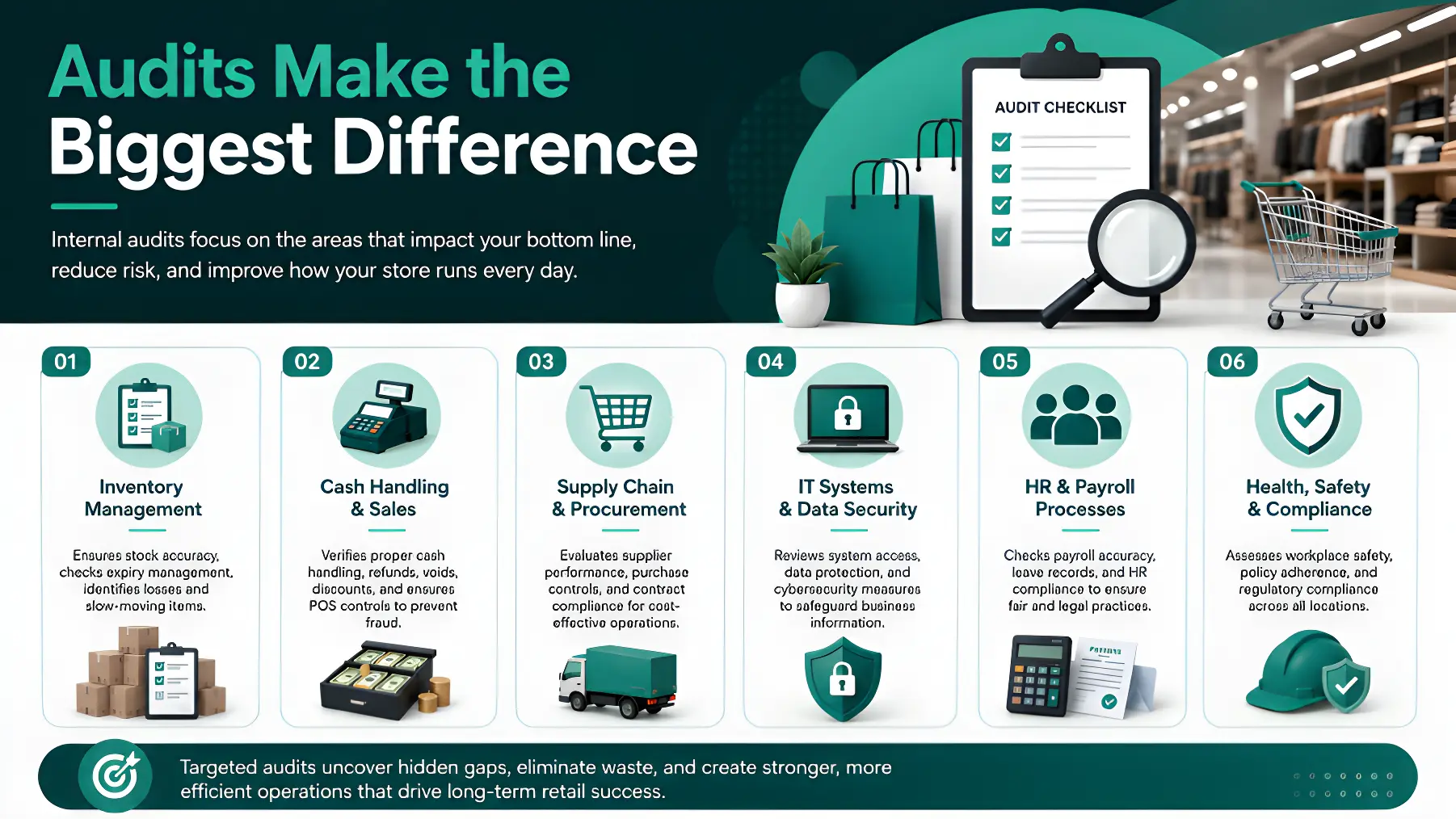
Here’s where that focus tends to pay off most.
Inventory management. Keeping stock records honest is one of the toughest jobs in retail. An inventory audit checks that what’s on your shelves matches what your system says. It also looks at stock rotation and expiry dates. This matters a lot for grocery and pharmacy stores. On top of that, auditors dig into losses from theft, damage, or items going missing. They also flag slow moving stock that ties up your cash.
Cash handling and sales. Cash is still a weak spot for many retail chains. Audits check how well your team balances the till. They also check whether staff handle refunds, voids, and discounts the right way to stop fraud. Beyond that, they confirm your deposits and petty cash line up. They also check that point of sale steps get followed as they should.
Supply chain and receiving. Auditors look closely at your supplier ties and delivery steps. They flag issues like late deliveries, stock that doesn’t match what was ordered, or suppliers not holding up their end of the deal. This keeps your supply chain steady and helps you dodge costly delays.
Financial controls. Good money habits are the backbone of any healthy retail store. Audits check your spending approvals. They confirm your accounts payable and receivable are correct. They also make sure your sales and costs get recorded right, so you always know where you stand.
Store security and loss prevention. Theft remains one of the costliest problems retailers face worldwide. Audits review your CCTV coverage, your alarm systems, and access controls around sensitive areas. They also check how well your shoplifting rules work. And they check whether your security staff are well trained.
Regulatory compliance. From fire safety to pricing and return rules, following the law is not optional. Audits confirm you meet UAE rules around anti money laundering, tax law, e-commerce, and consumer protection. This gives your team trust that the business runs the right way.
IT and POS systems. Auditors dig into how safe and stable your point-of-sale systems really are. They check if your software stays current, your data gets backed up, and your access controls are strong enough to stop fraud or a breach.
Employee practices. Your staff are one of your biggest assets. Sometimes, they’re also your biggest risk. Audits review training and workflow rules to make sure the right systems are in place. They also check performance tracking. They flag any signs that sales targets are being gamed unfairly.
Internal audits can truly reshape a business for the better. But for larger stores, they can take real time and real effort.
These steps help keep the process smooth and useful.
Plan around risk. Focus on the area’s most likely to cause trouble. Think stock loss, vendor payments, and point of sale systems. This way, your team spends its energy where it counts most.
Use your data. Modern data tools make it far easier to catch errors, spot fraud, and back up your findings with solid proof.
Keep things consistent. Build standard checklists, templates, and report formats. This makes sure every audit covers the full picture, not just the easy parts.
Bring in different teams. Involve finance, IT, HR, and other staff in the process. Their input helps you find the real root of a problem, not just the surface signs.
Keep learning. Retail changes fast, and so do the rules around it. Regular training keeps your audit team sharp. It also keeps them current with the latest tools, laws, and trends shaping the industry in 2026.
An internal audit helps you see the gaps and weak spots hiding in your business controls and daily work. It gives you the tools to run a tighter, sharper store.
Beyond that, it strengthens your risk plans, keeps you in line with UAE rules, and makes sure your financial processes hold up under scrutiny. Once you see what internal audit really does for a retail store, you can run your business with more confidence and fewer surprises.
Need a thorough, reliable internal audit for your UAE retail business? Dubai Business and Tax Advisors can help you review and strengthen your internal processes without the hassle. Contact DBTA today for a consultation to get started.
Internal audits lift efficiency, keep you compliant, and manage risk. They help catch fraud, streamline work, strengthen financial control, and build trust with stakeholders by keeping your rules aligned with your goals.
The core pieces are reviewing risk plans, testing controls, checking compliance, spotting gaps in daily work, and reviewing financial processes to keep the business running smoothly.
They improve stock accuracy, catch mismatches early, cut losses, and support better demand planning. This means fewer stockouts, less overstocking, and healthier turnover.
Without regular audits, a store has no real way to know if its controls work. This leaves it more open to fraud, financial loss, and fines for non-compliance.
They build strong controls, run regular checks, and hold teams accountable. This helps catch fraud early and reinforces honest work across the business.

As CEO of DBTA, Aurangzaib Chawla advises globally mobile businesses and individuals on cross-border tax planning and structuring. With expertise spanning the UK, UAE, and wider GCC, Zaib helps clients minimise double taxation, protect assets, and achieve long-term financial efficiency while staying fully compliant.
Let’s talk about how to structure your business for growth the smart, compliant, and tax-efficient way
As CEO of DBTA, Aurangzaib Chawla advises globally mobile businesses and individuals on cross-border tax planning and structuring. With expertise spanning the UK, UAE, and wider GCC, Zaib helps clients minimise double taxation, protect assets, and achieve long-term financial efficiency while staying fully compliant.
Let’s talk about how to structure your business for growth the smart, compliant, and tax-efficient way

As CEO of DBTA, Aurangzaib Chawla advises globally mobile businesses
and individuals on cross-border tax planning and structuring. With expertise spanning the UK, UAE, and wider GCC, Zaib helps clients minimise double taxation, protect assets, and achieve long-term financial efficiency while staying fully compliant.
Let’s talk about how to structure your business for growth the smart, compliant, and tax-efficient way.
Get in Touch