
How to Start a Business in Dubai: A Simple Guide for 2026

Recent Insights
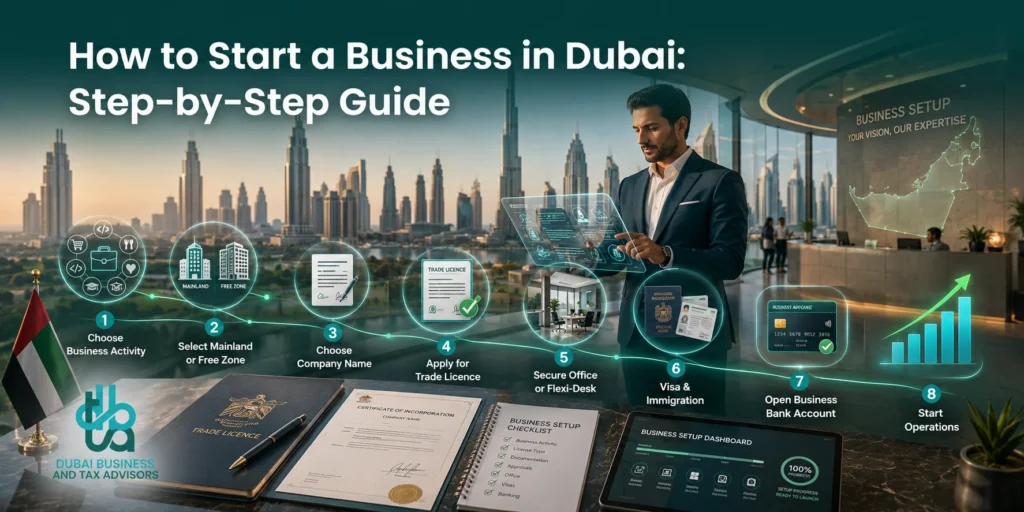
Table of Contents
Dubai is now one of the best places in the world to start a business. A strong economy helps. So do easy rules for setting up companies. A tax system that works in your favour helps too.
Foreigners can also own 100% of their business in most cases. This is a big draw for people moving here from abroad.
The city keeps pulling in international companies. Why? Its location, ports, airports, and digital services make it simple to trade with Europe, Asia, and Africa. You can run all of this from one base.
Still, setting up a company here has its own rules. It has its own steps too. This guide walks you through each one. You’ll learn how to pick an industry. You’ll learn how to get your license and visa sorted.

Why Start a Business in Dubai
A Gateway to Global Trade
Dubai sits on one of the world’s busiest trade routes. It connects Europe, the Middle East, Africa, and South Asia. Goods and services can move quickly between these regions.
The city also has strong digital infrastructure. It has a workforce made up of people from all over the world. That mix of skills and connections makes Dubai a natural launch pad.
Want to sell beyond the UAE? This is the place to start.
A Strong and Varied Economy
Dubai has worked hard to move away from relying on oil. Today, tourism drives growth. So do finance, technology, and healthcare.
This spread of industries means more openings for new businesses. It doesn’t matter what sector you’re in. There’s likely room for you.
High spending power among residents keeps demand steady. So does spending from visitors. The dirham is pegged to the US dollar. This helps reduce currency risk for anyone trading internationally.
Simple, Business-Friendly Rules
Setting up a company in Dubai is mostly done online. The process is fast too, compared to many other countries.
Free zones are built for specific industries. Think tech, media, or trade. These zones often offer full foreign ownership. They also offer exemption from import duties.
This makes the whole process smoother for new business owners. It doesn’t matter if you’re starting small. It doesn’t matter if you’re planning to scale quickly. Either way, the path stays simple.
Tax Rules That Work in Your Favor
The UAE introduced a federal corporate tax in 2023. Mainland businesses that earn more than AED 375,000 a year pay 9% on profits above that amount. Profits up to AED 375,000 are taxed at 0%.
Free zone companies can still get a 0% rate on certain income. But there are conditions. You need to meet rules set by the Ministry of Finance. You also need to keep that income separate from any mainland dealings. It’s worth checking your exact situation with a tax advisor. The rules depend on your business activity. They also depend on your structure. Compared with many other countries, this is still a low tax burden. It’s one of the main reasons entrepreneurs choose Dubai over other hubs.
Steps to Start a Business in Dubai
Here’s the process from start to finish.
Step 1: Choose Your Industry
Before anything else, do some homework. Find out what people in Dubai want and need. A few sectors stand out right now.
Tourism and hospitality. Travel and tourism make up a large share of Dubai’s economy. This share keeps growing each year.
Real estate and construction. Demand from overseas buyers stays strong. So does demand from developers. New projects launch regularly across the emirate.
Technology and e-commerce. Online shopping is growing fast. So are digital services. Government support for tech startups helps drive this growth.
Financial services. Dubai hosts thousands of finance firms. It keeps attracting international banks. It keeps attracting investment companies too.
Logistics and transport. Dubai has major ports. It sits on global shipping and flight routes. This sector keeps growing alongside trade volumes.
Healthcare and life sciences. The government keeps investing in medical tourism. It keeps investing in advanced care. This pushes the industry forward.
Step 2: Pick a Trade Name
Your business name needs to follow a few simple rules.
It can’t be offensive or rude. Skip country names. Skip political terms too. Leave out religious references. And include your legal structure where the rules require it. Think LLC, EST, or FZE.
Step 3: Gather Your Documents
Once you know your industry and name, pull your paperwork together. You’ll typically need these items.
- A completed business license application form
- Passport copies for all directors, shareholders, and managers
- A bank reference letter, or audited financial statements if you have a corporate shareholder
- A business plan covering your goals and activities
- Articles of incorporation, if they apply to your setup
- A No Objection Certificate from your UAE sponsor, for mainland businesses
- Your existing trade license, if you already run a business in the UAE
- Signed consent forms from all directors, shareholders, and managers
Step 4: Get Your Business License
Your license depends on what your business does. Here’s a quick breakdown.
- A trade license suits anyone buying and selling goods. This covers retail, wholesale, and import or export.
- An industrial license fits businesses that manufacture products. It also fits those that package goods or assemble items.
- A professional license works for consultants. It works for IT specialists, lawyers, engineers, photographers, and other service-based professionals.
- A tourism license covers travel agencies. It covers tour operators and event planners too.
- A freelance license is for solo professionals. Think creative, tech, education, or media fields. You can work without setting up a full company. You don’t need to rent office space either.
Step 5: Register With the Dubai Chamber of Commerce
Once your trade license is in hand, you can register with the Dubai Chamber of Commerce. First, visit their website. Then create an account and submit your documents.
After approval, pay the registration fee. You’ll then receive your membership certificate.
Step 6: Apply for a Business Visa
You’ll need a visa for yourself. You’ll need one for any staff you bring on too. This involves some paperwork. It also involves a medical check.
Your company acts as the sponsor. It handles the application on your behalf.
Setting Up Your Business Online
The UAE government lets you complete most of this process online. You do this through its Basher platform. That means you don’t have to visit a government office in person.
You log in and enter your business details. Then you upload your documents. Basher connects directly with the relevant licensing authorities.
Because of this, approvals often come through fast. So do your license and your registration. Sometimes it only takes minutes.
Choosing the Right Jurisdiction
Where you set up matters just as much as what you set up. Here are your three main options.
Mainland Dubai
A mainland company give you direct access to the local UAE market. You can bid for government contracts. You can also trade anywhere in the country without location limits.
Dubai Free Zones
Free zones let you keep 100% ownership of your company. You won’t pay personal or corporate tax on qualifying income. You can also send profits back to your home country freely.
Setup is usually straightforward. Each free zone tends to specialize in an industry, like tech, media, or trade.
This route suits businesses that want to operate globally. It works well if you don’t want to get tied down by local market rules.
Offshore Companies
Do your customers live mostly outside the UAE? Then an offshore setup might suit you better than a free zone or mainland company. It offers more privacy. It offers no tax on foreign income. It also offers lower running costs.
Offshore companies work well for holding assets. They work well for managing international transactions too. They suit businesses that don’t need a physical presence in Dubai.
You can set one up as a foreigner. You won’t need an office. You won’t need a visa either.
Do Your Market Research First
Before you commit to a jurisdiction or license, spend real time understanding your market. Look into local demand. Find out what your customers want. Learn how they spend their money.
Study your competitors too. What do they charge? Where are the gaps you could fill? Industry reports can help here. So can surveys and local consultants.
Understanding Dubai’s legal and cultural landscape will help too. It will help you shape your offering to fit the market. This beats trying to force a model that worked somewhere else.
Build Real Connections
Networking counts for a lot in Dubai. Industry events are good places to meet other business owners. So are trade shows and government-run workshops.
Joining a business council can open doors. So can a chamber of commerce or a co-working space.
Free zone authorities are often happy to make introductions. So are local consultants. LinkedIn remains a useful tool too, especially before you even land in the city.

Benefits of Starting a Business in Dubai
Setting up in Dubai comes with several practical advantages. This holds true whatever industry you’re in.
Global visibility. Dubai’s standing as a business hub gives your brand instant credibility. It also opens doors to international partners.
Access to a wealthy, diverse market. A high-income population lives here. Millions of visitors arrive each year too. Together, they give you a wide customer base with real spending power.
Easy import and export. World-class ports make international trade fast. They make it affordable too, thanks to strong logistics.
A strong tech ecosystem. Smart city projects support tech-driven businesses. So does solid digital infrastructure, at every stage of growth.
Full profit repatriation. You can send 100% of your earnings back to your home country. No restrictions apply.
Access to global talent. Hiring skilled people from around the world comes easy here. Far fewer restrictions apply than in many other countries.
A connected business community. Regular events keep the community active. So do expos. It’s easy to meet other founders and collaborators.
Frequently Asked Questions
A free zone suits full foreign ownership. It suits international trade and online businesses too. Mainland gives you direct access to the local UAE market. It also gives you access to government contracts. But it comes with more regulation. Pick mainland if you want to sell locally. Pick a free zone if your focus is global or remote.
First, pick your industry. Then choose a trade name. Gather your documents next. After that, get your license, register with the Chamber of Commerce, and apply for a business visa. Finally, complete your registration online.
Choose your consulting focus first. This could be IT, HR, or management. Next, decide between a free zone or mainland setup. Then apply for a professional license. Arrange office space, submit your documents, and get an investor visa if you need one. Most consulting setups finish within about ten working days.
For UAE nationals, expect a total between AED 19,033 and 41,033. For foreigners, it usually runs between AED 23,533 and 47,533. This includes visa, office, and license costs.
Yes, you can. Choose your business activity first. Then pick a free zone or mainland setup. You can submit your documents online without being in Dubai.
Once your license gets approved, you’ll need to travel to Dubai. This covers your visa, your Emirates ID, and opening a business bank account. A local consultant can help this go faster.
No, you can’t. Setting up always involves licensing costs. It involves office space and registration fees too.
No, you can’t. Setting up always involves licensing costs. It involves office space and registration fees too.
You can keep costs down, though. Choose a freelance license or a lower-cost free zone package. Use a virtual office instead of physical space. Or partner with an investor or a startup incubator that offers funding support.
Final Thoughts
Starting a business in Dubai isn’t complicated. Most people get fully set up within two to four weeks. Whether you choose mainland, a free zone, or an offshore structure, getting the registration, visa, and licensing steps right from the start will save you time. It will save you money too.
Dubai gives you access to customers from well over 150 nationalities. Strong digital infrastructure helps too. It helps even small startups scale quickly.
Costs stay reasonable as well. Just make sure you get the paperwork and compliance right at every stage.
Working with a local advisor can make the whole process smoother. This matters most if you’re setting up from overseas. It helps you avoid delays. It helps you avoid mistakes with your documentation too.
Ready to launch your business in Dubai? DBTA’s ACCA-qualified advisors handle jurisdiction selection, licensing, visas, and tax registration end to end, so your setup goes smoothly from day one. Contact DBTA today for a consultation, to get started.
Latest news & articles
About the Author:
AURANGZAIB CHAWLA
As CEO of DBTA, Aurangzaib Chawla advises globally mobile businesses and individuals on cross-border tax planning and structuring. With expertise spanning the UK, UAE, and wider GCC, Zaib helps clients minimise double taxation, protect assets, and achieve long-term financial efficiency while staying fully compliant.
Planning to launch in Dubai or the UAE?
Let’s talk about how to structure your business for growth the smart, compliant, and tax-efficient way

About the Author:
AURANGZAIB CHAWLA
As CEO of DBTA, Aurangzaib Chawla advises globally mobile businesses and individuals on cross-border tax planning and structuring. With expertise spanning the UK, UAE, and wider GCC, Zaib helps clients minimise double taxation, protect assets, and achieve long-term financial efficiency while staying fully compliant.
Planning to launch in Dubai or the UAE?
Let’s talk about how to structure your business for growth the smart, compliant, and tax-efficient way
About the Author:
AURANGZAIB CHAWLA
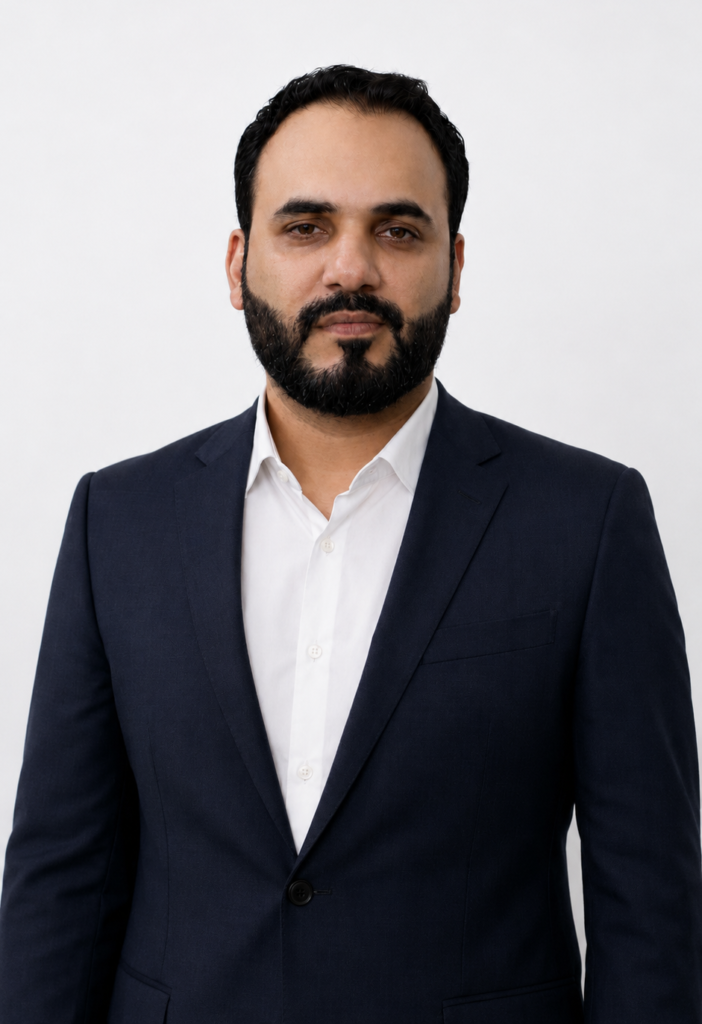
As CEO of DBTA, Aurangzaib Chawla advises globally mobile businesses
and individuals on cross-border tax planning and structuring. With expertise spanning the UK, UAE, and wider GCC, Zaib helps clients minimise double taxation, protect assets, and achieve long-term financial efficiency while staying fully compliant.
Planning to launch in Dubai or the UAE?
Let’s talk about how to structure your business for growth the smart, compliant, and tax-efficient way.
Connect with Reliable Dubai Business Consultants
Get in Touch