
Free Zone vs Mainland vs Offshore: Which UAE Entity Structure Is Right for You?

Recent Insights
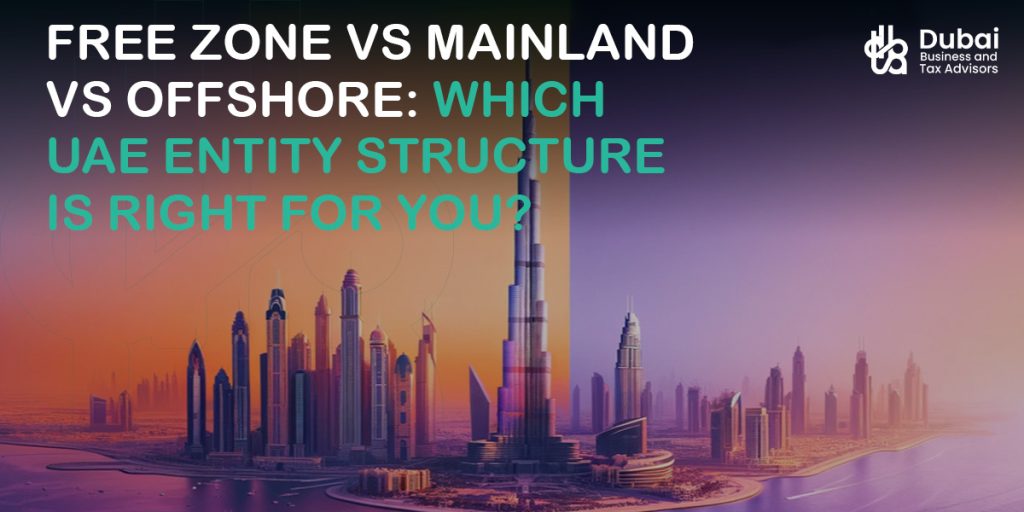
Table of Contents
10 Steps to Set Up Your UAE Business the Right Way
10 Steps to Set Up Your UAE Business the Right Way

Introduction:
The UAE is one of the world’s most attractive places to start a business, because of its strategic location, tax advantages, and modern infrastructure. But before you register anything, you need to answer one big question. Should your company be mainland, free zone, or offshore?
This choice shapes almost everything. It affects who can run the company. It affects where you can trade. It also affects how much tax you pay and how many visas you can sponsor.
Get it right and your business grows with ease. Get it wrong and you may end up paying to fix things later.
This guide walks through all three options in plain language. By the end, you should know which one fits your goals.
The Three Pillars of UAE Business Structures
The UAE business world runs on three main types of company. Each one was built for a different kind of business.
Mainland companies are registered with the Department of Economic Development, or DED, in whichever Emirate you pick. They can trade anywhere in the UAE and overseas. That makes them the top choice for businesses that want full access to the local market.
Free zone companies are set up inside one of the UAE’s many business zones. Each zone has its own rules. Most are built around one industry. Free zones tend to work best for businesses that trade with other countries.
Offshore companies exist mainly to hold assets and manage business abroad. They offer strong privacy and good asset protection. But they cannot trade inside the UAE itself.
Let’s look at each one in more detail.
Mainland Companies: Your Gateway to the Local Market
A UAE mainland company is a good fit if you want to sell directly to customers and businesses inside the country. Mainland companies get their license from the DED. They are the only structure allowed to trade freely across the whole UAE.
How Mainland Companies Are Regulated
Mainland companies fall under the DED of whichever Emirate they sit in. Recent updates to the UAE’s Commercial Companies Law made life much easier for foreign owners.
In the past, a UAE national had to hold 51% of the shares in most mainland firms. That has changed. Full foreign ownership is now allowed for most business activities. This means you can run your company without a local partner.
The Upside of Going Mainland
You get full market access. This is the biggest reason people choose mainland. You can sell to anyone in the UAE. You can work with government offices. You can trade with other mainland firms too, with no limits.
You get a lot of freedom in what you do. The DED offers licenses for thousands of business activities. These span trade, industry, and professional services. This gives you room to grow into new areas without switching your structure.
You can grow your footprint. A free zone company is often tied to one spot. A mainland company is not. You can open branches in different Emirates. You can also bid for government contracts.
Your visa quota grows with your office. The number of visas you can sponsor is based on office size, not a fixed cap. That means more room to hire as your team grows.
The Trade-Offs
Setting up and renewing a mainland company usually costs more than a free zone setup. Why? Mostly because of office space rules and government fees.
The approval process can also take longer. You may need sign-off from several government bodies, depending on what your business does.
On tax, mainland companies pay the UAE’s standard 9% corporate tax on profits above AED 375,000. Many free zone firms, on the other hand, can qualify for a 0% rate on certain income.
Free Zone Companies: A Hub for International Trade
Free zones have played a huge role in turning the UAE into a global trade and logistics hub. There are more than 40 free zones across the country. Each one is built around a different industry.
If your business is aimed at customers outside the UAE, a free zone company is often the simpler, cheaper way in.
How Free Zones Work
Each free zone is run by its own Free Zone Authority, or FZA. This body handles registration, visas, and the local rules. That gives free zones a lot of independence. It also tends to mean a faster, smoother setup.
Some well-known examples in Dubai include the Dubai International Financial Centre (DIFC) for finance, Jebel Ali Free Zone (JAFZA) for logistics, and Dubai Media City for media firms.
Why Businesses Choose Free Zones
Full foreign ownership as standard. Free zone companies have always allowed 100% foreign ownership. You keep full control of your business from day one.
You can move your money with ease. Free zone firms can send all profits and capital back home. There are no limits on this. That matters a lot if you run an international business.
Tax perks that add up. Many free zone firms qualify as a “Qualifying Free Zone Person.” This means they pay 0% corporate tax on qualifying income. Most zones also skip customs duty on goods moving in and out of the zone.
A quicker path to opening your doors. Free zone setup usually runs through one single window, managed by the FZA. That means less back and forth compared to a mainland application.
Ready-made industry networks. Many free zones focus on one sector. So, you end up surrounded by other firms doing similar work. This can mean shared tools, useful contacts, and an easier path to partners and suppliers.
What to Watch Out For
The biggest limit is trading with mainland companies. If a free zone firm wants to sell into the mainland market, it usually needs to open a mainland branch. Or it can work through a local distributor. Both options add cost and paperwork.
Visa numbers are also capped. This is usually based on your office package or business plan. That can slow down hiring as you grow.
If you do end up trading with the mainland, you must follow both free zone and mainland rules. This adds a layer of compliance work.
And free zone companies cannot bid for government contracts. That shuts out a chunk of possible business.
Offshore Companies: Asset Protection and Global Reach
An offshore company in the UAE suits investors whose business happens mostly outside the country. These firms cannot trade inside the UAE. But they are great for holding assets, running international operations, and protecting wealth.
How Offshore Companies Are Regulated
Offshore companies are set up through offshore bodies, such as the Ras Al Khaimah International Corporate Centre (RAK ICC) or the Jebel Ali Free Zone Authority (JAFZA). You will often see them called International Business Companies, or IBCs.
Why Investors Choose Offshore
Full ownership and free movement of funds. Just like free zone firms, offshore companies allow full foreign ownership. Profits can move back to your home country with no limits.
Strong privacy protection. Offshore setups keep details about the Ultimate Beneficial Owner, or UBO, private. This appeals to investors who value discretion.
Solid asset protection. Offshore structures are a popular way to shield investments, property, and intellectual property from risk.
Lower running costs. You don’t need office space or staff visas for an offshore firm. That keeps costs down. It’s usually the cheapest of the three options to run.
The Limits of Offshore
The obvious catch is that offshore companies cannot do business inside the UAE. That means no local office. No local hires. No trading with UAE customers.
Owning an offshore firm also does not get you a UAE residency visa. So, it is not a route to living in the country.
And because these firms have no physical base, some international banks find it harder to open accounts for them.

Not Sure Which UAE Entity Fits Your Business? Let Us Help.
Schedule a free 30-minute call with a senior international tax advisor at DBTA. We’ll walk you through the ideal structure for your business and timeline.

How to Choose the Right Structure
If you’re targeting local customers, think retail, construction, or professional services, a mainland company gives you the widest reach. Yes, it costs more to set up. But full access to the UAE market usually pays that back.
If your business runs on trade with other countries, a free zone company is often the smarter pick. You get full ownership, good tax treatment, and fewer rules to work through, especially in a zone built for your industry.
If you mainly need to hold assets or manage money across borders, an offshore company is often your leanest and most private option. It won’t let you trade in the UAE. But for its purpose, it’s hard to beat.
There’s no single right answer here. The best structure is the one that fits what you want to do. That might mean selling locally, trading with the world, or protecting your wealth.
Getting Help with the Process
Choosing and setting up the right structure takes a fair bit of paperwork. The rules can feel confusing if you’re new to the UAE system.
A good business setup advisor can walk you through your options. They can handle the filings, manage your visa and PRO needs, and stay on hand later for tax and compliance support as your business grows.
FAQs
Start by picking your business activity and structure, mainland, free zone, or offshore. Then choose a company name. Next, prepare your legal papers, such as a Memorandum of Association. Apply for early approval from the DED or the right Free Zone Authority. Once approved, submit your documents and get your license. A setup advisor can make this faster and less stressful.
Mainland companies can apply for licenses that cover thousands of business activities. This spans retail, real estate, manufacturing, and consulting. Free zones tend to focus on one sector each. Dubai Media City, for example, is built for media firms. JAFZA focuses on trade and logistics. Offshore companies cannot run any commercial activity inside the UAE. Their job is limited to holding assets and running operations abroad.
Offshore companies are usually the most affordable. They don’t need office space, staff, or visas. Free zone setups come next, especially with low-cost flexi-desk packages. Mainland companies tend to cost more, due to office space rules and government fees.
No. Offshore companies don’t hold an operating license for the UAE. They cannot sponsor visas for staff or owners. Their role is to hold assets and manage business abroad.
It comes down to your target market. Pick mainland if the UAE itself is your main market. Pick a free zone if you trade with other countries but still want a UAE base. Pick offshore if your goal is asset management or cross-border deals with strong privacy. Talk to a setup specialist. They can match your goals to the right structure with confidence.
Not sure which structure fits your business?
DBTA’s ACCA-qualified advisors will assess your market, ownership goals, and tax position, then handle the filings, licensing, and visa work for whichever structure fits. Contact DBTA today for a consultation to get started.
UAE Business Setup Playbook for Global Founders
We help international entrepreneurs avoid setup mistakes, optimise for tax, and open compliant banking lines.

Latest news & articles
About the Author:
AURANGZAIB CHAWLA
As CEO of DBTA, Aurangzaib Chawla advises globally mobile businesses and individuals on cross-border tax planning and structuring. With expertise spanning the UK, UAE, and wider GCC, Zaib helps clients minimise double taxation, protect assets, and achieve long-term financial efficiency while staying fully compliant.
Planning to launch in Dubai or the UAE?
Let’s talk about how to structure your business for growth the smart, compliant, and tax-efficient way

About the Author:
AURANGZAIB CHAWLA
As CEO of DBTA, Aurangzaib Chawla advises globally mobile businesses and individuals on cross-border tax planning and structuring. With expertise spanning the UK, UAE, and wider GCC, Zaib helps clients minimise double taxation, protect assets, and achieve long-term financial efficiency while staying fully compliant.
Planning to launch in Dubai or the UAE?
Let’s talk about how to structure your business for growth the smart, compliant, and tax-efficient way
About the Author:
AURANGZAIB CHAWLA
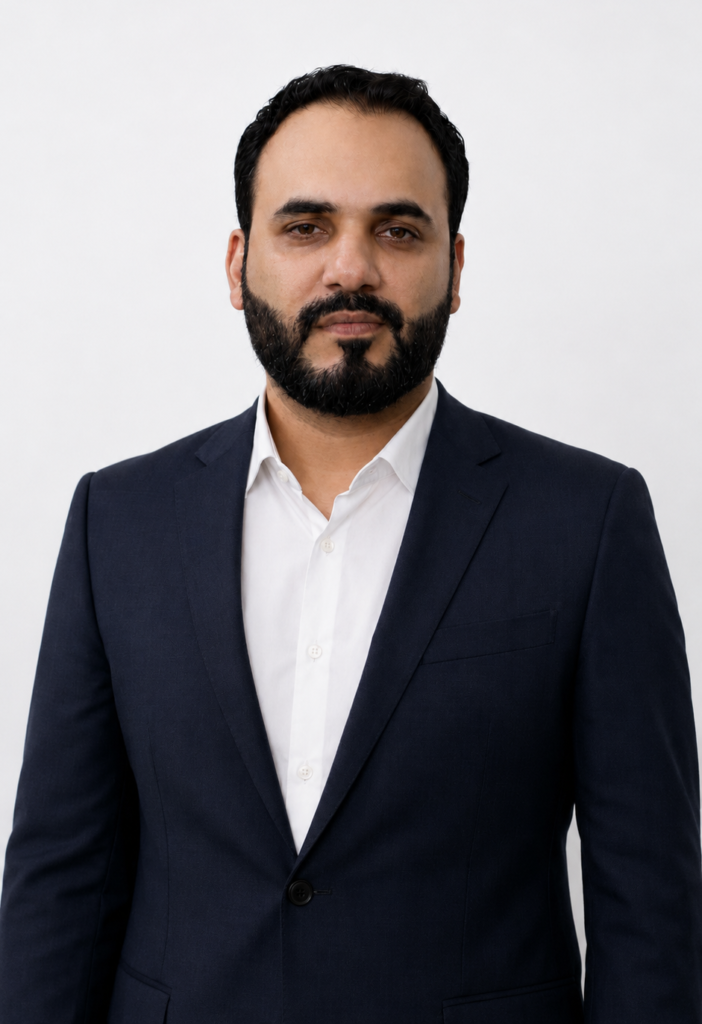
As CEO of DBTA, Aurangzaib Chawla advises globally mobile businesses
and individuals on cross-border tax planning and structuring. With expertise spanning the UK, UAE, and wider GCC, Zaib helps clients minimise double taxation, protect assets, and achieve long-term financial efficiency while staying fully compliant.
Planning to launch in Dubai or the UAE?
Let’s talk about how to structure your business for growth the smart, compliant, and tax-efficient way.
Connect with Reliable Dubai Business Consultants
Get in Touch