
Complete Guide to Offshore Company Setup in Dubai

Recent Insights
Table of Contents
Dubai is one of the best places to set up an offshore company. Its laws, tax rules, and global links make it a top choice for investors.
But what is an offshore company? It is a legal business set up in a UAE free zone. It can own assets and trade with the world. It cannot sell to people or firms inside the UAE. That is the one key rule.
In return for that rule, you get full foreign ownership. You get a fast setup. And you get far less red tape than a mainland or free zone company.
This guide covers all you need to know. Laws, tax, costs, setup steps, and what is new in 2026.
What Is an Offshore Company
An offshore company is set up in a UAE free zone. But it trades and holds assets outside the UAE. It is fully legal. A free zone body runs and checks it.
These firms are used for global trade, holding assets, managing funds, and owning rights like brands or patents. The law gives real privacy and strong asset cover.
There are three main offshore zones in the UAE. JAFZA in Dubai, RAK ICC in Ras Al Khaimah, and AFZA in Ajman. All three let you own 100% of your firm. All three offer a 0% tax rate to those who qualify.
Why Choose Dubai for Your Offshore Company
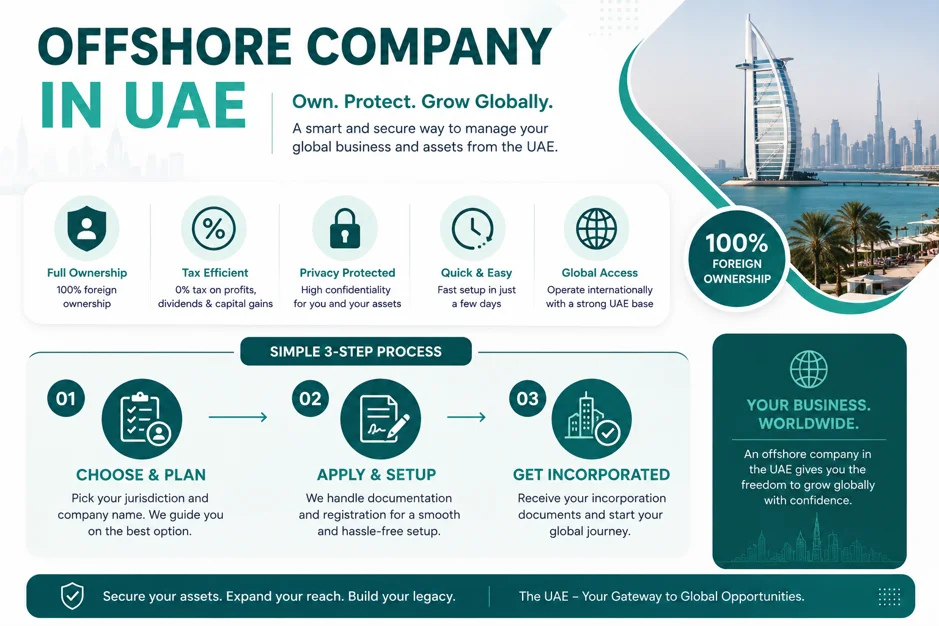
There are strong, clear reasons why Dubai stays at the top of the list in 2026.
Full Foreign Ownership
You own the firm 100%. No local sponsor. No silent partner. No need to share your stake with a UAE resident. This is built in from day one.
Strong Tax Savings
The UAE brought in a 9% Corporate Tax in June 2023. It hits profits above AED 375,000. But offshore firms that meet the Qualifying Free Zone Person (QFZP) rules can still pay 0% tax.
Dividends and capital gains are also tax free. That makes the UAE one of the best places to hold global assets.
Privacy and Asset Cover
UAE offshore laws keep your details private. Your name does not appear in any public list. That gives real cover from outside claims and legal risk.
Fast and Simple to Set Up
No minimum share capital. No office needed. No UAE visa needed. Most firms are up and running in five to ten working days.
The paperwork is short. Passport copies, a proof of address, and a bank reference letter. That is broadly all you need.
A True Global Base
Dubai sits between Europe, Asia, and Africa. That makes it a great spot for global trade and deals. A UAE company also adds real weight when you open a bank account or work with global partners.
Legal Rules and Recent Updates
Offshore firms in the UAE are set up under free zone laws. They also fall under some federal rules. Here is what you need to know right now.
The UAE Companies Law
Federal Decree-Law No. 32 of 2021 is the UAE’s main company law. It mostly covers mainland firms. But it sets the base rules for how all types of company are run, including offshore ones.
JAFZA Offshore Rules 2023
JAFZA updated its offshore rules in 2023. The changes were big. You now only need one director, not two. You can have different types of shares. And offshore firms can now hold a lease in approved UAE freehold zones.
Under the new rules, a JAFZA offshore firm can also own a stake in another UAE company. It can hold a local UAE bank account too. These changes make the JAFZA option much more flexible than before.
RAK ICC and the 2024 Decree
Ras Al Khaimah’s RAK ICC runs offshore firms in that emirate. In 2024, Emiri Decree No. 12 of 2024 gave RAK ICC the power to issue free zone trade licenses to offshore firms.
This is a big change. A RAK offshore firm with a RAKEZ Free Zone License can now trade inside that free zone. It can also qualify for the 0% tax rate under the QFZP rules. That opens up a whole new range of options.
Ajman AFZA Offshore Rules
Ajman Free Zone set up its offshore rules in 2014. Ajman offshore firms pay no UAE tax. They cannot trade inside the UAE. Each firm must appoint a local agent and at least one director. The director can be a person or a company.
Types of Offshore Companies in the UAE
The UAE has a few offshore options. Each one has its own rules and costs. Here is a clear look at what is on offer.
JAFZA Offshore in Dubai
Run by the Jebel Ali Free Zone. JAFZA offshore firms allow full foreign ownership. No minimum capital. No tax. You need at least one shareholder and one director. A locally licensed agent must handle your application.
RAK ICC Offshore in Ras Al Khaimah
RAK ICC licenses 100% foreign-owned firms. No minimum capital. No audit needed. Tax exempt when you qualify. The 2024 changes gave RAK firms more options than before, including free zone licenses and new tax breaks.
Ajman AFZA Offshore in Ajman
Ajman allows full foreign ownership. No local partner needed. No minimum capital. No currency limits. Like all UAE offshore firms, you cannot trade inside the UAE or sponsor visas.
DIFC and ADGM in Dubai and Abu Dhabi
These are not called offshore zones in the UAE. But DIFC in Dubai and ADGM in Abu Dhabi offer their own legal systems with full foreign ownership and strong rules. They suit financial firms and expert services that target global clients.
How to Set Up Your Offshore Company
Setting up an offshore firm in Dubai is simpler than most people think. There are no office checks. No long approval queues. The whole process is built to be fast.
Step 1: Pick Your Zone
Think about what you need. RAK ICC is great if you want the new license options from 2024. JAFZA has the longest track record. Ajman is the lowest cost entry point.
Step 2: Choose a Company Name
Pick a name that is unique. Follow the naming rules of your chosen zone. Avoid names that are rude, religious, or linked to politics. Make sure it does not clash with any existing brand.
Step 3: Hire a Registered Agent
Every UAE offshore firm must use a licensed agent. Your agent does all the paperwork. They file your application, keep your records, and deal with the zone authority on your behalf.
Step 4: Gather Your Documents
The list is short. You need passport copies for all owners and directors, proof of address, and a bank reference letter. No UAE visa is needed. Company owners must also provide company papers.
Step 5: Submit and Get Approved
Your agent files the application and pays the fees. Once it is approved, you get your company certificate and share papers. This takes five to ten working days on average.
Step 6: Sort Out the Post-Setup Steps
After setup, you may want to open a UAE bank account and keep your company records in order. Offshore firms do not usually need to file audited accounts.
But if your firm holds patents, runs financial services, or manages assets, the UAE’s Economic Substance rules apply. You will need to show real local activity. More on that below.
Documents You Will Need
The list is short. Here is what you will need to provide:
- A valid passport copy for each owner and director
- Proof of address, such as a recent utility bill or bank statement
- A bank or professional reference letter for each owner and director
- Passport-sized photos
- A filled application form and a memorandum of association, both prepared by your agent
No minimum capital is needed. Your costs cover the agent fee, the setup fee, and the annual license fee. These are much lower than a mainland or free zone setup because you have no office rent or visa costs.
Key Benefits for Foreign Investors
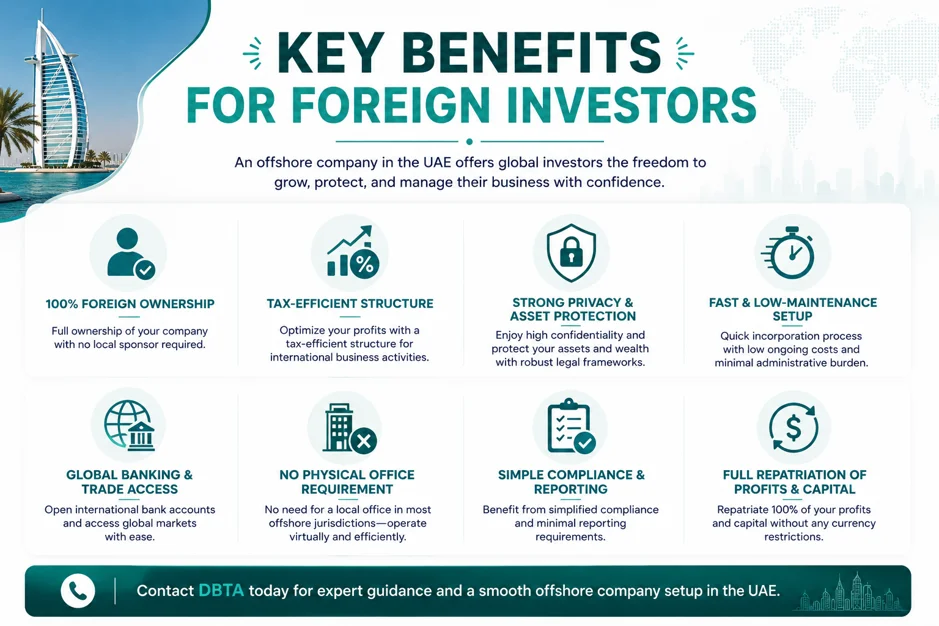
Any foreign person or company can own shares in a UAE offshore firm. No UAE visa needed. No local sponsor needed. These firms are made for people who want a Dubai base without living or working there.
No Tax
Offshore firms pay no UAE corporate tax, no income tax, and no capital gains tax. With the right setup through a qualifying free zone, you can still get the 0% rate under the current tax law.
Move Money Freely
You can send all your profits and funds back home with no limits. There are no currency controls. Your money moves where you need it to go.
Privacy and Asset Cover
Your name does not appear in any public list. Under Ajman law, for example, the owner and director registers are closed to outside parties. This built-in privacy helps protect your assets from claims.
Flexible Company Structure
JAFZA offshore firms can issue different types of shares. Your firm can also hold stakes in other UAE firms or real estate in approved freehold zones. That gives you real room to shape your investment structure.
No Staff Rules to Follow
You do not have to hire UAE staff. Offshore firms are not bound by UAE labour law. That keeps your day-to-day admin simple and low cost.
Mainland vs Free Zone vs Offshore: A Quick Look
Many investors mix up free zone and offshore companies. Here is a simple table to help you see the key differences.
| Feature | Mainland Company | Free Zone Company | Offshore Company |
|---|---|---|---|
| Ownership | Up to 100% foreign. Some sectors may need a UAE partner. | 100% foreign owned. | 100% foreign owned. |
| Who Can You Sell To | Anyone in the UAE and abroad. | Only within that free zone or abroad. No direct mainland sales without a local agent. | No sales inside the UAE. Global trade and asset holding only. |
| Physical Office | You must have one. Minimum size varies by emirate. | Yes, required. Options go from virtual to full office. | Not needed at all. |
| Visa Sponsorship | Can sponsor visas based on office size. | Can sponsor visas. Number depends on office space. | Cannot sponsor any UAE visas. |
| Corporate Tax (2026) | 9% on profits above AED 375,000. | 0% if the entity qualifies as a Free Zone Person. | 0% through a qualifying free zone license. |
| Setup Cost | High. Office, license, visas, and ongoing fees. | Medium. Varies by free zone. | Low. No office or visas needed. |
Tax and Compliance in 2026
The UAE’s tax rules have changed a lot since 2023. Here is a clear look at what applies to offshore firms right now.
The UAE Corporate Tax
The UAE started a 9% Corporate Tax in June 2023. It applies to profits above AED 375,000. But not all firms pay 9%. Offshore firms that qualify as a Free Zone Person can still pay 0% on their eligible income.
Qualifying Free Zone Person Status
A Qualifying Free Zone Person (QFZP) pays 0% tax on income that qualifies. That usually covers trades inside free zones and global sales. Income from UAE mainland deals may be taxed if it does not meet the rules.
The Federal Tax Authority gives detailed guidance on this. A RAK offshore firm with a RAKEZ Free Zone License, for example, can qualify as a QFZP and pay 0% on its eligible income.
Economic Substance Rules
Offshore firms still fall under UAE Economic Substance Regulations, called ESR. If your firm manages patents, holds assets, or runs financial services, you must show real local activity.
That could mean having UAE-based directors, a local bank account, or key choices being made in the country. Simple holding firms usually face lighter rules. But failing to comply can bring fines, so it is worth getting right from the start.
VAT
Offshore firms usually fall outside UAE VAT. They do not sell to UAE mainland clients. But if your firm later starts trading inside the UAE or dealing in local real estate, you must register for VAT and follow the rules.
Accounts and Record Keeping
You must keep proper financial records even if a full audit is not needed. Under Ajman rules, offshore firms must keep financial papers and records for at least ten years.
If your firm holds a free zone license, it must also meet annual renewal rules and any audit or admin duties set by the zone authority.
Is an Offshore Company Right for You
Offshore firms in Dubai give you a solid, well-run base for global trade, asset holding, and tax planning. Full foreign ownership, strong privacy, and low tax are hard to match.
The UAE’s rules have changed a lot since 2023. The new Corporate Tax, the 2024 RAK ICC changes, and the updated JAFZA rules add new things to think about. But they also open new doors. Getting your structure right from day one now matters more than ever.
This guide has covered the laws, the main offshore options, the setup steps, and the tax rules as they stand in 2026. If you are ready to move forward, a good tax and business advisor will help you pick the right zone, set up your firm correctly, and stay fully compliant as the rules keep changing.
Contact DBTA today for expert guidance and a smooth offshore company setup in the UAE.
FAQs
Pick a zone such as JAFZA, RAK ICC, or Ajman. Choose a name and hire a licensed agent. Your agent handles all the forms and files your application. Once approved, you get your company certificate. The whole process takes five to ten working days.
Expect to spend between AED 8,000 and AED 15,000. That depends on the zone and the services you pick. It covers setup fees, license fees, and agent fees. There is no office rent or visa cost, which keeps startup spend well below a mainland or free zone firm.
Some extras, like document checks, UAE bank account setup, or a nominee director, may cost more on top of the base fee.
Yes. Offshore firms in the UAE allow full foreign ownership. No UAE visa is needed. No local sponsor is needed. You can send your profits back home with no limits.
Offshore firms are mostly exempt from UAE corporate tax, income tax, and VAT, if they do not trade inside the UAE. With the right free zone setup, they can still get the 0% tax rate under the current law.
Most offshore firms are set up in three to seven working days. RAK ICC and Ajman are known for fast approvals. There is no office check to wait for, which speeds things up a lot compared to a mainland or free zone firm.
Latest news & articles

About the Author:
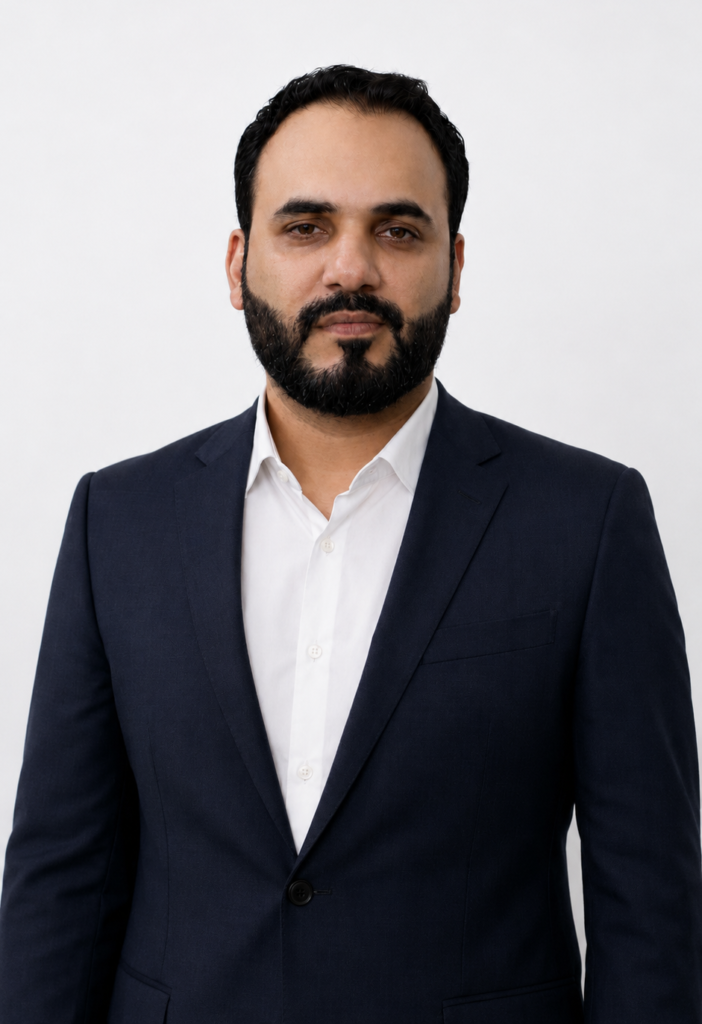
AURANGZAIB CHAWLA
As CEO of DBTA, Aurangzaib Chawla advises globally mobile businesses and individuals on cross-border tax planning and structuring. With expertise spanning the UK, UAE, and wider GCC, Zaib helps clients minimise double taxation, protect assets, and achieve long-term financial efficiency while staying fully compliant.
Planning to launch in Dubai or the UAE?
Let’s talk about how to structure your business for growth the smart, compliant, and tax-efficient way

About the Author:
AURANGZAIB CHAWLA
As CEO of DBTA, Aurangzaib Chawla advises globally mobile businesses and individuals on cross-border tax planning and structuring. With expertise spanning the UK, UAE, and wider GCC, Zaib helps clients minimise double taxation, protect assets, and achieve long-term financial efficiency while staying fully compliant.
Planning to launch in Dubai or the UAE?
Let’s talk about how to structure your business for growth the smart, compliant, and tax-efficient way
About the Author:
AURANGZAIB CHAWLA
As CEO of DBTA, Aurangzaib Chawla advises globally mobile businesses
and individuals on cross-border tax planning and structuring. With expertise spanning the UK, UAE, and wider GCC, Zaib helps clients minimise double taxation, protect assets, and achieve long-term financial efficiency while staying fully compliant.
Planning to launch in Dubai or the UAE?
Let’s talk about how to structure your business for growth the smart, compliant, and tax-efficient way.
Connect with Reliable Dubai Business Consultants
Get in Touch