
Low-Cost Business Setup in Dubai: A Practical 2026 Guide

Recent Insights
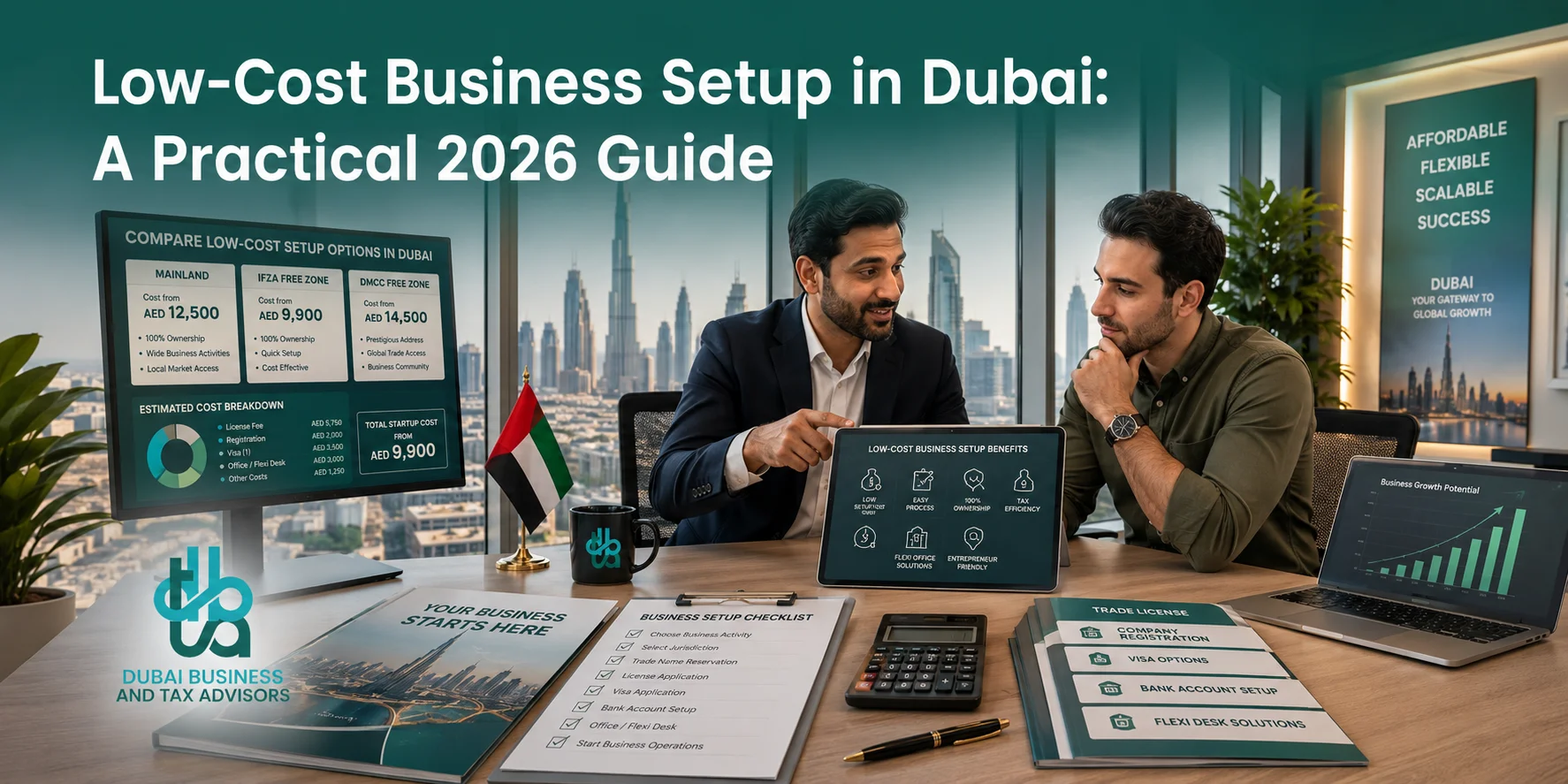
Table of Contents
Introduction
Dubai is one of the best places in the world to start a business. There’s no personal income tax. Setup can take as little as a week. And the costs, if you pick the right zone, are lower than most people expect.
But real affordability means more than finding the lowest price. You need to pick the right location, know what’s included, and understand the rules. Miss any of these, and those low upfront costs can grow fast.
This guide covers everything you need. We’ll look at Free Zones vs mainland, the cheapest zones in 2026, the hidden costs to watch for, how tax works, and how to get fully up and running.
Free Zone or Mainland, Which One Is Right for You
This is the first big choice. Your costs, your market reach, and your legal duties all depend on it.
Up until 2021, most foreign investors chose Free Zones for one reason. It was the only way to own 100% of your business. That changed. UAE law now allows full foreign ownership in most mainland sectors too. So today, the choice is really about cost and how you plan to work.
Going mainland means you can sell to anyone in the UAE. You can work with government clients and open offices anywhere in the country. The downside is cost. You’ll need a physical office with a signed tenancy contract (called an Ejari). The total setup bill usually runs between AED 25,000 and AED 40,000.
Going Free Zone suits you if your clients are overseas, or if you run a digital or service business. The big saving is on office space. Most Free Zones let you use a flexi-desk or virtual office as your legal address. That cuts one of the biggest upfront costs right away. Some professional services may still need a Local Service Agent on the mainland, so check your license type first.
Table 1: Free Zone vs Mainland Briefly
| Feature | Free Zone | Mainland |
|---|---|---|
| Foreign Ownership | 100% | 100% (most sectors) |
| Market Access | Mainly international. Mainland access via branch or permit. | Full UAE access, including government work. |
| Estimated Setup Cost | AED 5,500 to AED 15,000 (zero-visa packages) | AED 25,000 to AED 40,000+ |
| Office Requirement | Flexible (virtual or flexi-desk available) | Physical office (Ejari) usually required |
| Processing Time | 7 to 14 days for a license | 21 to 28 days for a license |
The Cheapest Free Zones in 2026
Not all Free Zones cost the same. Big-name zones like DMCC and DIFC are more expensive. Their location and prestige push the price up. If you want to keep costs low, several zones give you just as much for far less.
Here’s where to look.
UAQ Free Trade Zone in Umm Al Quwain is one of the cheapest in the UAE. Their LYTE package starts at about AED 5,500 with no visa. It’s ideal for solo founders or freelancers who don’t yet need a UAE residence visa.
SHAMS (Sharjah Media City) starts at around AED 5,750. It works well for media, online retail, and digital businesses.
SRTIP (Sharjah Research Technology and Innovation Park) also starts from AED 5,500. It focuses on tech, R&D, and innovation.
RAKEZ (Ras Al Khaimah Economic Zone) is one of the most flexible options around. Their Biz Starter package begins at about AED 6,000 with no visa. If you need a visa and a desk, their all-in package runs around AED 14,000.
IFZA (International Free Zone Authority) operates in Dubai and provides a Dubai address at a lower price than the big-name zones. It’s a strong pick for consultants and service businesses who want a Dubai base without the DMCC price tag.
Table 2: Approximate Starting Costs by Free Zone (2026)
| Free Zone | Starting Cost (AED) | Visa Quota | Best For |
|---|---|---|---|
| UAQ Free Trade Zone | 5,500 to 6,500 | 0 | Remote work, solo founders |
| SHAMS | 5,750 | 0 | Media, e-commerce |
| SRTIP | 5,500 | 0 | Tech, R&D, innovation |
| RAKEZ Biz Starter | 6,000 | 0 | Fast setup, general business |
| RAKEZ All-Inclusive | 14,000 | 1 | Visa needed, flexi-desk included |
| Mainland (minimum) | 25,000 to 40,000+ | Varies | Full UAE market access |
Prices change. Always confirm direct with the Free Zone before you sign anything.
Paying in Installments
Cash flow is tight in the early months for most new businesses. The good news is that many Free Zones and setup agents now let you pay in monthly stages. Some plans run up to 12 months with no interest.
This can cover your license fee, visa costs, and government charges. Not every Free Zone offers it, so ask early. It’s easy to arrange, but rarely mentioned upfront.
What the Headline Price Leaves Out
Every Free Zone leads with their lowest number. That’s fine, but the real cost is higher. Here’s what tends to get left off the list.
Document fees cover getting your Memorandum of Association signed and notarised, plus any legal translation your home country needs.
Visa costs add AED 3,000 to AED 5,000 per person. This covers the entry permit, medical test, and Emirates ID.
Bank account setup is free at most banks, but it takes time. Plan for three to six weeks. Banks run checks on your business and ask for a lot of paperwork.
License renewal costs AED 5,000 to AED 15,000 each year, depending on your zone and package.
Health insurance is required for all visa holders. It usually starts from about AED 3,000 per person per year.
Audit fees apply in some zones and to some mainland businesses. Budget AED 5,000 to AED 15,000 per year if this applies to you.
A good setup consultant will give you a full cost list before you start. If they won’t, find one who will.
How to Register Your Business Step by Step
The process in Dubai is clear and moves fast, especially in Free Zones. Here’s how it works.
Step 1: Plan First, Then Get Initial Approval
Start by getting your business activity right. This sets your license type: commercial, industrial, or professional. Each one has its own rules.
Next, pick your legal structure. Most founders go with a Free Zone LLC or a sole establishment. Once that’s settled, you register your trade name. It needs to match your activity, follow UAE naming rules, and end with the right legal term.
The Free Zone Authority (FZA) or the Department of Economic Development (DED) then gives you initial approval to move forward.
Step 2: Send Your Documents and Get Licensed
Once you have initial approval, gather your paperwork. You’ll need passport copies for all shareholders, a signed Memorandum of Association, and proof of address. This is either an Ejari contract or a flexi-desk letter.
Submit these, and most Free Zones issue your license in one to five working days. Many now use digital platforms, which cuts waiting time even further.
Step 3: Visas and Your Bank Account
After your license is out, you need an Establishment Card before any visa work can start. Then it’s the entry permit, medical test, and Emirates ID. This stage takes about one to two weeks.
Opening your bank account is the last big step. It’s also the slowest. Banks run detailed checks, and it can take three to six weeks. Having clean, well-organised records from day one speeds this up a lot.
Table 3: Typical Timeline for a Free Zone Setup
| Step | Time Needed |
|---|---|
| Pre-planning and consultation | 0 to 2 days |
| Trade name and initial approval | 1 to 2 days |
| License issued | 1 to 5 days |
| Establishment card | 2 to 5 days |
| Investor visa (permit, medical, Emirates ID) | 7 to 14 days |
| Bank account opened | 7 to 21+ days |
| Fully up and running | 2 to 4 weeks |
The Best Business Types to Start on a Low Budget
Some business types are cheaper to run than others. If you want to keep costs down, go for something that doesn’t need a big office, lots of staff, or stock.
Digital and Service Businesses
These are the easiest to start on a tight budget. Think freelance digital marketing, SEO work, content writing, IT support, online coaching, or dropshipping. You need your skills, a laptop, and a good internet connection.
These models fit well with zero-visa Free Zone packages. Many can be run from anywhere in the world, which makes them a natural fit for the Free Zone model.
Flexi-Desks and Freelance Permits
You don’t need to rent a full office to set up legally in Dubai. Free Zones offer flexi-desks and virtual office options. These give you a real business address, mail handling, and shared desk access when you need it.
Some Free Zones also issue freelance permits for people in tech, media, and creative work. These let you work on your own without forming a full company. Just check whether the permit includes a visa option if that matters to your plans.
Tax and What You Need to Know in 2026
Dubai’s tax rules are still among the most generous in the world for small businesses. But you do need to understand them clearly.
Corporate Tax
The UAE brought in corporate tax in June 2023. The rate is 9% on profits above AED 375,000. Below that limit, the rate is 0%.
If your yearly revenue is under AED 3 million, you can apply for Small Business Relief (SBR). This brings your rate to 0% for each tax period from June 2023 to December 2026. It’s a big benefit for new businesses. The SBR window may be extended past 2026, but this hasn’t been confirmed yet.
Free Zone businesses that qualify as Qualifying Free Zone Persons (QFZPs) can also get a 0% rate on income that meets the right criteria. This comes with substance rules you need to meet. Get proper advice before assuming you qualify.
VAT
VAT runs at 5% in the UAE. You must register once your taxable sales pass AED 375,000 per year. You can register by choice if you’re between AED 187,500 and AED 375,000.
Most new businesses start below the mandatory limit. But track your sales from the start so you’re ready to register when the time comes.
UBO Filing
All UAE companies must file details of their Ultimate Beneficial Owner (UBO). A UBO is anyone who owns or controls 25% or more of the business.
You must file within 60 days of setting up. After that, any ownership change must be reported within 15 days. Fines apply if you miss these deadlines. Don’t leave this one until later.
Economic Substance Rules
The UAE removed the requirement for Economic Substance Reports for financial years ending after December 31, 2022. This cuts one layer of admin for both Free Zone and mainland businesses. It’s a welcome change that makes things simpler for new founders.
Your Ongoing Costs After Setup
Setting up is step one. Staying on the right side of the law and growing steadily is the longer game.
Each year, budget for license renewal, health insurance for visa holders, bookkeeping, and tax filing once your revenue grows. Some zones also need an annual audit.
Keep your records clean from day one. You’ll need them for visa renewals, bank reviews, and tax filings. And if you ever want to expand to the mainland, tidy accounts make the whole process much easier.
The Bottom Line
Dubai is still one of the best places in the world to launch a business in 2026. The costs are low if you pick the right zone. The tax rules are generous for small businesses. And the setup process is faster than most people expect.
Real affordability means more than just choosing the cheapest option. It means picking the right zone for your work, knowing every cost before you commit, and staying on top of your legal duties from day one.
The founders who do best in Dubai treat the setup as the start of a proper, compliant business. Not just a quick registration. With the right plan, you can launch at low cost and build something that lasts.
FAQs
A Free Zone package with no visa starts from about AED 5,500 to AED 6,500 in zones like UAQ or RAKEZ. Mainland setup runs from AED 25,000 to AED 40,000 or more because you need a physical office. The right choice depends on how you plan to trade and who your clients are.
Yes, and they add up. Beyond the license, you’ll pay for visa processing, document work, renewals, health insurance, and possibly audits. Ask for a full breakdown before you commit. A good consultant will give you this without you having to ask.
You’ll need passport copies for all shareholders, a signed Memorandum of Association, your initial approval letter, and proof of address. This is either an Ejari contract or a flexi-desk letter. The exact list varies slightly between zones and the mainland.
Yes. Free Zones allow full foreign ownership with no local sponsor in most cases. Packages start from AED 5,500. Dubai is one of the more open markets in the world for overseas founders.
A Free Zone license takes one to five working days. Full setup, including a visa and bank account, usually takes two to four weeks.
A business setup in Dubai, UAE, offers major benefits: 100 power, 0% personal income tax, low 9% commercial tax (with 0 under SBR for SMEs), world-class infrastructure, and access to crucial resources. The megacity’s stable frugality, advanced logistics, and investor-friendly laws make it one of the world’s top destinations for entrepreneurs and stylish business setup companies in Dubai.
There’s no personal income tax. Corporate tax is 9% on profits above AED 375,000, but SBR brings it to 0% for businesses under AED 3 million in revenue, through the end of 2026. Qualifying Free Zone businesses may also pay 0% on eligible income.
Yes. Free Zones offer virtual office and flexi-desk options that meet the legal address requirement at a fraction of the cost. This is one of the main reasons Free Zones work so well for lean startups.
Latest news & articles
About the Author:
AURANGZAIB CHAWLA
As CEO of DBTA, Aurangzaib Chawla advises globally mobile businesses and individuals on cross-border tax planning and structuring. With expertise spanning the UK, UAE, and wider GCC, Zaib helps clients minimise double taxation, protect assets, and achieve long-term financial efficiency while staying fully compliant.
Planning to launch in Dubai or the UAE?
Let’s talk about how to structure your business for growth the smart, compliant, and tax-efficient way

About the Author:
AURANGZAIB CHAWLA
As CEO of DBTA, Aurangzaib Chawla advises globally mobile businesses and individuals on cross-border tax planning and structuring. With expertise spanning the UK, UAE, and wider GCC, Zaib helps clients minimise double taxation, protect assets, and achieve long-term financial efficiency while staying fully compliant.
Planning to launch in Dubai or the UAE?
Let’s talk about how to structure your business for growth the smart, compliant, and tax-efficient way
About the Author:
AURANGZAIB CHAWLA
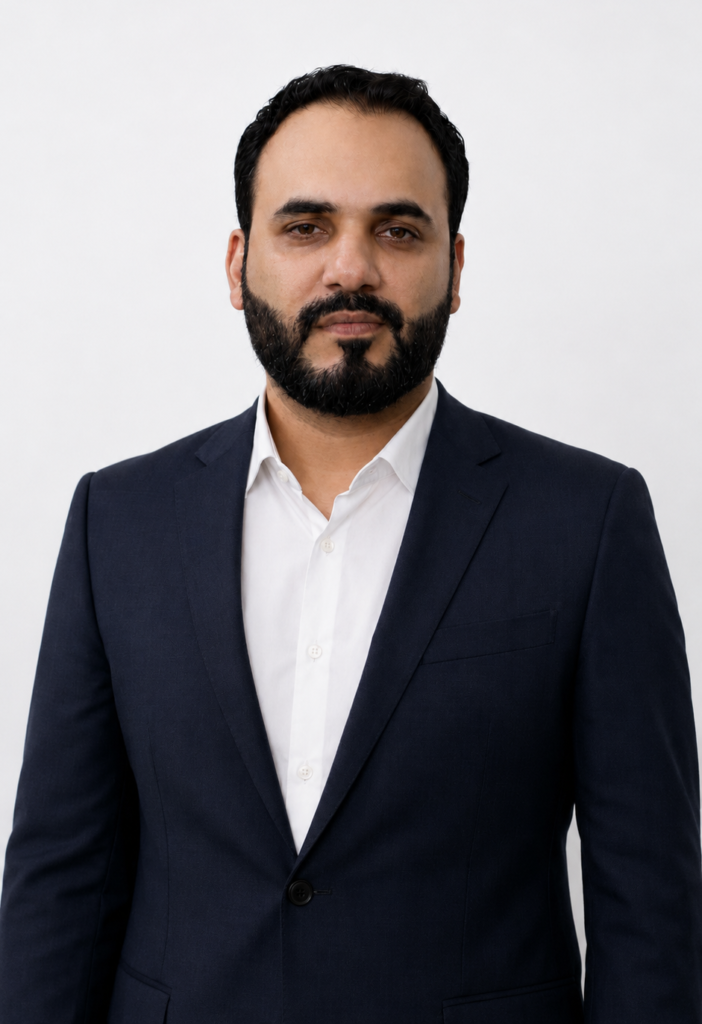
As CEO of DBTA, Aurangzaib Chawla advises globally mobile businesses
and individuals on cross-border tax planning and structuring. With expertise spanning the UK, UAE, and wider GCC, Zaib helps clients minimise double taxation, protect assets, and achieve long-term financial efficiency while staying fully compliant.
Planning to launch in Dubai or the UAE?
Let’s talk about how to structure your business for growth the smart, compliant, and tax-efficient way.
Connect with Reliable Dubai Business Consultants
Get in Touch