
Visa-Free Countries for Emirates ID Holders (2026): Full List, Rules, and Travel Requirements

Recent Insights

Table of Contents
Are you planning a trip from the UAE? Your UAE residency can help, but it does not replace the basic rules. Some countries offer easier entry for UAE residents. This guide covers visa free countries for Emirates ID holders in 2026 in a clear, simple way.
Can You Travel with Emirates ID Only?
No, you cannot use it alone.
When you travel abroad, you always need your passport. The Emirates ID only shows that you live in the UAE. It is not a travel document outside the UAE.
Where Emirates ID May Work
Travel within the GCC works in a different way for citizens and residents. UAE citizens can use their national ID to move between some GCC states.
If you are an expat, you still need your passport. Border staff will ask for it every time. At UAE airports, smart gates can scan your ID, but this only speeds up local exit checks.
Why Is a Passport Still Required for Travel Abroad?
Your passport is the main document used around the world. Every country checks it before letting you in.
The Emirates ID does not fill that role. It only proves you live in the UAE. It can support your entry or visa request, but it cannot take the place of your passport.
What Decides Visa-Free Access for UAE Residents?
Passport vs Emirates ID: What Matters More?
Your home country passport matters most. Most visa-free rules for Emirates ID holders check your passport first. The Emirates ID then adds extra benefits. Some countries let you in simply because you live in Dubai or Abu Dhabi.
How Does UAE Residency Help with a Visa?
UAE residency shows you have a stable job. It proves you have strong ties to a home base. Consulates tend to trust UAE residents more. This makes it easier to apply for a visa using your Emirates ID details. If you need to get or renew your UAE residency, our UAE visa processing services can help you stay fully compliant.
Why Do Two UAE Residents Get Different Access?
An Italian expat and a Thai expat face different rules. The Italian can enter the UK with no visa. The Thai resident may need a full visa. The list of visa free countries for Emirates ID holders changes based on your home country. Always check your own passport rules first.
Visa-Free Countries for Emirates ID Holders (2026 List)
Visa-Free Countries
These countries let you enter with no prior visa. You just show your papers at the border.
- Georgia: Up to 90 days for UAE residents.
- Armenia: Easy access for most UAE residency holders.
- Montenegro: Often lets UAE residents in for short stays.
- Serbia: Check current seasonal rules for UAE residents.
- Jordan: UAE residents often get easier entry here.
Visa on Arrival Countries
You can get a visa on arrival at these places using your Emirates ID. You may need to pay a fee at the desk.
- Azerbaijan: Easy process at Baku airport.
- Maldives: Free visa on arrival for all.
- Seychelles: Entry permit given on arrival.
- Mauritius: Easy access for many UAE-based expats.
- Indonesia: Often offers visa on arrival for UAE residents.
eVisa Countries
You must apply for an eVisa with your Emirates ID details before you fly. eVisa processing time is usually 3 to 7 working days.
- Uzbekistan: Simple online portal for residents.
- Kyrgyzstan: Digital visa options are available.
- Morocco: Recently eased rules for UAE residents.
- Singapore: Some UAE-based nationals can apply online with ease.
Quick Comparison: Visa-Free vs Visa on Arrival vs eVisa
| Feature | Visa-Free | Visa on Arrival | eVisa |
|---|---|---|---|
| Cost | Usually free | Fees at the desk | Paid online |
| Wait Time | Zero | 15–60 minutes | 1–3 days |
| Documents | Passport / ID | Forms at airport | Scanned uploads |
| Risk | Very low | Low | Medium |
Emirates ID Travel Checklist
Key Documents
- Passport with at least 6 months left
- Emirates ID (original)
- Printed eVisa (if needed)
- Travel insurance
- Return flight ticket
Final Checks Before You Go
- Check the weather at your stop.
- Confirm your hotel by email.
- Tell your bank you are travelling.
- Carry local cash for taxis or buses.
Extra Items Some Borders May Ask For
Border staff may ask about your job in the UAE. Keep a digital copy of your work contract on your phone. Some countries ask for a No Objection Certificate (NOC), which is a short letter from your UAE employer confirming they allow you to travel. Our Licensing and PRO Services team can help with employer letters, attestations, and all related government paperwork.
Airline Boarding Rules
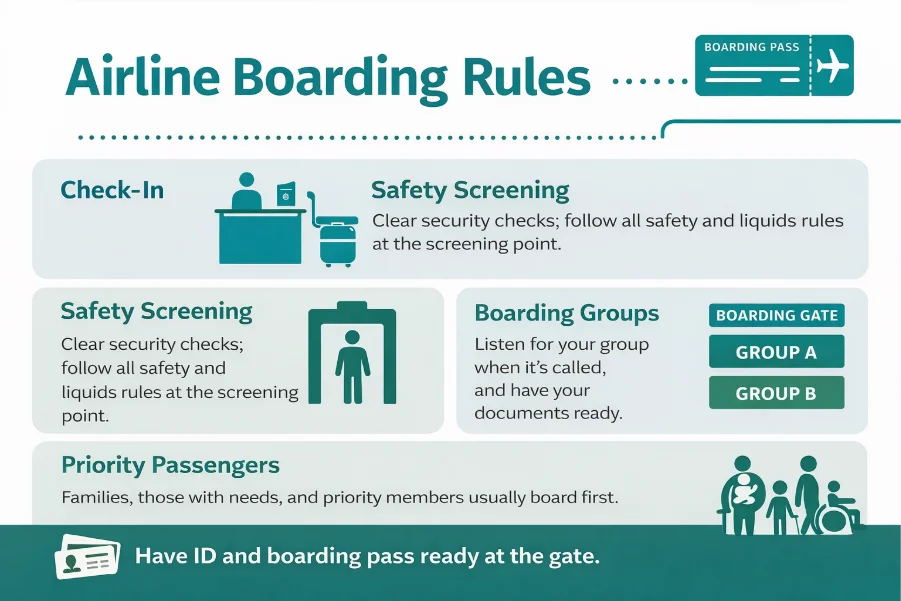
Airlines check your visa status and Emirates ID before you board. If you do not have the right visa, they will not let you fly. They follow strict entry rules to avoid fines. Always get to the airport at least three hours early.
Can a Country Deny You Entry Even If It Is Visa-Free?
Yes, entry is never fully certain. Border officers have the final say. They can turn you away if they doubt your plans.
Common Reasons for Entry Refusal
- Passport has less than six months left.
- No proof of where you will stay.
- Past record of staying too long on a prior visa.
- No travel insurance.
- Acting nervous or unclear during checks.
Visa-Free Access by Passport
Indian Passport Holders
Indian citizens with UAE residency get certain perks. They can apply for a US or Schengen visa more easily. Some countries also offer Indian citizens a visa on arrival if they hold a US Green Card or UAE residency.
Pakistani Passport Holders
Pakistani residents often need an eVisa for many places. But countries like Azerbaijan are very open to them. They must also meet the ID scan rules that apply in certain countries.
Filipino Passport Holders
Filipinos in the UAE often travel to South-East Asia, where most countries are already visa-free for them. For Europe, they need to apply for a visa and use their Emirates ID as proof of income.
Why Does Access Differ?
Trade ties between countries change every year. Some countries offer a visa waiver linked to Emirates ID status to boost tourism. Others keep strict rules for safety reasons. Your passport strength is still the main factor.
Step-by-Step Travel Guide for Emirates ID Holders
Before You Travel
- Check the latest visa-free list for Emirates ID holders.
- Renew your passport if it runs out soon.
- Print your hotel and flight papers.
- Buy travel insurance for your trip.
At the UAE Airport
Use the smart gates with your Emirates ID to save time at exit checks. Drop your bags and head to the gate. Make sure your eVisa is approved before you arrive. If you need help sorting your residency or travel documents before you fly, our visa processing team in Dubai can walk you through every step.
At Your Destination
Go to the Visa on Arrival desk if needed. Show your passport and Emirates ID. Pay any fees that apply. Get your entry stamp and enjoy your trip.
Visa on Arrival vs eVisa vs Visa-Free: Which Is Best?
Which Is Fastest?
Visa-free is the fastest option. You walk to the officer, get a stamp, and go. There is no paperwork at the border.
Which Is Safer?
An eVisa is safer than a Visa on Arrival. You know you are approved before you fly. This cuts the risk of being sent back.
Which Has the Least Risk?
Countries that accept the Emirates ID for visa-free entry carry the lowest risk. If your papers are valid, you are fine. eVisa systems can sometimes have tech issues, so apply early.
Visa Fees, Processing Time, and Costs
Visa on Arrival Fees
Fees vary by country and passport. They usually range from $20 to $100. Always carry USD or local cash, as some airports do not take cards.
eVisa Processing Time
The average eVisa takes 3 to 7 days. Some countries offer fast-track processing for an extra fee. Never book your flight until your eVisa is approved.
Hidden Costs to Watch For
Watch out for fees on third-party websites. Always use the official government portal. You may also need to pay for health insurance at the border.
Easiest Countries to Travel to from the UAE (2026)
No-Paperwork Countries
Georgia and the Maldives are the easiest. They have the most relaxed entry rules for UAE residents. You just show up with your passport.
Fast Entry Options
Azerbaijan and Armenia give quick entry stamps. Both are about a 3-hour flight away. This makes them great for a long weekend trip.
Best Short-Trip Destinations
- Oman: Easy road trip for UAE residents.
- Qatar: A short 1-hour flight from Dubai.
- Bahrain: Very open to UAE residents.
Common Mistakes UAE Residents Make
Emirates ID Misuse
Some people think the ID replaces the visa stamp. It does not. You still need the digital visa record tied to your passport.
Passport Issues
Travelling with a torn passport is a big mistake. Even a small rip can lead to a ban. Make sure your passport has at least two blank pages.
Missing Papers
Forgetting to print the eVisa is a common error. Do not rely on your phone battery. Always keep a hard copy in your bag.
Overstaying Rules and Legal Risks
Penalties
If you stay past your allowed time, you will face heavy fines. Some countries charge per day. These rules apply strictly to Emirates ID holders.
Travel Bans
Staying too long can lead to a ban. You may not be able to visit that country again. It can also hurt future visa requests for the US or UK.
Long-Term Impact
Other embassies may see your overstay record. They may view you as a risk traveller. Always leave the country at least two days before your visa runs out.
Common Myths About Emirates ID Travel
Emirates ID Equals Visa-Free Access (False)
Many people think the ID opens every door. It does not. It is only a residency permit. Most countries still need a visa based on your passport.
Visa on Arrival Means Guaranteed Entry (False)
Visa on Arrival only means you can apply at the border. It does not mean they must let you in. You still need to meet all entry rules and Emirates ID standards.
All UAE Residents Get the Same Access (False)
A UAE resident from the UK has more access than one from Syria. Residency helps, but it does not erase your passport’s own rules. Always check for visa exceptions that apply to your Emirates ID and passport.
How Dubai Business and Tax Advisors Can Help
Travel rules are not always clear. Many UAE residents run into problems when they plan a trip. The confusion often starts with visa rules or missing papers.
That is where expert help makes a real difference. Through our business tax advisory services, DBTA helps clients well beyond tax matters. We explain how your residency ties in with your travel and business needs.
For business owners, this is even more important. Your residency and company formation setup can affect how easily you move across borders. Getting the right structure in place from the start avoids problems later.
You can get help with:
- UAE residency visa applications and renewals via our visa processing services
- Staying in line with entry rules
- Business setup for better travel access
- Golden Visa options for long-term plans
If you are looking into visa free countries for Emirates ID holders, clear advice can save you time and stress. Good planning keeps your papers ready and stops delays.
Conclusion
Living in the UAE does make travel easier in many ways, but you should never guess when it comes to visa rules. You still need your passport no matter where you go.
Always check entry rules for your stop before you book. Rules can change fast, and small details can affect your whole trip.
Get your papers in order and take time to plan. For UAE residents looking into visa-free countries for Emirates ID holders, things go much better when everything is sorted in advance. For any questions about your UAE residency, PRO services, or how your business setup affects your travel, contact us today or explore our UAE visa processing services to get started.
Frequently Asked Questions (FAQs)
It depends on your passport. Some UAE residents can visit places like Georgia or the Maldives with no visa, but not all do. Always check the latest rules before you book.
No. Even if you live in the UAE, you still need your passport for travel abroad. The Emirates ID only shows your residency status.
Some countries allow visas on arrival for UAE residents, but it usually depends on your passport. Azerbaijan and the Maldives are common examples, though the terms can vary.
No. Airlines will not accept it on its own. They will ask for your passport and check your visa before you board.
You need your passport, Emirates ID, and any required visa. It also helps to carry your return ticket, hotel booking, and proof of funds.
Yes, very much so. Two people in the UAE can face totally different entry rules just because their passports are different.
There is no single answer. Some countries allow short stays of a few weeks. Others may allow up to 90 days.
Even with no visa, you may still need to show a return ticket, hotel details, and enough money for your stay.
Not always, but some places do ask for it. Even where it is not required, having it can save you from big costs.
No, the ID alone will not help. Travel access still depends mainly on your passport, not just your UAE residency.
The biggest risk is being stopped before you even leave. Without a passport, airlines will not let you board and border staff will not process your entry.
The safest way is to check official embassy sites or airline travel updates. These are usually the most up-to-date sources.
In most cases, yes. You pay a fee at the airport, and the amount varies by country.
If you stay too long, you may face fines or a travel ban. It can also make future visa requests harder.
Children follow the same visa rules as adults. They also need their own passport and, in some cases, extra documents such as a parent consent letter.
Latest news & articles
Visa-Free Countries for Emirates ID Holders (2026): Full List, Rules, and Travel Requirements
Read More »
About the Author:
AURANGZAIB CHAWLA
As CEO of DBTA, Aurangzaib Chawla advises globally mobile businesses and individuals on cross-border tax planning and structuring. With expertise spanning the UK, UAE, and wider GCC, Zaib helps clients minimise double taxation, protect assets, and achieve long-term financial efficiency while staying fully compliant.
Planning to launch in Dubai or the UAE?
Let’s talk about how to structure your business for growth the smart, compliant, and tax-efficient way
About the Author:
AURANGZAIB CHAWLA

As CEO of DBTA, Aurangzaib Chawla advises globally mobile businesses
and individuals on cross-border tax planning and structuring. With expertise spanning the UK, UAE, and wider GCC, Zaib helps clients minimise double taxation, protect assets, and achieve long-term financial efficiency while staying fully compliant.
Planning to launch in Dubai or the UAE?
Let’s talk about how to structure your business for growth the smart, compliant, and tax-efficient way.
