
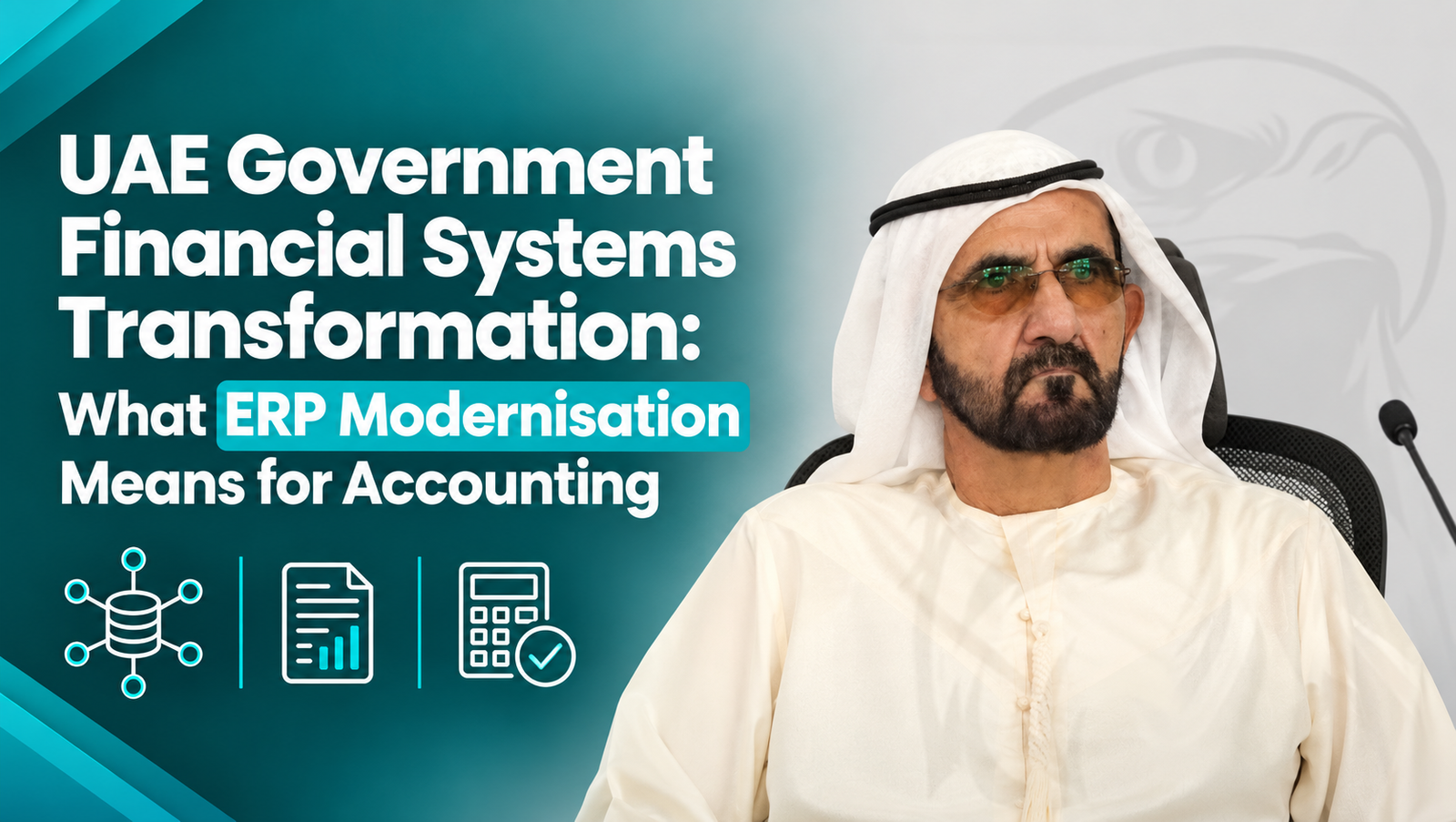
The UAE has taken another major step towards modernising its government financial systems. On 1 November 2026, the Ministry of Finance (MoF) and the Federal Authority for Government Human Resources signed a strategic partnership to transform the federal government’s Enterprise Resource Planning (ERP) systems.
The project will move federal government entities to Oracle Fusion Cloud Applications, including Oracle Fusion Cloud Enterprise Resource Planning (ERP) and Human Capital Management (HCM). The aim is to connect financial and human resource operations through a more integrated digital environment.
The Ministry expects the move to improve automation, data quality and the speed of financial and administrative procedures. It will also support better financial planning, reporting and decision-making across federal entities.
UAE Moves Government Financial Operations to Cloud ERP
The new project is more than a software upgrade. It is part of the UAE’s wider effort to improve how public resources are managed.
By connecting finance and human resource systems, government entities can work with more organised and accessible information. The platform is designed to support automated procedures, better data management and stronger financial controls.
For government finance teams, accurate financial information will become even more important. Complete records help organisations prepare reliable reports, monitor spending and make informed decisions.
The project also includes cloud technology and artificial intelligence to support daily operations and improve access to useful information. This reflects the growing role of digital tools in financial management.
Financial Data Forum Puts IPSAS and Reporting in Focus
The ERP announcement follows another important development. On 27 October 2026, the Ministry of Finance held the Financial Data Forum 2026 in Abu Dhabi.
The forum focused on improving the accuracy and reliability of government financial statements. It also reviewed the accounting policies and procedures used by federal entities for the 2026 financial year.
A key part of the discussion was the continued use of International Public Sector Accounting Standards (IPSAS). The Ministry reviewed the implementation of IPSAS 41 to 43, introduced in 2025, and the requirements for applying new standards, IPSAS 45 to 49, during 2026.
The UAE Accountability Authority also took part in discussions about auditing and the challenges of applying updated accounting standards.
The Ministry highlighted the use of artificial intelligence and digital tools to automate parts of financial statement preparation, improve data checks and support faster reporting.
Together, these developments show that the UAE is focusing on both modern financial technology and the quality of the accounting information behind it.
What ERP Modernisation Means for Businesses and Accountants
The new ERP project is aimed at federal government entities. It does not mean that every private company must adopt Oracle Fusion Cloud.
However, businesses that supply goods or services to government entities should pay attention to these developments. Accurate invoices, organised accounting records and reliable financial reporting can help them manage their business processes more effectively.
For accountants and finance teams, the shift highlights the growing value of financial analysis, data accuracy and digital accounting skills. Businesses that rely on incomplete records or delayed reconciliations may find it harder to maintain reliable financial information.
Companies should review their accounting and bookkeeping processes, check their financial records and improve their internal reporting. They should also assess their budgeting and forecasting practices to make sure management decisions are based on accurate financial data.
How Dubai Business and Tax Advisors Can Support Businesses
As financial systems become more digital, businesses need accounting processes that keep their records accurate and useful. Dubai Business and Tax Advisors (DBTA) supports UAE companies through accounting and bookkeeping services, budgeting and forecasting, financial reporting, audit support and tax advisory.
These services help businesses maintain clear financial records, monitor financial performance and prepare reliable reports. DBTA’s team can also help companies review their financial controls, identify gaps in their accounting processes and improve financial planning.
The UAE’s ERP transformation marks an important step in the development of federal financial management. For businesses, the message is clear: accurate accounting records, reliable financial reporting and effective financial planning are becoming increasingly important in a more digital business environment.