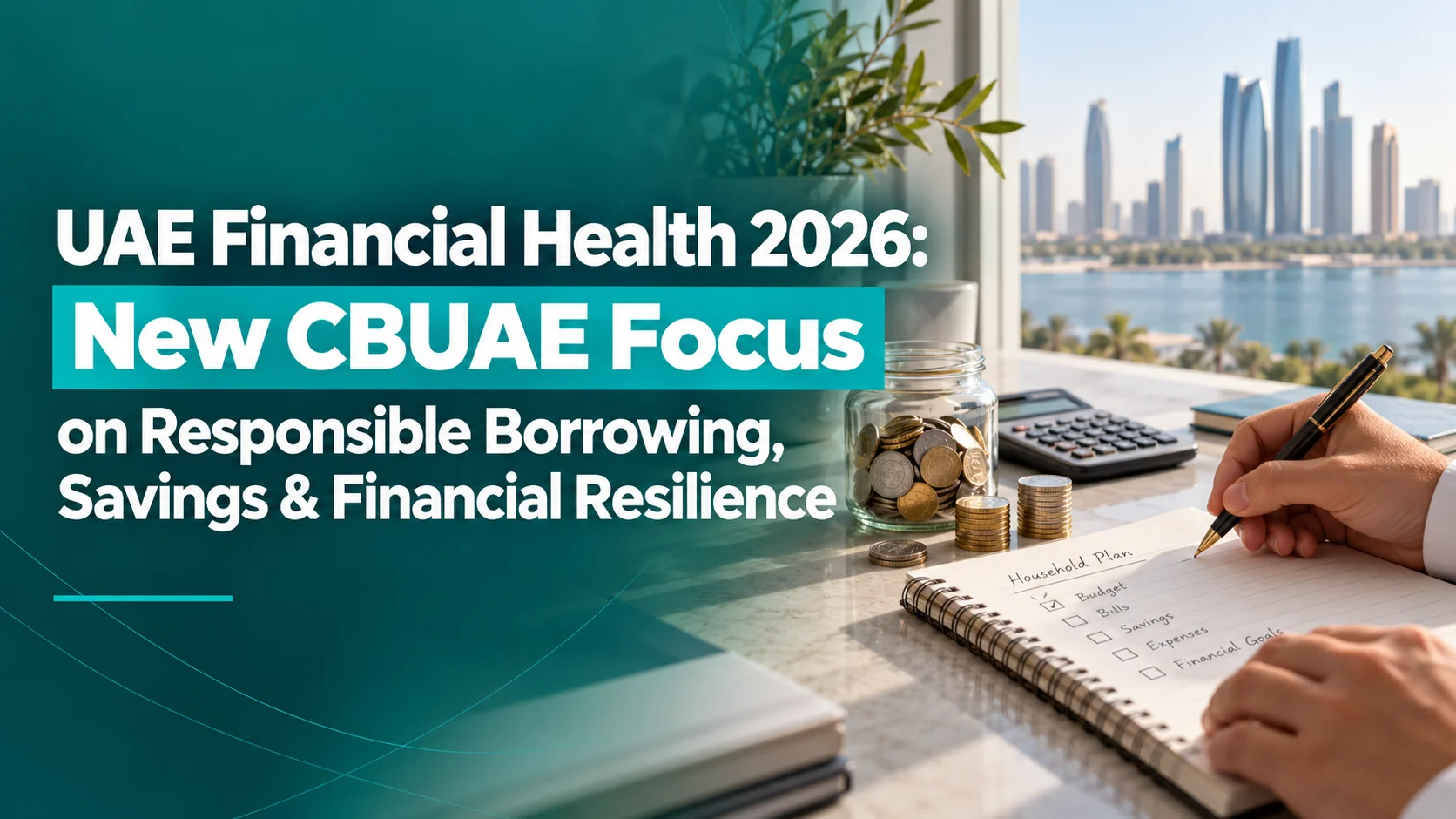
Abu Dhabi, UAE: The Central Bank of the UAE (CBUAE) is putting financial health at the center of its latest policy agenda, with a stronger focus on responsible borrowing, savings, financial literacy and resilience.
The development comes as the CBUAE hosts the MENA Leaders’ Summit on Financial Health in Abu Dhabi on September 30 and October 1, 2026. The summit marks a wider shift from measuring financial inclusion through accounts and transactions to looking at real financial outcomes. These include the ability to handle financial shocks, build long-term savings, borrow responsibly, and make informed financial decisions.
UAE Launches National Financial Literacy Strategy
One of the main announcements from the summit is the National Financial Literacy Strategy 2027–2031.
The new strategy aims to equip people at different stages of life, as well as micro, small and medium enterprises (MSMEs), with the knowledge and skills needed to make financial decisions confidently, responsibly and safely.
For businesses, this means financial awareness is becoming more closely linked with day-to-day financial management. Understanding cash flow, borrowing needs and future financial commitments can help businesses make more informed decisions.
This makes proper business planning and strategy increasingly important for MSMEs that need to manage growth while maintaining financial resilience.
Responsible Borrowing Rules Are Already in Effect
The focus on responsible borrowing also has a direct regulatory element. CBUAE’s updated Responsible Financing Practice became effective on September 13, 2026.
Financial institutions must not provide credit beyond amounts a customer can service. They must assess the customer’s ability to meet credit obligations and examine credit records, including solvency, monthly obligations, and past credit behavior.
For customers and businesses seeking finance, this makes it important to understand existing obligations before taking on new credit. Strong budgeting and forecasting can help businesses assess their expected cash position and financing needs before making borrowing decisions.
Clearer Financial Information and Responsible AI
The CBUAE’s updated disclosure requirements also require financial institutions to provide customers with clear, accurate, and understandable information about financial products. This includes relevant risks, costs, fees, interest or profit rates and payment schedules. The requirements apply across communication channels and information must be available in both English and Arabic.
The CBUAE has also issued guidance on the responsible use of AI and machine learning by licensed financial institutions. The guidance focuses on consumer protection, transparency, accountability, explainability, bias and data privacy.
For businesses, maintaining reliable bookkeeping and financial information can support better financial visibility and decision-making as the financial sector becomes more data-driven.
What Businesses Should Do Now
MSMEs should review their current borrowing, cash flow and financial commitments rather than waiting for financial pressure to build. Maintaining accurate accounts payable and receivable records can also help management understand upcoming obligations and available cash.
Businesses can also consider professional financial support when reviewing their financial position. Outsourced CFO services can provide management with structured financial insight, forecasting and financial oversight without requiring a full-time internal CFO.
The CBUAE is also launching a Financial Health Innovation Challenge for practical solutions aimed at improving the financial health of individuals and MSMEs. Applications are open until November 30, 2026.
For UAE businesses, the direction is clear: financial health is moving beyond basic access to financial services. Dubai Business and Tax Advisors (DBTA) can help businesses strengthen financial planning, reporting and financial management so they are better prepared to make informed decisions as the UAE’s financial environment continues to evolve.