
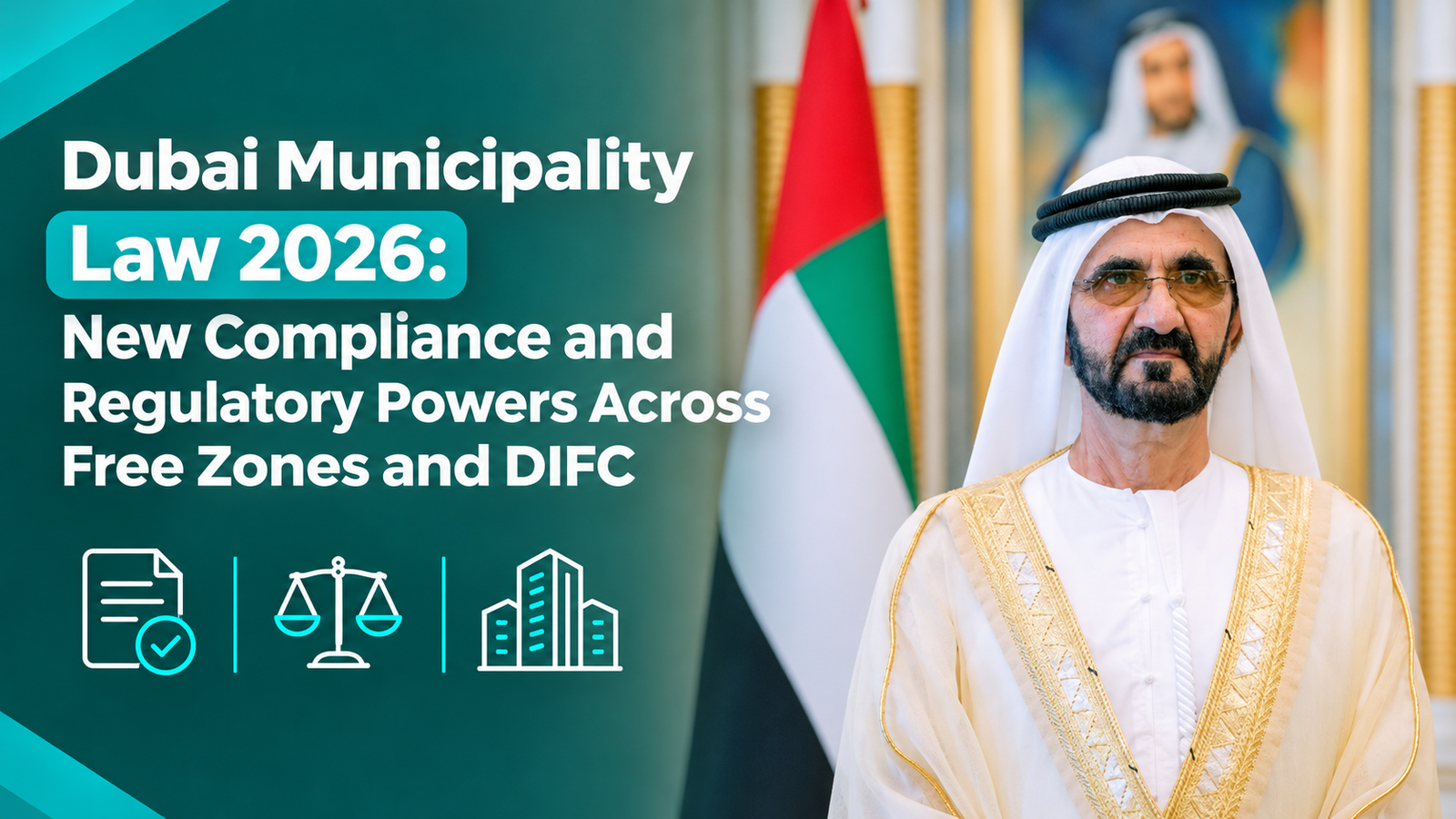
Dubai has introduced a new legal framework to define the role and powers of Dubai Municipality across the emirate. On 12 November 2026, His Highness Sheikh Mohammed bin Rashid Al Maktoum issued Law No. (18) of 2026 concerning Dubai Municipality. The law replaces the 1961 Order Establishing the Dubai Municipality Council and sets out the Municipality’s responsibilities in urban planning, construction, public health, food safety and waste management.
One of the most important changes for businesses is that the law’s scope includes Special Development Zones and Free Zones such as the Dubai International Financial Centre (DIFC), subject to specific legal exemptions. This makes the new framework relevant to companies that operate outside mainland Dubai and need to understand their municipal and regulatory responsibilities.
Dubai Municipality’s Role Extends Across Free Zones
The law confirms that Dubai Municipality’s statutory functions extend across the emirate, including free zones and special development areas, unless a specific legal provision provides an exemption.
This does not mean that free-zone authorities or DIFC have lost all their regulatory responsibilities. Their own legal frameworks continue to apply. However, businesses must understand where municipal requirements also apply and how these responsibilities interact.
The law also provides for the repeal of existing legislative provisions to the extent that they conflict with the new framework. Existing local orders, decisions and regulations can continue where they remain consistent with the law.
Stronger Focus on Inspections and Business Compliance
Law No. 18 establishes a framework for regulatory oversight and inspections. It also requires individuals, companies and government entities to cooperate with Dubai Municipality and its affiliated bodies.
This includes providing requested information, documents, statistics and reports needed for the Municipality to carry out its responsibilities.
For businesses, this makes accurate records and clear compliance procedures important. Companies operating commercial premises, food businesses, buildings and other regulated facilities should review the requirements that apply to their activities.
Maintaining organised records through reliable bookkeeping services and accounting services in Dubai can help businesses keep their financial information accurate and accessible. Companies should also ensure that their licences, inspection records and operational documents are properly maintained.
Sustainable Planning and Smart Monitoring
The law also focuses on Dubai’s wider urban development. Dubai Municipality is tasked with supporting an integrated and sustainable urban planning system that improves quality of life and wellbeing.
Its responsibilities include promoting modern construction technologies, protecting public health and food safety through smart digital systems, and strengthening integrated waste management.
The wider vision also covers green spaces, recreational facilities and the preservation of Dubai’s architectural and urban heritage. These priorities make the law relevant to developers, property owners, facility managers, restaurants and businesses involved in construction and environmental services.
Companies should review their operating costs and assess whether changes to their premises or processes may affect their budgets. Budgeting and forecasting can help businesses plan for maintenance, operational expenses and other financial commitments linked to their activities.
New Framework for Private-Sector Participation
Another important feature is the Municipality’s ability to outsource designated functions to public or private organisations through formal agreements.
These agreements can define each party’s responsibilities, service conditions and performance standards. This creates a legal framework for private-sector participation in municipal services, including waste management, inspection support and technology.
However, this provision does not guarantee contracts or allow private companies to exercise every municipal power independently. Their role will depend on the functions assigned and the terms of the relevant agreements.
Businesses interested in these opportunities should assess their costs, contractual responsibilities and financial capacity before entering into such arrangements.
What Businesses Should Do Now
Companies should review the municipal and free-zone requirements that apply to their operations. They should check relevant building and safety standards, maintain accurate licences and inspection records, and ensure that required documents can be provided when requested.
Clear financial reporting can also help management monitor expenses and understand the financial impact of operational changes. Businesses should review their financial records and seek appropriate advice on their separate UAE tax and reporting obligations.
Dubai Business and Tax Advisors (DBTA) supports companies with accounting services, bookkeeping services, budgeting and forecasting, financial reporting, financial due diligence and UAE Corporate Tax advisory. Its ACCA-qualified team helps businesses organise financial information, monitor costs and manage their financial responsibilities.
Law No. 18 of 2026 marks an important development in Dubai’s municipal governance. Businesses across mainland Dubai, free zones and DIFC should review their responsibilities and follow further official guidance to remain prepared as the new framework takes effect.