
Top 10 Best Small Business Ideas in the UAE (2026 Guide)

Recent Insights
Table of Contents
Introduction
The UAE in 2026 is more than a regional hub. It is a global center for trade, business, and growth. Few markets offer what the Emirates does. You get a large, high-spending consumer base. You get a government that supports private business. And you get world-class systems that help small companies compete.
For years, I have assisted clients with tax and business law in the UK and Middle East. “I have watched Dubai and Abu Dhabi diversify from oil. Today, both cities operate via the digital and knowledge-based sectors. That shift is now complete. The doors are more open than ever for small business owners.
2026 is a key milestone. The Dubai Economic Agenda, or D33, is in action. Its aim is to double the size of Dubai’s economy in a decade. The rules are clear and fair. Getting started with company formation and trade license management in the UAE is straightforward when you know the right steps. It is easy to stay compliant once you are in.
Why Start a Small Business in the UAE in 2026?
The case for the UAE is strong. The currency is pegged to the US Dollar. This keeps prices stable and makes planning easier. The non-oil private sector keeps growing. It beats most other markets in the region year after year.
The location is hard to beat. Within an eight-hour flight, you can reach two-thirds of the world’s people. That makes the UAE a great base for trade, advice, and digital work. Foreign ownership laws have also changed for the better. In 2026, you can own 100% of your business on the mainland. You do not need a local sponsor. You keep full control of your company.
Top 10 Small Business Ideas in the UAE and Why They Work
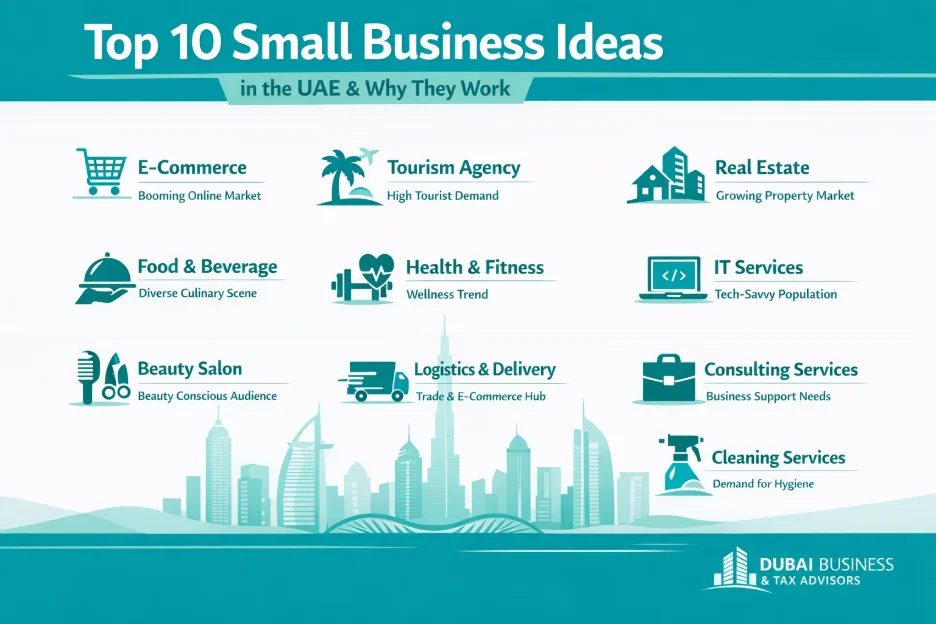
E-Commerce Business
Online shopping is now a core part of how people in the UAE buy goods. By 2026, most buyers prefer to shop online. The UAE has a young, tech-savvy population. Its delivery network is one of the fastest in the world. You can sell niche products, digital items, or high-end goods. Free zones offer e-commerce packages that include a license and a virtual office. The e-commerce setup cost in the UAE in 2026 is very low compared to most markets. Working with an expert in Dubai Free Zone company formation helps you pick the right package from day one.
Digital Marketing Services
Every year, the UAE welcomes thousands of new firms. Each and every one of them require assistance getting discovered online. By 2026, the market is beyond basic social media posts. Clients demand AI-driven search engine optimization, data tools, and content that connect with local buyers. One of the low-cost business ideas in UAE is that of a digital marketing agency. You essentially just need a professional license and high-speed internet. In UAE, the license fee and workforce payments are associated with the costs of starting a digital marketing firm. It is a service-based model, hence, the margins are high. You can serve clients across the world while still being based in a low-tax jurisdiction like Dubai. You grow as a freelancer from small beginnings. Then you expand into a boutique agency. Watch hot sectors (real estate, travel, fintech etc.)
Food Truck and Mobile Catering
The UAE loves food trucks. They let people enjoy great food without the high costs of mall space. This model works well at busy spots like Kite Beach and the Last Exit locations. The winter event season also brings big crowds. To get started, you must follow the full food truck license checklist in the UAE. This means getting approvals from the Department of Economy and Tourism (DET), the local council, and the Roads and Transport Authority (RTA) if your truck moves between spots.
Small Retail Shop
Physical retail is not dead. The small, local shop concept is thriving in 2026. New housing areas like Jumeirah Village Circle, Dubai Hills, and Town Square keep growing. People in these areas want local shops they can walk to. Boutique grocery stores, pet shops, and concept stores all do well here. The small shop license cost in the UAE depends on the size of your space and where it is located. Entrepreneurs who choose a Dubai Mainland company setup can sell directly to the local community without needing a distributor.
Salon and Spa Business
The beauty sector in the UAE is worth billions of dirhams. People here care deeply about grooming and wellness. A well-placed salon or spa can earn strong, steady profits. But the salon and spa license rules in the UAE are strict. You need a professional license. Your space must meet the hygiene and size rules set by Dubai Council or the local body in your Emirate.
The main costs are the fit-out, tools, and staff. Hiring is a big part of the budget. Plan for the visa process too. In the UAE, business owners find it takes three to four weeks to go from entry permit to full residency. Your market is wide. It ranges from wealthy clients who want luxury care to busy workers who need fast, quality grooming.
Training Institute and Coaching Center
The UAE wants to become a top global talent hub. This creates real demand for training centers. You could teach AI skills, coach leaders, or run language classes for the large expat community. Education holds up well even in hard times. Training institute startup costs in the UAE must include approvals from the KHDA in Dubai or ADEK in Abu Dhabi.
Focus on high-demand topics. Coding, leadership, and green business training all sell well right now. A mix of in-person and online classes gives you the widest reach. The setup process takes more effort than a basic agency. But the long-term value is strong, and you can win government contracts.
Import-Export Trading
The UAE is a top global logistics hub. Its ports, Jebel Ali and Khalifa Port, are world class. A small trading firm can move goods between Europe, Asia, and Africa with ease. To get started, you need a commercial license and a Customs Code. These are the core import-export license rules in the UAE. Properly managing your company formation and trade license from the start ensures you have the right activity codes to clear goods through customs without delays.
Key costs include the license, a customs deposit, and office or warehouse space. In 2026, the best trading firms use the UAE’s trade deals, known as CEPAs, with India, Indonesia, and Israel. These deals lower tariffs and speed up customs. Small traders who know the paperwork gain a real edge.
Renewable Energy Services
The UAE is working hard toward its Net Zero 2050 goal. This has opened a new space for small business owners. Renewable energy ideas in the UAE include solar panel setup for homes, energy checks for office buildings, and EV charger care. The government backs this sector with funding and public-private deals.
Setting up a renewable energy business in the UAE means getting technical approvals and a professional or industrial license. Startup costs are higher due to the need for trained staff and special tools. But new building rules that require green standards keep demand high. Real estate developers and homeowners are your main buyers.
Franchise vs. Independent Business
Franchise vs. Independent Business Making the choice between the franchise and your brand is a significant decision. Popular sectors to franchise in the UAE are food, fitness and education. They have an established brand that is well known and a system that has been proven. High initial (franchise fee) and monthly royality payments must be compared to the cost to create your own brand when comparing franchise and independents in UAE. Franchises do good and financing is easier. Banks consider familiar brands to be less risky. But an independent business provides you full-time freedom and greater margins when you establish your name. The process to license a franchise is identical to that for an independent firm. All you need is just to submit the franchise deal during your approval with DED or other Free Zone body.
Low-Cost Online Businesses
The easiest way to enter the UAE market is through online services. Freelance work, dropshipping, and digital products like software or online courses all fit this model. These are the most accessible low-cost business ideas in the UAE. You often only need a freelance permit or a basic e-commerce license.
The big advantage is low overhead. You can work from a co-working space or a home office. This cuts the minimum capital your UAE business needs. In 2026, the goal for these firms is global reach from a local base. You enjoy the UAE’s lifestyle, safety, and low taxes while serving clients worldwide. Success comes from strong personal branding and high-value digital work.
Startup Costs and Financial Planning
Good financial planning in the UAE means knowing both the visible and hidden costs. As a tax advisor, I always tell clients the same thing. The license price is not the full cost of starting up. In 2026, pricing is more open than before, but surprise costs still trip people up. Plan for a 12-month runway. Revenue often takes longer to arrive than you expect.
What Does a Business License Cost in the UAE?
The business license cost in the UAE depends on your chosen area. A mainland license from the Department of Economy and Tourism (DET) starts at AED 15,000. It can reach AED 35,000 once you add office costs, a 5% market fee on rent, and admin fees.
What Does E-Commerce Setup Cost in the UAE in 2026?
An e-commerce business costs more than just the license. Budget for the license at about AED 10,000. Add a good website at AED 5,000 to AED 15,000. Then add a payment gateway. Tools like Telr, Checkout.com, or Stripe often need a deposit or charge per sale. You also need to follow UAE online store VAT rules. Even before you hit the VAT threshold, your accounts software, like Zoho or Xero, must track your sales from day one.
What Is the Minimum Capital Rule for a UAE Business?
Most LLCs and service firms do not need to place cash in a bank before getting a license. You just declare the capital in your company documents. But some sectors are different. Real estate, insurance, and investment firms must meet strict capital rules. They may need a bank guarantee or a blocked deposit to satisfy the regulator.
Office, Flexi-Desk, and Workspace Costs
Most mainland licenses need a real address, logged through an Ejari contract. Free zones let you use a flexi-desk or smart office instead. These give you a legal address at a lower cost. In 2026, a flexi-desk costs AED 4,000 to AED 10,000 per year. If you need a physical shop, add utility costs and cooling fees. These can raise your monthly rent by 20 to 30%.
What Are the Visa and Immigration Costs?
Visa processing in the UAE is fast, but each person costs money. An investor visa runs AED 4,000 to AED 5,500 and lasts two years. Staff visas cost more because they need health insurance and a labor deposit. Add the medical test fee of AED 300 to AED 800 and the Emirates ID fee of about AED 300. Your office size sets your visa quota. The rule is roughly one visa per 80 to 100 square feet of office space.
Hidden and Ongoing Costs to Plan For
Ongoing costs are easy to miss. A PRO service to handle your government filings costs AED 5,000 to AED 15,000 per year. Health insurance is required for all staff. Basic plans start at AED 600. Full plans can reach AED 15,000 or more per person. Add annual audit fees, corporate tax filing costs, and late renewal fines. Staying on top of these keeps your business in good standing.
Legal and Regulatory Must-Knows
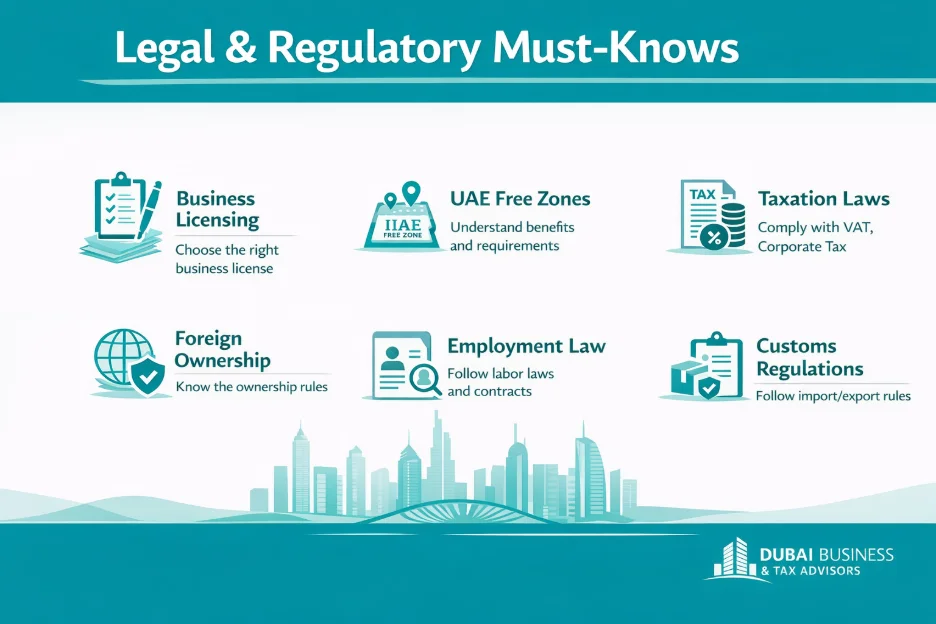
Running a business in the UAE means taking the rules seriously. In 2026, the focus on substance and honesty has grown. Your business must be real. It must have genuine activity inside the UAE to benefit from the local tax rules. Knowing these facts is what keeps a business safe from fines or closure.
What Types of Business Licenses Are There in the UAE?
There are four main types. A Commercial License covers trading in goods, general or specific. A Professional License covers services, advice, and skilled trades. An Industrial License covers making or processing goods. An E-commerce License covers fully online businesses. Picking the wrong type can block your bank account or cause customs issues. Getting proper guidance on your company formation and trade license from day one helps you avoid these problems entirely.
How Do Startup Visa Quotas Work in the UAE?
Every license comes with a set number of visas. For a new startup on a flexi-desk, this is usually one to three visas. If you need a bigger team, you must rent a physical office to raise that number. The startup visa quota rules in the UAE are enforced by the Ministry of Human Resources and Emiratisation (MoHRE). Holding many visas without a real office can lead to checks and fines. Our licensing and PRO services team handles MoHRE filings to keep your quota aligned with your office setup.
How Does Corporate Tax Affect UAE Businesses?
Corporate tax has changed the game for small firms. In 2026, all businesses must sign up with the Federal Tax Authority (FTA). This applies even if you expect to earn less than the AED 375,000 profit limit. The corporate tax impact for UAE businesses means keeping clean financial records. Many firms must also provide audited accounts. Small Business Relief lets firms with revenue below AED 3 million claim zero taxable income for a set time. But you must still register and file.
What Are the Online Store VAT Rules in the UAE?
VAT is a sales tax. As an online seller, you collect it on behalf of the government. You must register for VAT once your sales and imports pass AED 375,000 in the last 12 months. Many small businesses sign up early, once they pass AED 187,500, to claim back the VAT they paid on startup costs. Keep digital records of every sale. The FTA now uses AI-based systems to run audits.
What Are the Import-Export License Rules in the UAE?
To trade goods, you need a Customs Code. This requires a valid trade license and a small fee paid to your local customs office, such as Dubai Customs. You must also know which goods need extra permits. The Health Ministry covers drugs. The Climate and Environment Ministry covers food items. Following these rules is the only way to avoid costly port delays. Our tax advisory team can walk you through the full compliance checklist before your first shipment.
Common Mistakes and Misconceptions
The biggest mistake I see is what I call the License Myth. Many new business owners think a trade license means they are ready to trade. It does not. The license is just your company’s birth record. Your bank account is what makes it real. In 2026, banks have strict checks. If your plan is vague or your work type is seen as high risk, like crypto or some forms of global trade, you may not get a corporate account at all. That makes your license useless.
Franchise vs. Independent Business Costs in the UAE
When you compare franchise and independent costs in the UAE, the gap goes far beyond the first payment. A UAE franchise fee ranges from AED 50,000 to AED 250,000 upfront. The fit-out must also meet the franchisor’s global brand rules. That can cost 40% more than a custom independent build. On top of that, you pay 5 to 10% of your monthly gross sales as a royalty fee.
Quick Reference Tables
Best Small Business Ideas by Budget
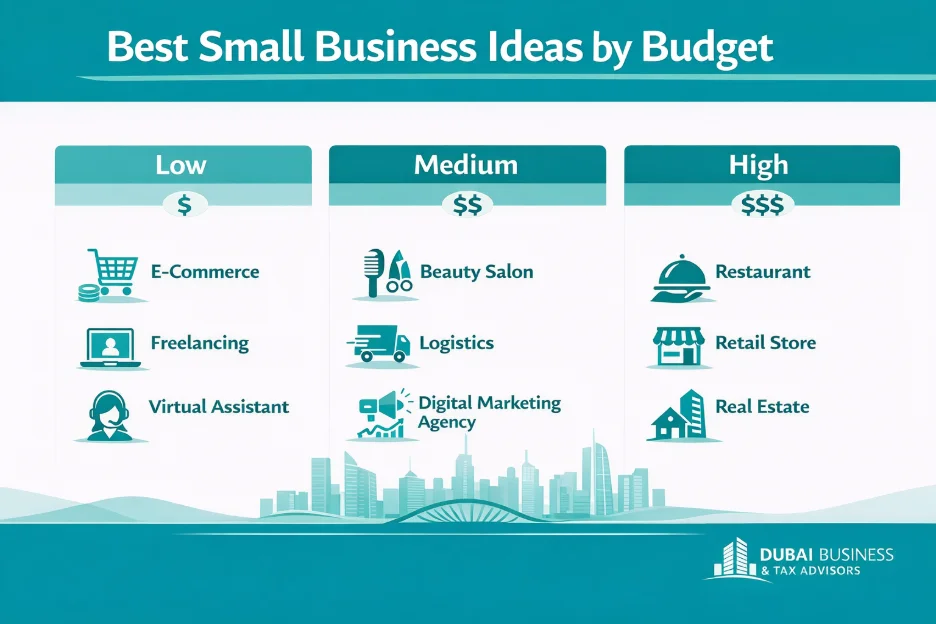
| Budget Range | Best Ideas | Setup Type |
|---|---|---|
| Under AED 20K | Freelance, Digital Marketing, Niche E-commerce | Free Zone Virtual Office |
| AED 20K–50K | Import-Export, Training, Tech Startup | Free Zone with 1–2 Visas |
| AED 50K+ | Food Truck, Salon, Retail, Renewables | Mainland Office or Shop with Staff |
License Cost: Free Zone vs. Mainland
A mainland license lets you trade anywhere in the UAE. It comes with a 5% market fee on rent. A Free Zone license has zero customs duties for zone-to-zone trade. But you need a local agent to sell on the mainland.
Visa Quota by Office Type
A flexi-desk gives you one to two visas. A 200-square-foot office gives you two to three. For bigger teams, mainland licenses are more flexible. You can raise your quota by proving a genuine business need.
How DBTA Can Help
Starting a business in the UAE is exciting. But the rules change fast, and the gaps are costly. At Dubai Business and Tax Advisors (DBTA), we do more than process licenses. We build compliant, scalable business structures.
Our team trained in the UK. We bring global standards to local UAE knowledge. We help with:
- Business Planning: We help you pick the right setup to avoid future banking and tax issues. Our company formation and trade license management service covers every step, from choosing your activity codes to getting your license issued.
- License and Sign-Up Support: We give you clear pricing with no hidden fees. You know your full cost from day one.
- Visa and Quota Help: We handle the MoHRE and visa filings to get your team up and running fast.
- Tax and VAT Advisory: From VAT sign-up to corporate tax planning, we keep you on the right side of the FTA.
FAQs
The top ideas sit in the digital and green sectors. E-commerce leads the list. Consumer spending is high and delivery is fast. Digital marketing agencies are also strong, since every new business needs to be found online.
Costs vary by location. A basic Free Zone license for a service firm can start as low as AED 5,750 to AED 12,000. For a mainland trading company, budget AED 15,000 to AED 30,000 for the license alone.
Digital services and e-commerce give the best returns for a small budget. Freelance work in finance, tech, or marketing needs just a laptop and a freelance permit of about AED 7,500. Yet it can earn high hourly rates.
Most small firms need one of four license types. A Professional License covers service work like consulting or teaching. A Commercial License covers retail and trading. An Industrial License covers making goods. An E-commerce License covers online stores. Some sectors need extra approvals from specific government bodies.
Free Zones offer 100% foreign ownership, zero import and export tax within the zone, and a fast setup. They work best for advisors and global traders.
The licensing stage is very fast. Digital Free Zones can issue a license in 24 to 48 hours using UAE Pass. Mainland licenses through the Instant License system also complete in under a day for most business types.
You need a passport copy for each owner, a clear photo, and a brief business plan. If you already live in the UAE, add your Emirates ID. A No Objection Certificate from your current sponsor may also be needed, though this is being dropped across many sectors.
Yes. The UAE is one of the most open markets in the world for foreign owners. Under current law, you can own 100% of your firm in Free Zones and most mainland sectors. You do not need to live here to own a company. But most owners get a residency visa to make banking and day-to-day work easier.
Tech, green energy, and health lead the list. Fintech tools, such as payment apps and peer lending, are drawing big investment. The green sector, including solar setup, waste tech, and ESG auditing, earns strong returns thanks to government programs.
You can run a home business through the DED Trader License or a Free Zone virtual office package. These let you work legally without paying for office space. This cuts your startup costs by a large margin.
The biggest risk is being stopped before you even leave. Without a passport, airlines will not let you board and border staff will not process your entry.
Conclusion
The UAE in 2026 offers real chances for those who plan well and stay compliant. Whether you launch a tech-driven online store or a local retail shop, the path is clear: do your research, manage your budget, and get expert help early. Knowing what a business license costs in the UAE and planning for the corporate tax rules all business owners must now follow will turn your idea into a working, growing business. If you are ready to take the next step, our company formation and trade license management service gives you a clear, compliant starting point with no hidden surprises.
Latest news & articles

Visa-Free Countries for Emirates ID Holders (2026): Full List, Rules, and Travel Requirements
Read More »
About the Author:
AURANGZAIB CHAWLA
As CEO of DBTA, Aurangzaib Chawla advises globally mobile businesses and individuals on cross-border tax planning and structuring. With expertise spanning the UK, UAE, and wider GCC, Zaib helps clients minimise double taxation, protect assets, and achieve long-term financial efficiency while staying fully compliant.
Planning to launch in Dubai or the UAE?
Let’s talk about how to structure your business for growth the smart, compliant, and tax-efficient way
About the Author:
AURANGZAIB CHAWLA

As CEO of DBTA, Aurangzaib Chawla advises globally mobile businesses
and individuals on cross-border tax planning and structuring. With expertise spanning the UK, UAE, and wider GCC, Zaib helps clients minimise double taxation, protect assets, and achieve long-term financial efficiency while staying fully compliant.
Planning to launch in Dubai or the UAE?
Let’s talk about how to structure your business for growth the smart, compliant, and tax-efficient way.
