
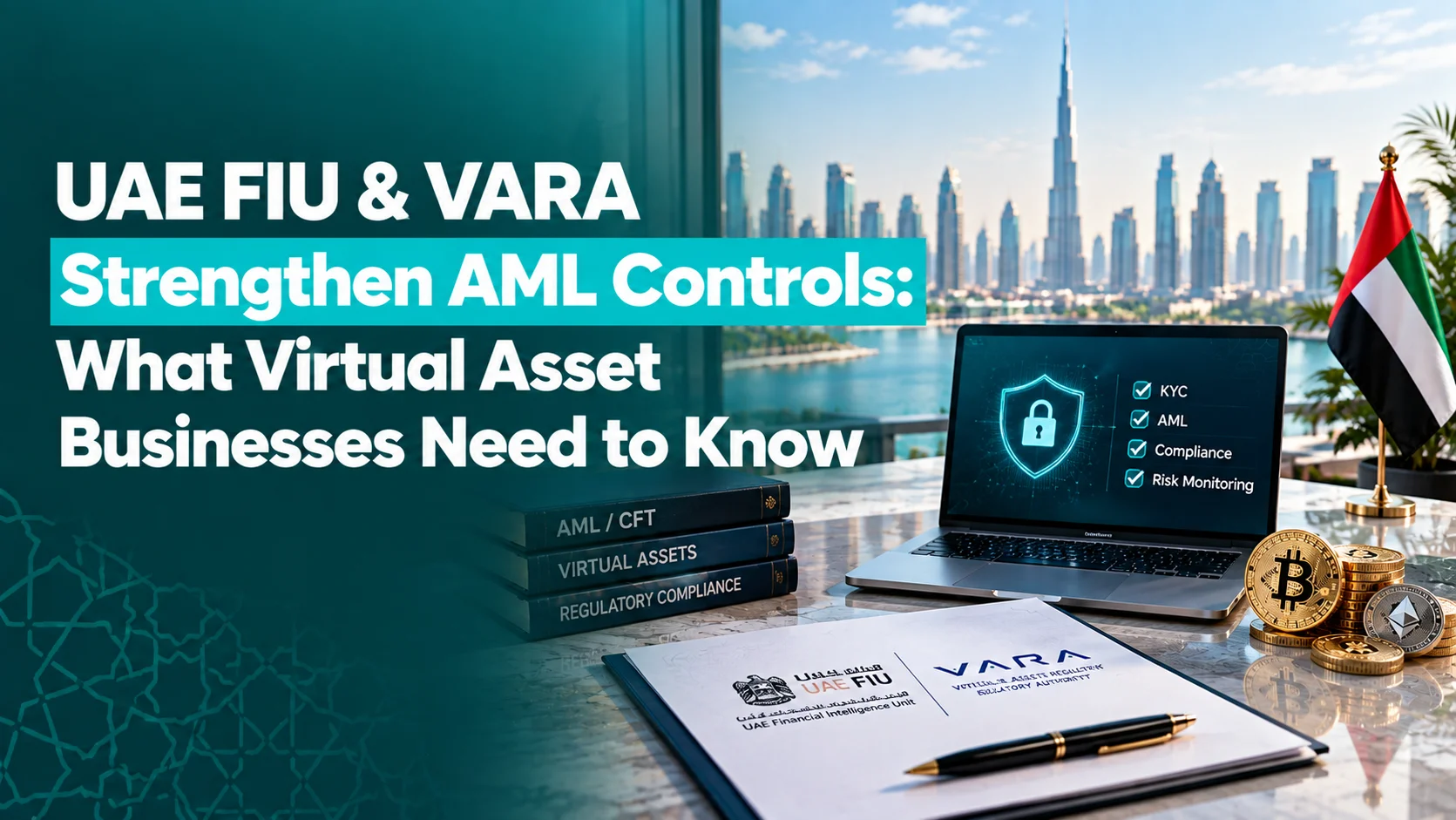
Dubai, UAE: The UAE Financial Intelligence Unit (UAE FIU) and the Virtual Assets Regulatory Authority (VARA) have signed a new Memorandum of Understanding (MoU) to strengthen cooperation against financial crime linked to virtual assets.
The MoU was signed on 5 October 2026 by Ali Faisal Ba’Alawi, Chief of the UAE Financial Intelligence Unit, and Matthew White, Chief Executive Officer of VARA. It creates a framework for the two authorities to exchange relevant financial intelligence and expertise and improve coordination, subject to applicable laws and confidentiality requirements.
What Is the Real News?
The main development is stronger cooperation between the UAE FIU and VARA. The agreement is intended to improve the authorities’ ability to identify and address financial crime risks connected with virtual assets.
The UAE FIU focuses on financial intelligence, while VARA regulates virtual asset activities in Dubai outside the DIFC. The new cooperation brings these roles closer together and supports the UAE’s wider efforts to protect the financial system from emerging financial crime risks.
The MoU itself does not announce a new license, penalty or separate reporting deadline for virtual asset businesses. Instead, it strengthens cooperation between the authorities within the existing regulatory framework.
Who Does This Affect?
The development is particularly relevant to Virtual Asset Service Providers (VASPs) operating under VARA.
VASPs already have AML/CFT responsibilities under VARA’s regulatory framework. They are expected to monitor business relationships for suspicious transactions and ensure that suspicious activity is reported through the required channels.
VASPs must also maintain appropriate risk assessment and monitoring processes. This makes strong tax and compliance procedures important for businesses that want to remain prepared as regulatory cooperation increases.
Why Should Businesses Pay Attention?
The latest MoU does not create a new set of rules by itself. However, it highlights the importance of having effective AML/CFT controls in place.
Weak risk assessments, poor transaction monitoring, or unclear reporting procedures can make it harder for a VASP to identify suspicious activity and meet its existing responsibilities.
Businesses should therefore treat compliance as an ongoing process rather than a one-time exercise. Their due diligence services and internal risk review processes should support a clear understanding of the risks connected with their business activities and clients.
VARA’s wider AML/CFT focus also supports this approach. In June 2026, VARA published guidance on AML/CFT business risk assessments for VASPs, reinforcing the importance of identifying and assessing financial crime risks.
What Should Virtual Asset Businesses Do Now?
VASPs should review their current AML/CFT framework and check whether their risk assessments, transaction monitoring procedures, and suspicious transaction reporting processes are working effectively.
Businesses should also maintain clear bookkeeping records and supporting documentation for their business activities. Well-organized records can help management review transactions, understand financial activity and identify areas where internal controls may need improvement.
Management should also regularly review compliance procedures instead of waiting for a regulatory concern to expose weaknesses.
For businesses operating in a changing regulatory environment, professional advice can provide an additional layer of support. A structured review of auditing and assurance processes can help businesses assess whether their financial and internal control systems are operating as intended.
What Does This Mean for UAE Virtual Asset Businesses?
The FIU–VARA MoU is an important current development for Dubai’s virtual asset sector. It strengthens cooperation and information exchange between two key authorities involved in addressing financial crime risks.
For VASPs, the message is not that the MoU has introduced a new penalty or reporting deadline. The key message is that existing AML/CFT responsibilities remain important and businesses should be ready to meet them effectively.
Companies should review their compliance framework, strengthen internal controls and keep their financial processes organized. Dubai Business and Tax Advisors (DBTA) can support businesses with compliance and wider financial management needs, helping them take a structured approach to regulatory readiness and business planning and strategy.