
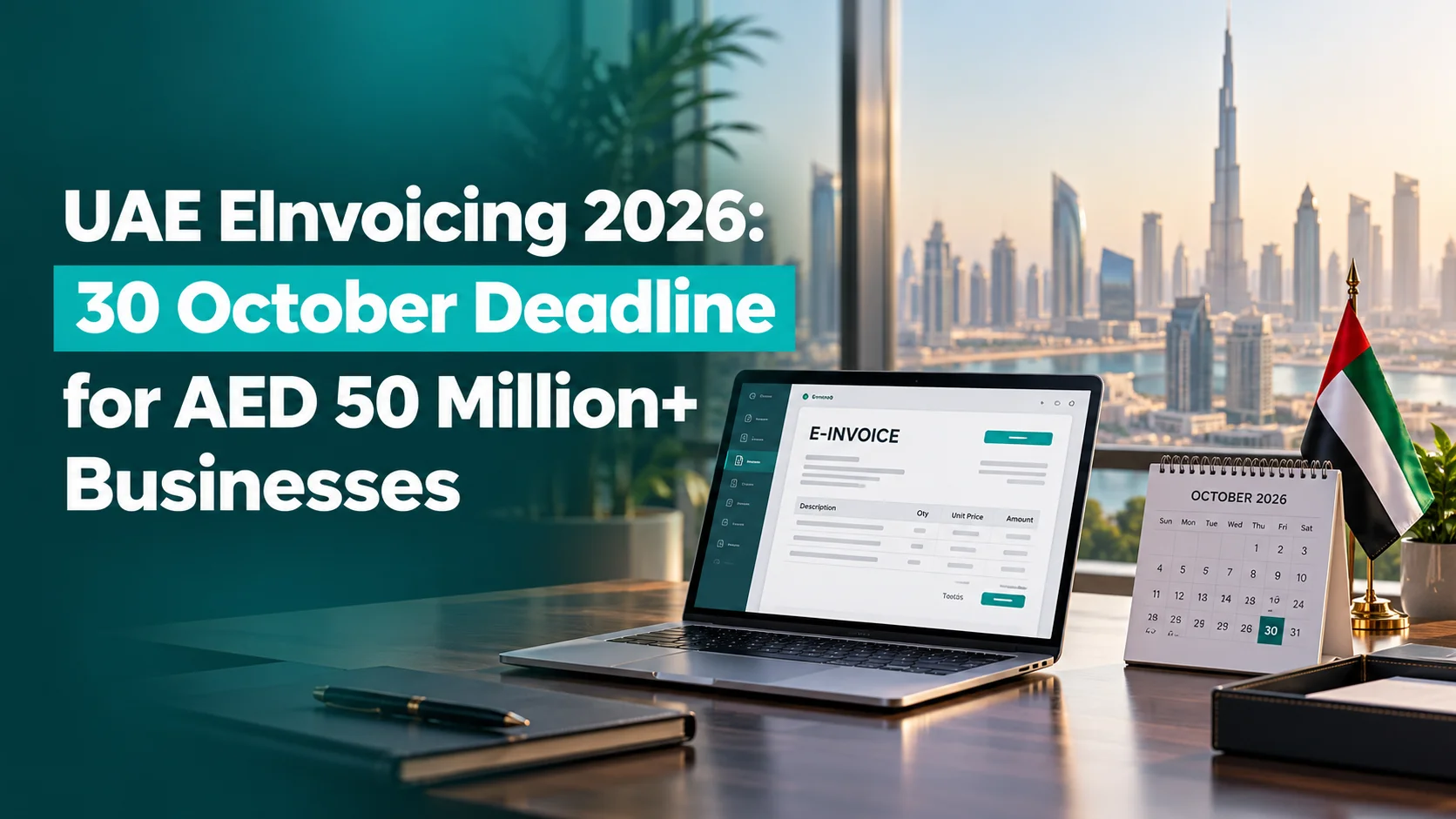
Dubai, UAE: UAE businesses with annual revenue of AED 50 million or more are approaching a major eInvoicing deadline. The Ministry of Finance (MoF) has set 30 October 2026 as the deadline for businesses covered by Phase One to appoint an Accredited Service Provider (ASP). The mandatory implementation date remains 1 January 2027.
The ASP appointment deadline was extended from 31 July to 30 October 2026. However, the extension did not move the January go-live date. This means businesses have more time to choose their provider, but they still need to complete the work needed for implementation before the start of 2027.
Who Needs to Act Before 30 October?
The current deadline applies to businesses subject to the UAE eInvoicing system with annual revenue of AED 50 million or more. These businesses need to appoint an Accredited Service Provider by 30 October and then complete the required onboarding and technical integration steps.
The latest MoF awareness session held on 27 September highlighted that businesses can select an ASP, complete the relevant registration through EmaraTax and progress the technical connection and integration process with their chosen provider.
For businesses that have not started, the key message is simple: the October deadline is for ASP appointment, not the final implementation date.
January 2027 Go-Live Has Not Changed
The MoF has confirmed that the mandatory Phase One implementation date remains 1 January 2027. Businesses should therefore use the additional time to move from provider selection to actual implementation preparation.
This can include reviewing accounting systems, invoice processes, business data and internal workflows. Businesses may also need to coordinate between finance, tax and technology teams as they prepare for the new electronic invoicing process.
UAE eInvoices Are More Than PDF Invoices
Under the UAE framework, an eInvoice is structured invoice data that is issued and exchanged electronically between a supplier and buyer and reported electronically to the Federal Tax Authority (FTA).
A normal PDF, Word document, scanned invoice, image or email attachment is not considered an eInvoice under the official framework.
The UAE system uses a 5-Corner Model to support electronic invoice exchange and reporting. The MoF confirmed in its latest awareness event that the model is now operational and that businesses can use the pilot phase to test reporting, interoperability and operational requirements.
What Could Happen If Businesses Wait?
The main concern for businesses that delay is not simply choosing an ASP. They also need time to complete integration and prepare their invoicing processes.
A late start could leave businesses with less time to identify data or system issues before mandatory implementation. This can affect tax compliance, invoice processing and day-to-day financial operations.
Businesses should therefore avoid treating 30 October as the date to begin preparation. It should be treated as a deadline that requires action before the date arrives.
What Should Businesses Do Now?
Businesses in scope should first confirm their revenue position and eInvoicing obligations. They should then review their accounting and bookkeeping systems, invoice data and current invoicing workflows.
They should also select an Accredited Service Provider and complete the required registration and contractual steps. Finance teams should review accounts payable and receivable processes to understand how incoming and outgoing invoices will work under the new system.
A review of business financial planning and forecasting can also help management plan for the technology and process changes connected with implementation.
The MoF is encouraging businesses to select their ASP and progress technical integration well ahead of the January 2027 deadline.
How DBTA Can Help
UAE invoicing will affect more than the way an invoice is created. Businesses also need their financial records, tax processes and internal workflows to work together.
Dubai Business and Tax Advisors (DBTA) can support businesses through bookkeeping, accounts payable and receivable, tax compliance, business tax advisory, and budgeting and forecasting services. This broader financial and tax support can help businesses review existing processes and prepare for the transition.
With 30 October 2026 approaching, Phase One businesses should act now on ASP selection and implementation planning. The 1 January 2027 mandatory implementation date remains unchanged, so preparation needs to continue after the provider is appointed.