
Offshore Company Setup in Dubai, UAE: A Complete 2026 Guide

Recent Insights
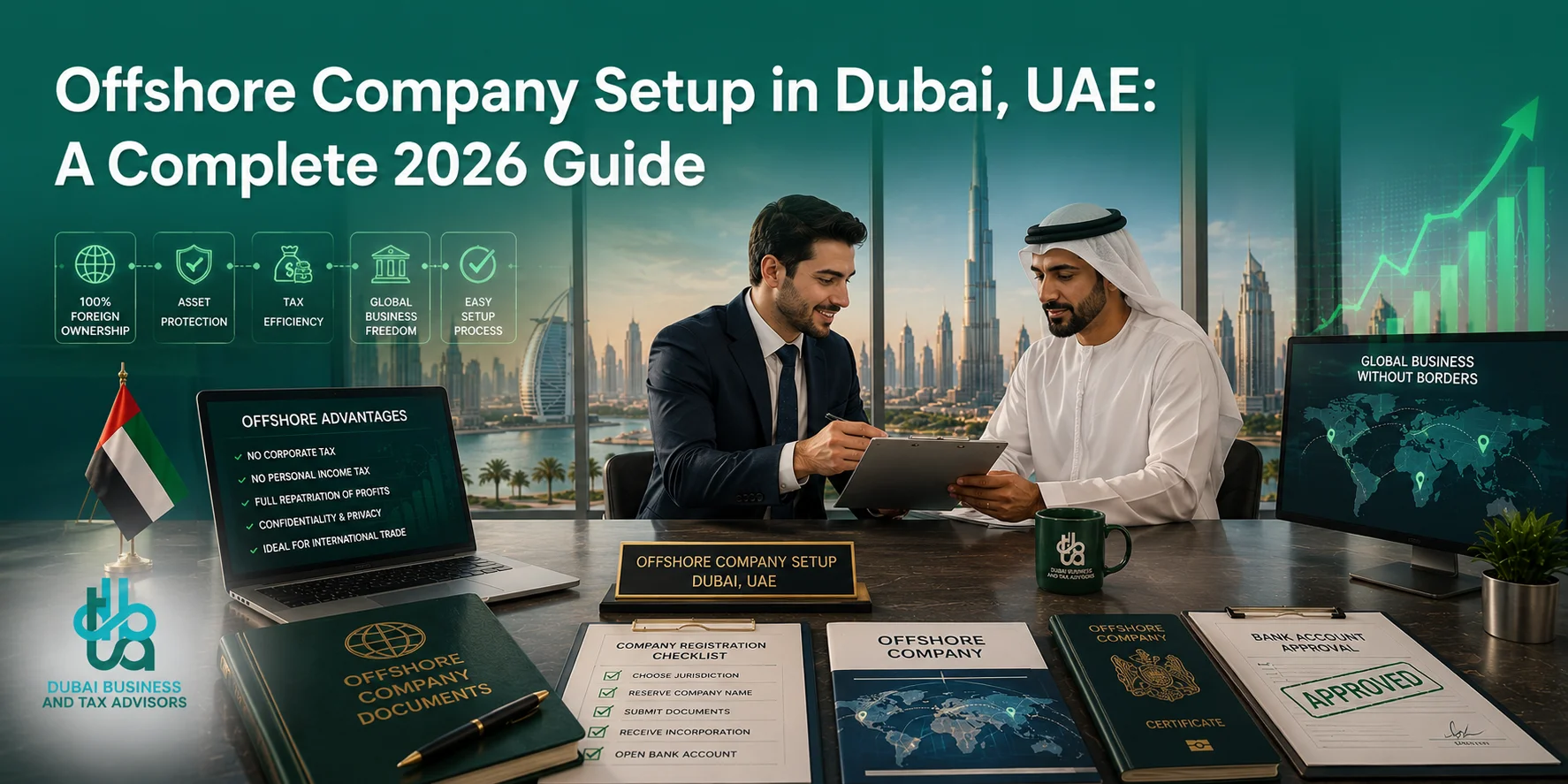
Table of Contents
Why offshore company setup in Dubai is gaining ground
More investors are setting up offshore companies in Dubai. The reason is simple. The UAE stays stable. It has strong money rules and a good name around the world.
Most offshore companies get set up as an International Business Company, or IBC for short. This setup gives you full foreign ownership. It also keeps your own assets safe if things go wrong elsewhere. That could be a lawsuit. It could be political trouble. Or it could be a money crisis back home.
People used to think of the UAE as just a low tax place. That view has shifted. Now the UAE is known as a well-run hub. It helps with long term wealth plans. It also works well for cross border holding setups.
Investors want more than a cheap fee now. They want real legal safety. They want a place that can pass tough checks from other countries. A well-built UAE offshore setup gives them just that.
Getting the terms right
People mix up these terms all the time. That mix up can lead to real legal and money problems. So, let’s make things clear.
Offshore company setup means you sign up your company in a free zone list. The two main ones are RAK ICC and JAFZA Offshore. These firms only serve business outside the UAE. They cannot open an office here. They cannot run local work either.
Company formation in Dubai is a wider term. It covers three paths. These are mainland, free zone, and offshore. Each path changes what your firm can do. It changes how you pay tax. And it decides if you can sponsor a UAE visa.
Company formation services give you the expert help you need. This covers paperwork, ID checks, opening a bank account, and staying on the right side of local and federal rules.
What this guide covers
This guide gives you a clear, useful look at offshore setup in Dubai. You will find real costs. You will get clear steps to follow. And you will learn the rules that matter most in 2026, plus how to sign up for tax.
Our goal is simple. We want to help you skip the early mistakes many people make. That way, your setup can last.
Is offshore setup right for you?
Offshore setups are useful, but they only do a few jobs well. Do you want to live in Dubai? Do you want to hire staff here? Do you want to trade with local people? If so, offshore is not for you.
Offshore firms work best for two things. First, trade invoices across borders. Second, holding assets that do not need active work. Before you pick this path, make sure the yearly upkeep is worth it for your real goal.
Mainland, free zone, or offshore
These three setups differ in three keyways. Who checks them. How much market access they give. And how they get taxed.
Mainland firms get a licence from the Department of Economic Development, or DED. They can trade anywhere in the UAE. Most fields now allow full foreign ownership. You do need a real office though. And profit above AED 375,000 gets taxed at 9% under UAE corporate tax rules.
Free zone firms sign up with a free zone body. They also allow full foreign ownership. Many can get a 0% tax rate. To get this, they must meet the rules for a Qualifying Free Zone Person, or QFZP. They can also apply for visas. But their trade often stays inside the zone or goes abroad.
Offshore firms are non-resident IBCs. They cannot trade inside the UAE. They cannot sponsor a visa. And they cannot have an office here.

An offshore firm saves you some cash at the start. But that saving is small. A cheap free zone deal can start near AED 12,000 to 15,000. That is close to offshore prices. In most cases, a free zone setup works just as well. Pick offshore only if your goal truly needs full non-resident status.
Clearing up common myths
Many people think offshore means zero tax with no work needed. That is not right. The UAE stays tax neutral for these firms. But your firm must still sign up for UAE tax. This step keeps your 0% rate safe.
Here’s another myth. People think offshore signup gives you UAE residency. It does not. Owning an offshore firm gets you no visa at all.
Benefits of an offshore company in Dubai
Full foreign ownership. You do not need a local partner. This keeps things simple. You stay in full control of your firm.
Tax perks. An offshore firm skips profit tax, personal tax, gains tax, and death tax. There is one rule though. Your income must come from outside the UAE. You must also follow the current rules. Done right, this makes offshore a strong tool for world tax plans.
Asset safety. UAE law guards offshore assets well. It shields them from debt claims and lawsuits from other places. These setups also work well for cross border trade, invoices, and holding assets like patents or shares in other firms.
Lower cost to start. You skip office space and visa costs. So offshore setup often costs less at the start than mainland or free zone paths.
Limitations you should know about
No local trade. Offshore firms cannot earn money from work done inside the UAE. They cannot deal with UAE residents either. All work must stay outside the country.
Real substance still matters. The empty paper firm is a thing of the past now. Free zone firms want to keep their 0% tax rate as a QFZP. To do that, they must show real work in the UAE. This means running core income work from the free zone. It also means having enough staff, assets, and costs there.
Here’s a fresh update worth knowing. Old rules called ESR used to make firms file extra notes and reports. A new law, Cabinet Decision No. 98 of 2024, dropped that rule. This applies for tax years that start on or after 1 January 2023. That said, tax signup with the FTA is still a must. This applies no matter what tax rate you pay.
Banking can be tough. UAE banks run tight ID and money source checks. These match world standards closely. Offshore firms have no real base in the UAE, so banks look at them with care. First time bank asks often to get turned down. Many reports point to high reject rates.
No visa path. Want a UAE visa for you or your co-owners? You will need a second free zone or mainland firm. An offshore owner does not get a UAE visa through the firm.
Ongoing paperwork. You still need yearly owner filings. You also need tax signup and tax filing with the FTA. Miss the tax signup date, and you face a flat AED 10,000 fine. Good news though. The FTA runs a waiver deal. If you sign up late but file your first tax return within 7 months of your tax year end, the fine can drop away on its own.
What worries investors most
Most investors fear one thing above all. That is a surprise cost. Banks often ask for a set cash balance. This can range from AED 50,000 to AED 500,000. Fall below it, and you may face extra fees.
Bank delays worry people too. So does the risk of picking a setup that does not fit their real needs. Do you plan to use UAE tax treaties? Do you want to hire local staff or sell in the UAE market? If yes, you will need a free zone or mainland firm, not an offshore one.
Choosing the right jurisdiction
The best offshore place depends on what you need the firm to do. Start with one question. Do you need it to own Dubai land?
JAFZA Offshore has a strong name. UAE banks widely trust it. It also has a rare perk. JAFZA offshore firms can legally own land in some Dubai spots, such as Palm Jumeirah or Emirates Hills. This needs approval first. This makes JAFZA the top pick if you want an offshore firm to hold Dubai land or property.
RAK ICC is one of the fastest growing firm lists in the region. It is also a low-cost pick. It works well for world holding, share ownership, and trade invoices. Pick RAK ICC when speed and low-cost matter more than owning local land.
Ajman Offshore gives a simple, cheap path for basic holding needs. Its fees sit close to RAK ICC.
Comparing UAE Offshore Places
| Point | RAK ICC | JAFZA Offshore | Ajman Offshore |
|---|---|---|---|
| Best For | World trade, holding, speed, low cost | Holding, mostly Dubai land, strong bank trust | Simple holding, low cost |
| Dubai Land | Not allowed in most cases | Allowed in set spots | Rare or not allowed |
| Reputation | Great, top offshore list | Strong, high bank trust | Good, low cost |
| Setup Cost (roughly) | AED 12,000 to 18,000 | AED 15,000 to 20,000 | AED 13,000 to 17,000 |
| Setup Speed | 1 to 7 workdays | About 4 weeks | 7 to 14 days |
Want a simple world setup? RAK ICC fits well. Want to buy land? JAFZA is the better path.
Dubai offshore vs BVI
The British Virgin Islands, or BVI, is a well-known offshore hub. People like it for its privacy and neutral stance. BVI firms also face lighter checks at setup, mostly around audits.
But UAE setups like RAK ICC and JAFZA give better bank trust today. Many world banks now stay wary of BVI firms, as world checks grow tighter. If bank trust matters to you, pick a UAE based offshore firm. It is the safer choice.
Step by step: how to set up an offshore company in Dubai
Step 1: Plan and prepare. Pick your business type. Choose your place. Set a budget for both setup and yearly costs. Then check that an offshore IBC truly fits your needs. Note that it rules out local trade and visas.
Step 2: Gather your papers. Solo investors need a passport copy, a recent bill (no older than 3 months), a CV or work history, and a bank letter. Firm owners need a firm certificate, firm rules, a good standing letter, and a board note. These often need a stamp from a UAE embassy. Any foreign papers will also need a notary or apostille stamp.
Step 3: Pick a name and get an agent. Offshore signups must go through a licensed agent. This agent signs your forms, gives the listed address, and talks to the authority for you.
Step 4: Finish the setup. RAK ICC often takes 1 to 7 workdays once your papers are ready. JAFZA takes closer to 4 weeks. But here is the real slow point for most investors. It is not the setup. It is opening the bank account. This can take weeks or even months.
What it really costs
Start signup runs from AED 12,000 to AED 20,000. This depends on your place. On top of that, plan for yearly renewal fees of AED 10,000 or more. Agent fees add AED 2,000 to 5,000 or more.
A few costs tend to catch people off guard. Notary and stamp costs often sit outside the main price. So does the AED 10,000 fine for a missed tax signup date. Legal fees, if you need a lawyer, come on top too.
Offshore Company Cost Breakdown (Estimated)
| Cost Item | What It Covers | Rough Range (AED) | Watch Out For |
|---|---|---|---|
| Start Signup | List fees, firm certificate | 12,000 to 20,000 | Skips bank and rule fees |
| Agent Fee | Set address and go-between work | 2,000 to 5,000+ | Often bundled in start price |
| Yearly Renewal | Needed upkeep each year | 10,000 to 12,000+ | This is a base cost, not a cap |
| Paper Stamps | Legal check of ID papers | 1,500 to 5,000, one time | Can rise if embassy sign off is needed |
| Tax Fine | Cost of a missed signup | 10,000 flat | Applies even at 0% tax |
Banking, the real bottleneck
Getting your first bank account approved is not easy for offshore firms. First tries often get turned down. Banks want a clear, real reason for the account. They also want solid proof of where your cash comes from. And they want a clear view of what your firm truly does.
Good prep makes a real gap here. Work with firm setup experts who already know banks that take on offshore firms. This can save you months of back and forth.
Staying compliant after formation
Once your firm forms, your agent takes charge. They handle yearly rule work and talk to the authority for you. You do not need a real office. But if your firm does work that needs proof, such as holding or patent income, you must still show real work. This keeps your 0% tax rate safe.
Every offshore firm must renew each year. It must also keep clean records. Audits are not a must for all offshore IBCs. But tax signup with the FTA is a must for every firm, no gaps allowed.
Where offshore companies work well
Holding assets. Offshore setups work well to hold shares, patents, or land. JAFZA stands out here, since it lets you own some Dubai land.
World trade. Do you trade across borders, say in goods or brand deals? An offshore firm gives you a tax-free way to send invoices. And you still get to use UAE bank tools.
Wealth and family plans. These setups support quiet, well-run plans to pass on wealth. They also help guard assets from your own legal risks.
South Asian investors, this includes those from Pakistan, often turn to UAE offshore firms. Steady politics draw them in. So does strong access to world banks, and no limits on moving cash. Just expect tight ID and money source checks along the way. You will also need clear proof of where your funds come from.
When offshore is not the right choice
Do you need to hire staff in the UAE? Sponsor a visa? Trade right in the local market? Offshore will not work for any of these. You will need a mainland or free zone firm instead.
Winding down or restructuring
Offshore firms also support smart exit plans. Ahead of a sale or shut down, you can rebuild the firm. This can allow tax smart asset moves. It can also support a clean close of one part of the work, while keeping legal and money risk low.
Understanding the full cost picture
The lowest price you see often covers just the base fee and agent cost. It skips paper stamps, expert fees for tax and rule filings, and ongoing bank costs. These can add up fast.
Setup costs shift a bit between RAK ICC, JAFZA, and Ajman. But yearly renewal fees stay close across all three, mostly AED 10,000 to 12,000 or more. So, your place choice should rest on what you truly need the firm for. Pick JAFZA for land, for one case, not just a small saving at the start.
Choosing a formation consultant
Picking the right place is not easy. Nor is bank onboarding or staying inside tax and rule limits. Good expert help makes this whole path much smoother.
Look for an expert with real work in world tax setups. Check for in house bank help, the kind that aids with ID checks and bank links. And look for a clear, upfront view on fees, with no hidden costs.
Ask direct questions. What is their track record opening bank accounts for non-resident firms? How do they handle tax signup for a zero-rate firm, step by step?
Stay wary of firms that just compete on the lowest price. These deals often skip the bank and rule help you truly need. You end up with a setup that looks whole on paper but does not work in real life.
Common mistakes to avoid
The most common and costly slip is simple. People use an offshore firm to trade local in the UAE, which the licence does not allow. A missed tax signup date comes next. A lack of true work behind holding or patent income comes close after that.
Want to stay clean? Sign up for tax on time. Keep your owner records fresh. Check your work levels each year against your real income and tasks.
Global tax scrutiny is increasing
The UAE tax rules now match the OECD’s BEPS plan. This plan taxes work where it truly happens. Say your offshore firm lacks real work, and you or your co-owners pay tax in a high tax land. That land’s tax body could claim the firm is truly run from there. They could then tax its income too. This is why real work and proof matter so much today.
Final thoughts
An offshore firm in Dubai is a strong, sharp tool. It works well for world trade, wealth safety, and holding assets that sit still, most of all land held through JAFZA. It is not the right fit if you want to live in the UAE, hire staff, or trade local.
The tax perks only hold up if you stay on top of tax signup. You also need the right level of real work for your task. Plan honest costs for setup, renewal, and banking. Get your papers right. Work with experts who can truly get your bank account open.
World tax bodies now watch these setups close. Trying to build one alone, with no help, is a real risk. Good advice up front is what builds a setup that can truly last for years.
Considering an offshore structure for your assets or global trade? DBTA’s advisors can help you pick the right jurisdiction, handle the RAK ICC or JAFZA filing, and get your bank account open without the usual back and forth. Contact DBTA today for a consultation to get started.
FAQs
With papers ready, RAK ICC setup often takes 1 to 7 workdays. A live bank account can take weeks to months to open.
No. It can only work outside the UAE. It cannot trade with UAE folks or local firms.
Yes. Every offshore firm must sign up for UAE tax with the FTA. Miss the date, and you face a flat AED 10,000 fine. A waiver may apply though. This works if you file your first return within 7 months of your tax year end. The firm may still get a 0% rate if it meets QFZP rules, and its income comes from outside the UAE.
You will need clear proof of your owners, proof of where funds come from, and ideally help from experts who already know banks that take offshore firms.
Renew your agent fee each year. Keep your owner list fresh. Stay on top of your tax filing tasks.
Latest news & articles



About the Author:
AURANGZAIB CHAWLA
As CEO of DBTA, Aurangzaib Chawla advises globally mobile businesses and individuals on cross-border tax planning and structuring. With expertise spanning the UK, UAE, and wider GCC, Zaib helps clients minimise double taxation, protect assets, and achieve long-term financial efficiency while staying fully compliant.
Planning to launch in Dubai or the UAE?
Let’s talk about how to structure your business for growth the smart, compliant, and tax-efficient way

About the Author:
AURANGZAIB CHAWLA
As CEO of DBTA, Aurangzaib Chawla advises globally mobile businesses and individuals on cross-border tax planning and structuring. With expertise spanning the UK, UAE, and wider GCC, Zaib helps clients minimise double taxation, protect assets, and achieve long-term financial efficiency while staying fully compliant.
Planning to launch in Dubai or the UAE?
Let’s talk about how to structure your business for growth the smart, compliant, and tax-efficient way
About the Author:
AURANGZAIB CHAWLA
As CEO of DBTA, Aurangzaib Chawla advises globally mobile businesses
and individuals on cross-border tax planning and structuring. With expertise spanning the UK, UAE, and wider GCC, Zaib helps clients minimise double taxation, protect assets, and achieve long-term financial efficiency while staying fully compliant.
Planning to launch in Dubai or the UAE?
Let’s talk about how to structure your business for growth the smart, compliant, and tax-efficient way.
Connect with Reliable Dubai Business Consultants
Get in Touch